Best Of The West Live Auction
November 13, 2026 5:30 PM PT
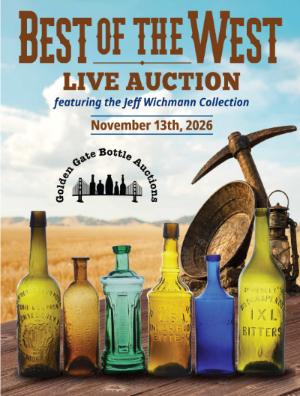
Golden Gate Bottle Auctions is proud to present the Best of the West Live Auction, featuring 72 exceptional lots from the Jeff Wichmann Collection. This special auction showcases an outstanding selection of rare Western bottles, along with four exceptional insulators. Jeff's longstanding passion for Western bottles and his contributions to the collecting community are reflected in this remarkable collection.
The auction will take place Friday, November 13, 2026, at the Gold Country Fairgrounds in Auburn, California, in conjunction with the 49er Bottle Show. Live bidding begins at 5:30 PM Pacific.
Absentee bids will be updated periodically in the online catalog. Please note that online bidding will not be available before or during the live auction on November 13.
→ Register For The Live Auction
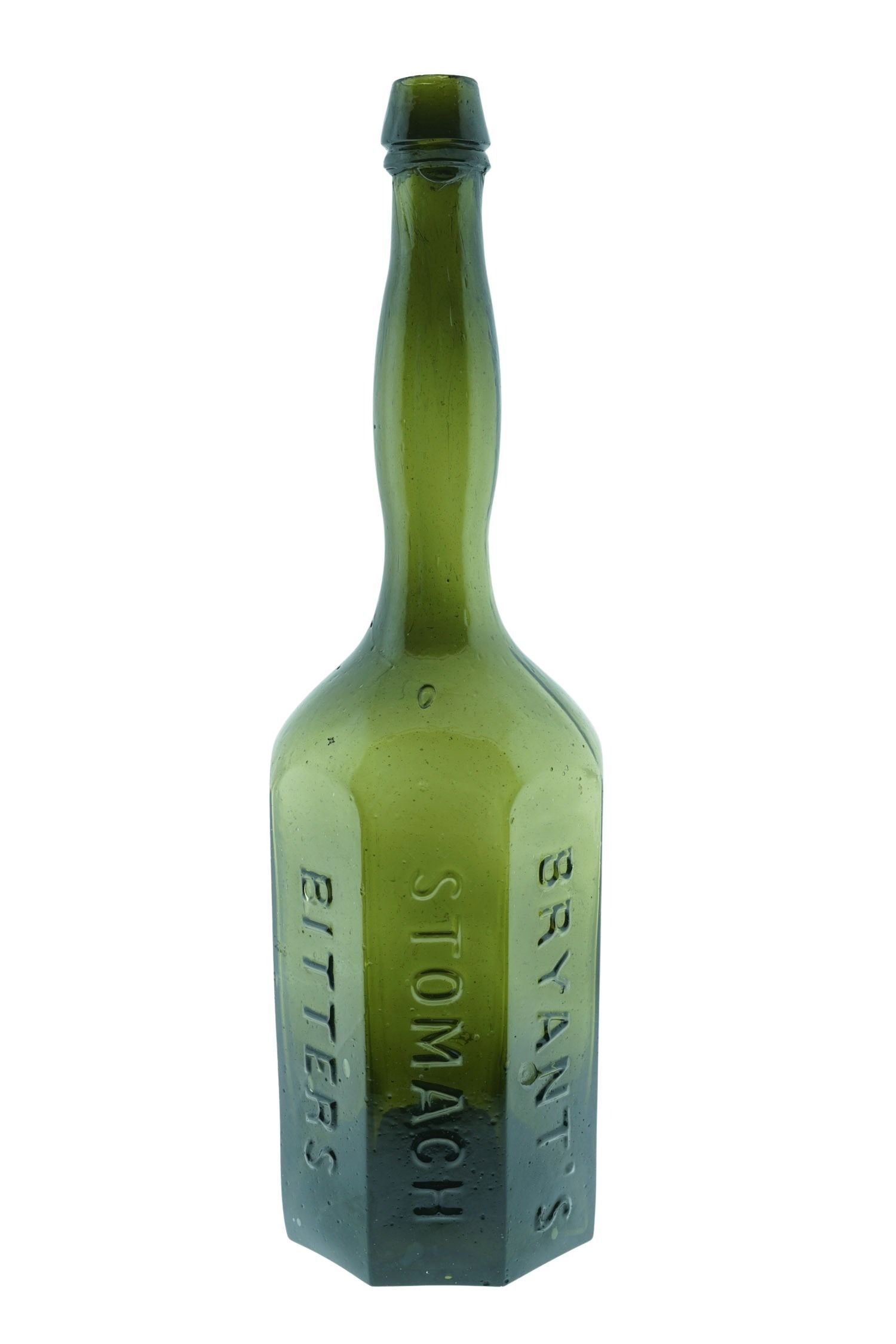
Bryant's Stomach Bitters
Circa 1859–1863, sticky ball pontil, 12 3/8". A highly desirable lady's leg bitters that was popular in the gold fields of California. G.N.W Bryant was a New York city druggist who concocted the bitters sold in these uniquely shaped bottles. Wm. Newell & Co. was the San Francisco agent for the product and based on the number of examples found broken in California, must have done a decent job marketing them. Many of these lady's leg examples were found on the famous Sea Lark shipwreck which sunk in 1863 off the coast of Brazil on its way to San Francisco.
Description & Condition: Likely a shipwreck example with moderate pitting, wear, and numerous open bubbles. An area of several deeper lines in the neck, possibly manufacturing–related or the result of deeper scratches. Two tiny potstones, one in the shoulder and one at the base of the neck, each with radiating legs measuring approximately 1/8" at their widest. Professionally cleaned.
Min. Bid $1,000 - Est. $2,000–$4,000
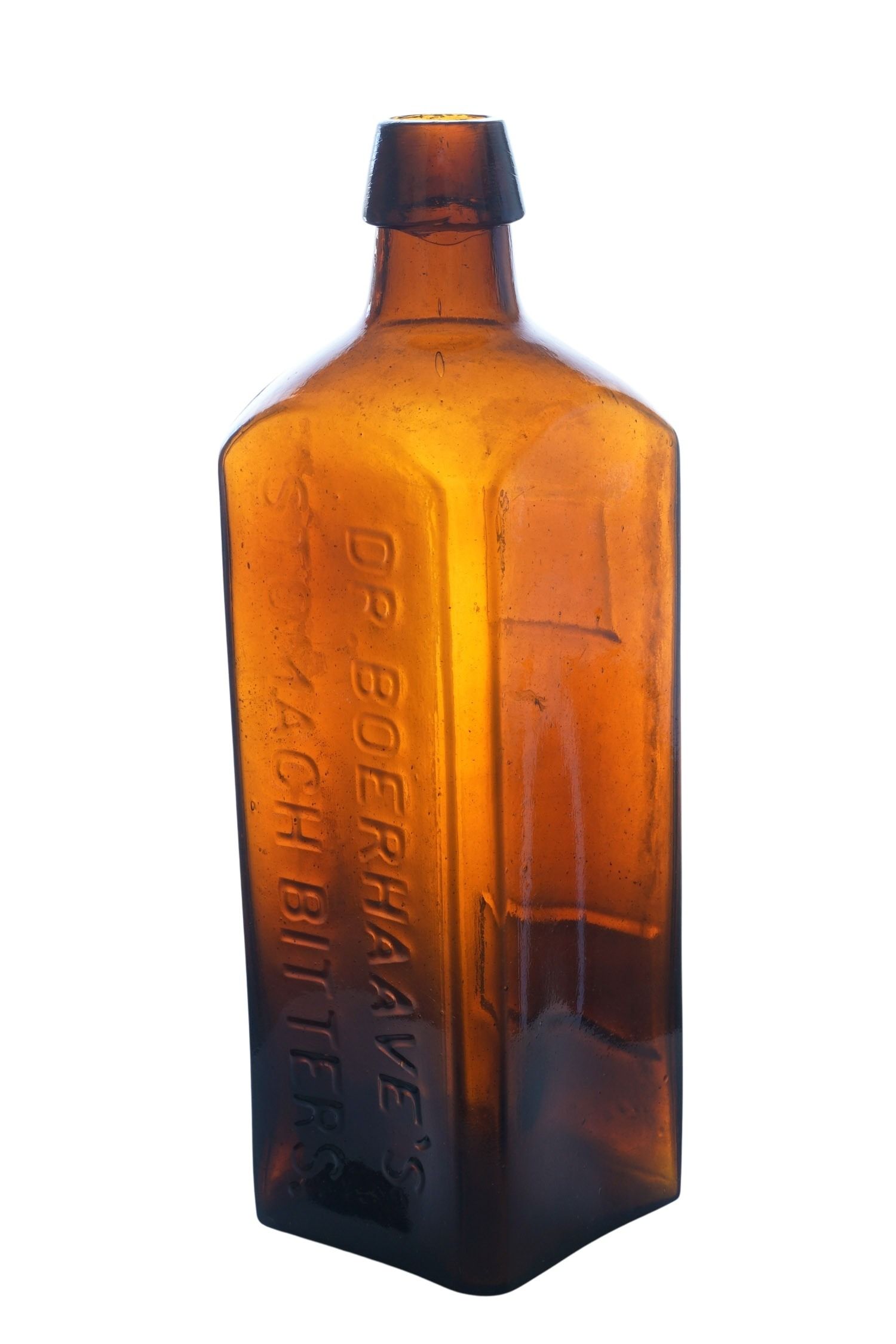
Dr. Boerhaave's Stomach Bitters
Circa 1868–1869, applied top. A rare Western bitters dating to the golden era of Western bitters, the late 1860s. Named after the renowned Dutch physician and botanist Dr. Herman Boerhaave (1668–1738), whose medical reputation endured long after his death, Boerhaave's Bitters was one of many nineteenth century patent medicines that borrowed the names of famous physicians to promote their products. The embossing pattern closely resembles that of the famous Hostetter's Bitters, but of course this bottle is exponentially rarer. There are roughly 11 known examples.
Description & Condition: Medium amber. Original cork remains inside, suggesting the bottle was likely never buried. Minor amount of original contents stain.
Min. Bid $750 - Est. $1,500–$3,000
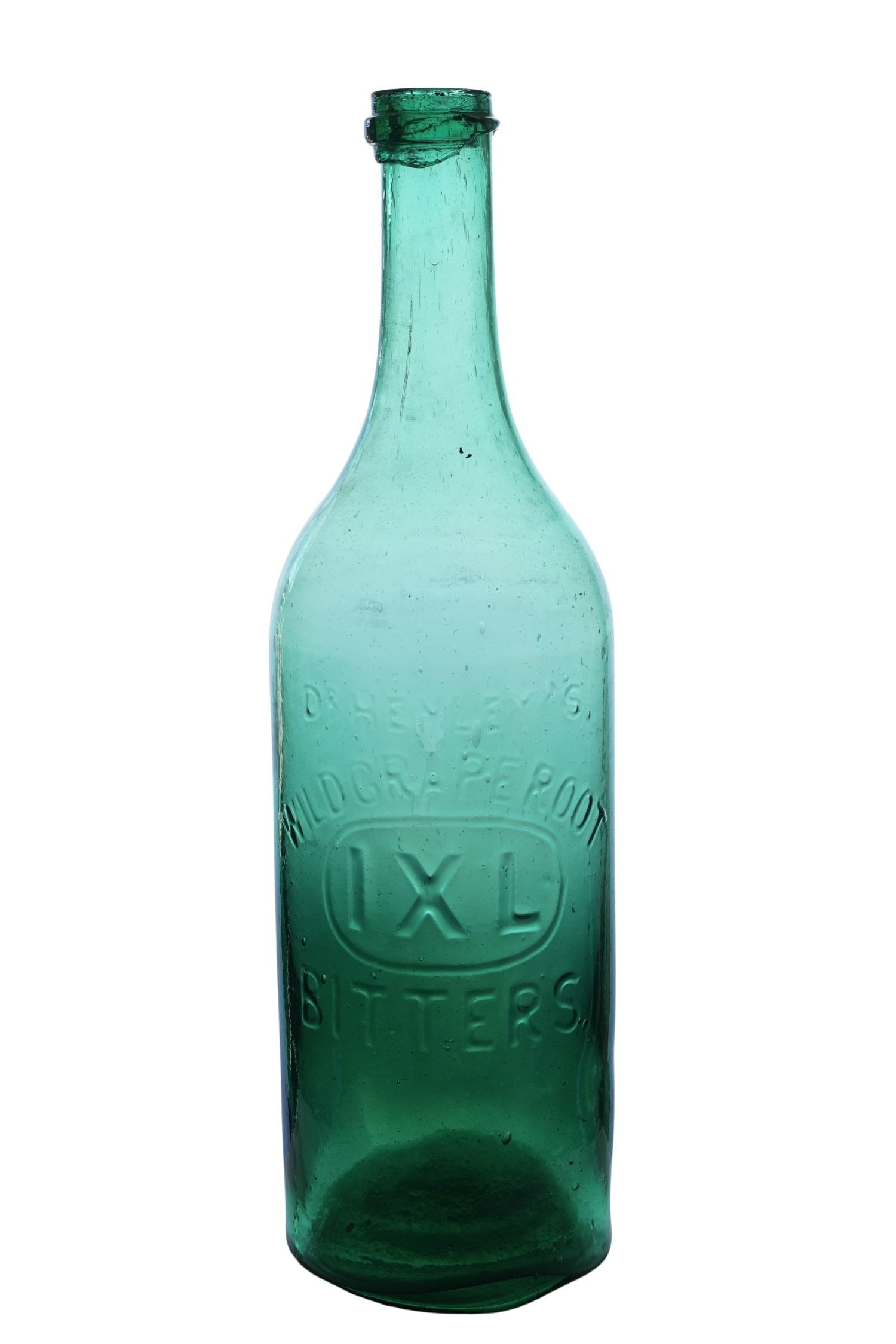
Dr. Henley’s IXL Wild Grape Root Bitters
Circa 1873–1882, applied top, 11 3/4". Second variant with circle. A very rare colored circle variant of the I.X.L. Most examples are found in aqua or lighter shades of green, making deeper colored examples like this one especially desirable. A fantastic color that will stand out in any I.X.L. run.
Description & Condition: Rich pastel green color. Small chip, 3/16", to the side edge of the lip that is not visible when the bottle is displayed. Shallow hairline annealing fissure about 1/8" in the neck approximately 1" below the top. A tiny potstone with 1/16" legs and an associated bruise on the inside of lip. All very minor issues that are difficult to see. Please refer to the online catalog photos. Possibly professionally cleaned.
Min. Bid $1,000 - Est. $2,000–$5,000
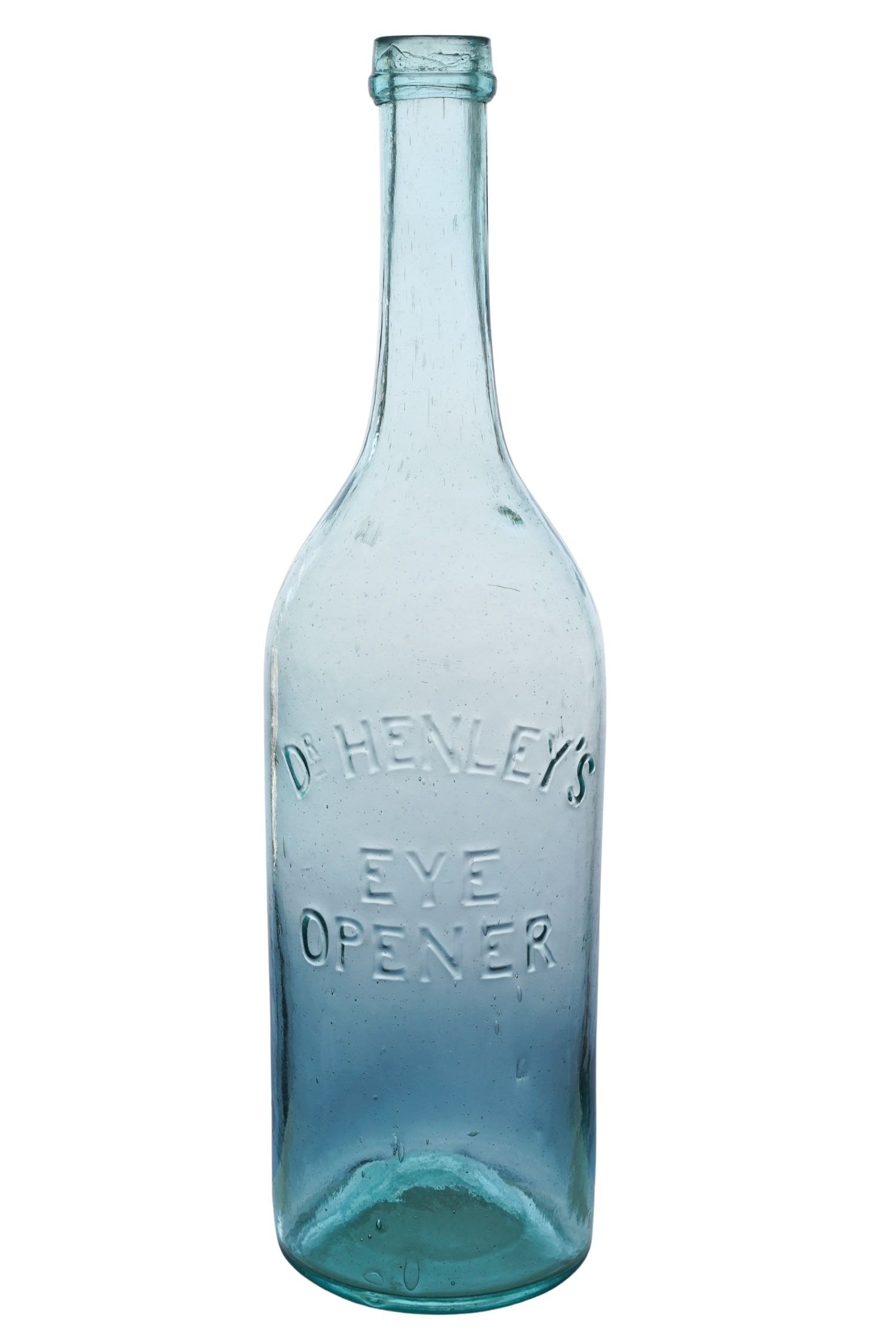
Dr. Henley’s Eye Opener
Circa 1872–1873, applied top, 12 1/4". One of the rarest Henley's products, with only about 5 known examples, virtually all of them aqua except for one incredible yellow example. Its rarity suggests it may have been one of Henley's least successful products, although the reason for its limited production remains unknown. Regardless, it is a striking bottle with large embossing and an attention–grabbing product name.
Description & Condition: Strong strike, some light crudity. Hard to see 1/8" flake that was filled with resin on the side of the lip. Two small scratches near the base.
Min. Bid $1,500 - Est. $3,000–$4,000
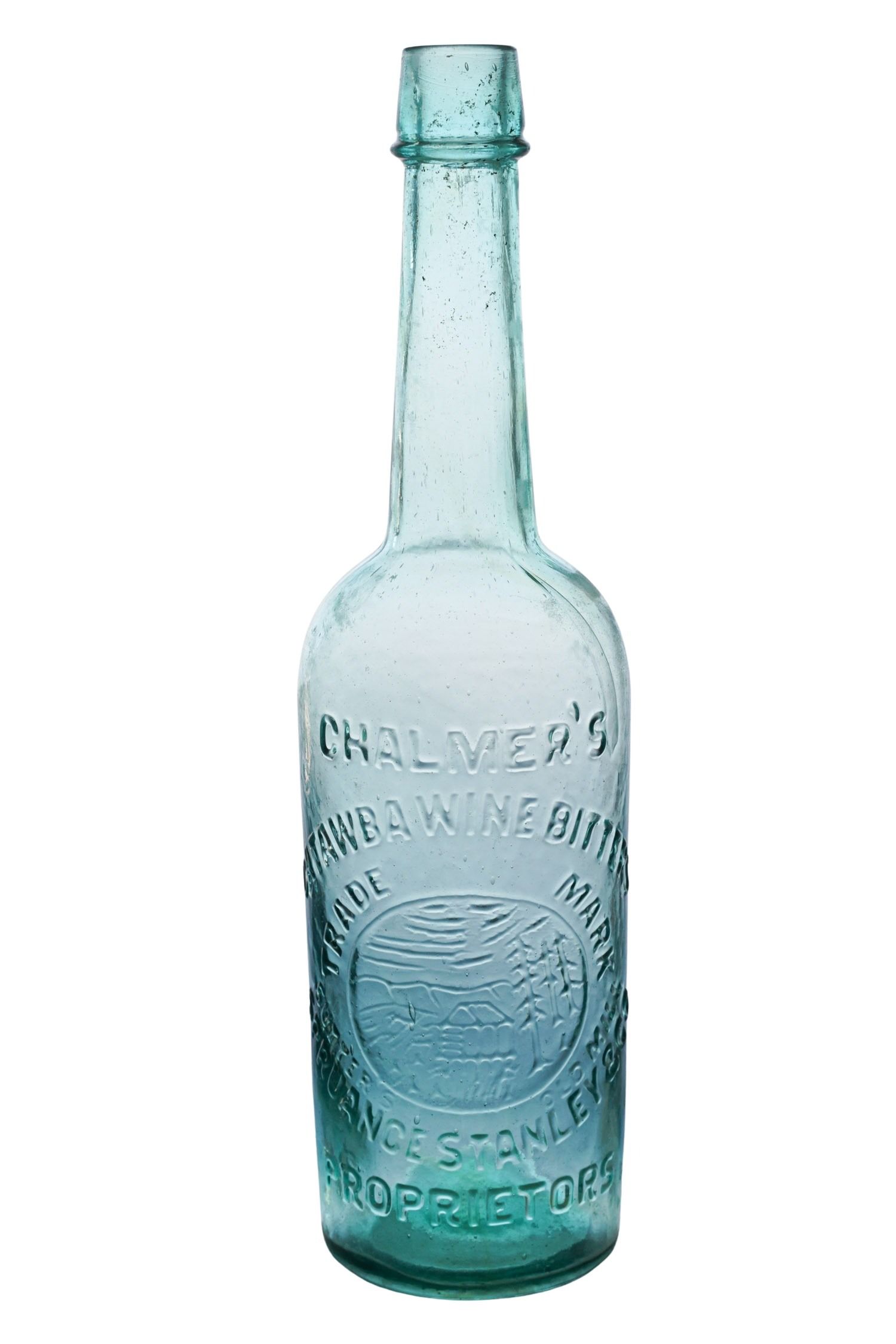
Chalmer's Catawba Wine Bitters
Circa 1873–1874, applied top, fifth. This is one of the West's most iconic bottles, featuring an image of Sutter's Mill where gold was discovered in 1848. These bottles are coveted by collectors of all kinds for their historic and unique embossing. The mill was located at Coloma, California, where James Marshall's discovery of gold in January 1848 sparked the California Gold Rush. Few Western bottles so directly commemorate one of the most significant events in California history. Most known examples have been found in Nevada, with only about three reported from California. A truly historic and iconic bottle that remains one of the cornerstones of any advanced Western bottle collection.
Description & Condition: Aqua with a slight green tone. Strong strike with a good amount of whittle. A few light exterior scratches and several patches of exterior wear, with remnants of rust on the neck. The pattern of wear is consistent with prolonged use, possibly from being carried in a leather satchel or similar container. Despite these signs of use, it displays beautifully.
Min. Bid $4,000 - Est. $8,000–$12,000
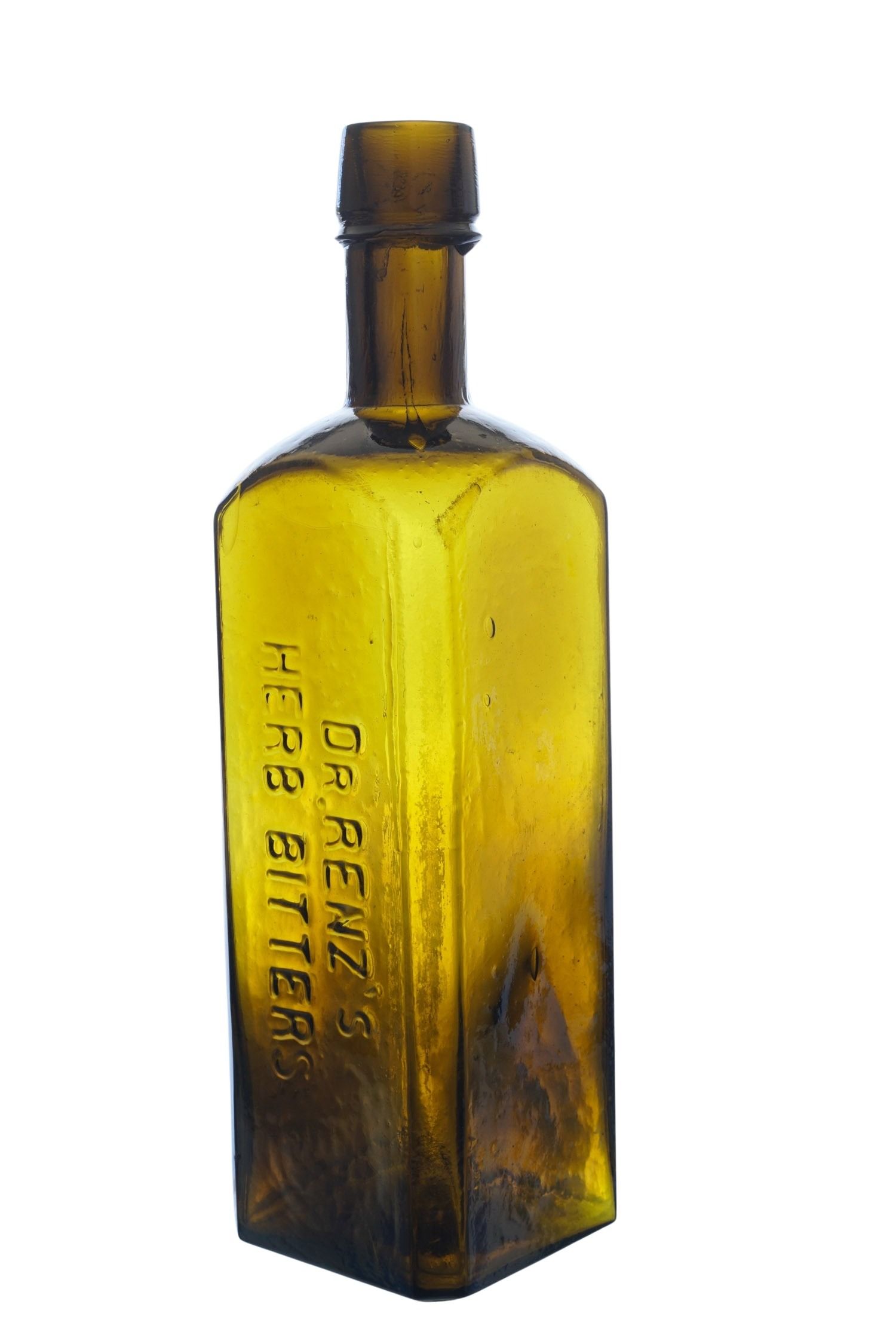
Dr. Renz's Herb Bitters
Circa 1868–1872, applied top. This is the earliest variant of the notorious Dr. Renz's Herb Bitters, affectionately known by collectors as the "Small Letter Renz." These bitters were first marketed in August of 1867 by Dr. C. M. Renz and his son John. Around 1872, John Renz relocated to San Francisco to expand the business, helping establish what would become one of the most famous bitters brand on the West Coast. Produced into the early 1870s, this variant is highly regarded for its vibrant colors and glass crudities. Examples are known in a remarkable range of colors, including aqua, lime green, olive green, yellow green, and even deep emerald green. Surprisingly, amber is one of the rarer colors for this variant. Examples are also found with a variety of lip finishes, ranging from the extremely rare tapered top example known as the "Cone Top Renz" to the more traditional whiskey lip finish found on most examples. This particular example was dug in Virginia City about 10 years ago.
Description & Condition: Olive amber with light whittle and an oversized top. A small amount of interior dirt remains.
Min. Bid $750 - Est. $1,500–$2,500
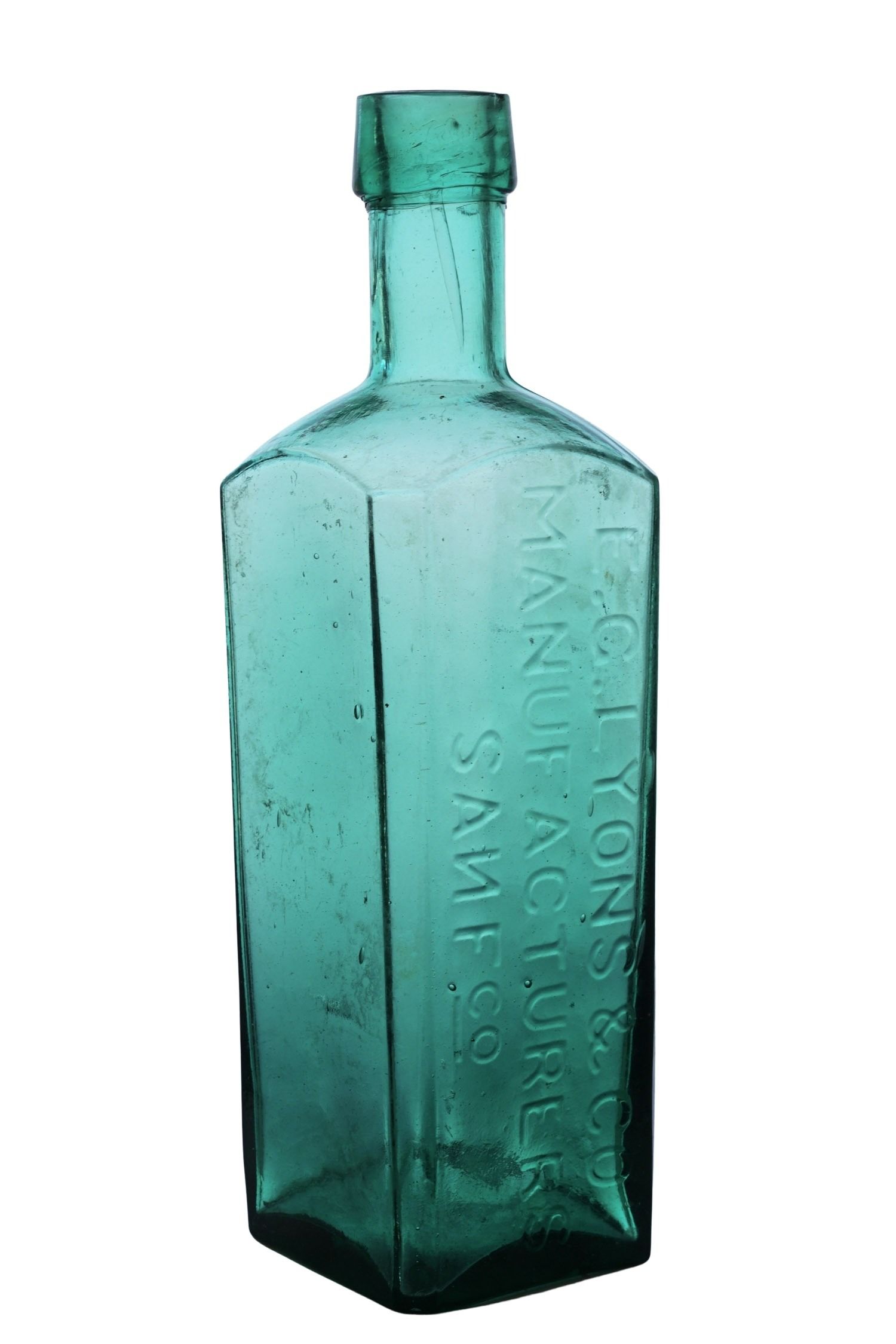
E.G. Lyon's & Co. Manufacturers SANFco
Circa 1863–1870. The E.G. Lyon's square is another early and desirable Western bottle. The earliest examples are believed to have been made during the mid–1860s, although some collectors believe a second run was produced later in the decade or perhaps even into the early 1870s. It is not known exactly what product these bottles contained, and it is likely they served as a generic container for a variety of E.G. Lyon's bitters and cordial products. These bottles feature the unusual abbreviation "SANFCO" for San Francisco, as well as the famous backwards "N" in LYON'S, a characteristic long noted by collectors. Examples are known in a surprising range of colors, from deep olive green through various shades of yellow and amber. This beautiful colored example was excavated by Bob Franconi in 2003 during a bottle digging expedition in Oakland, California.
Description & Condition: Light seafoam green, possibly the only known example in this color. Minor 1/8" chip on the edge of the lip. Some very light, spotty exterior dullness and patina.
Min. Bid $3,000 - Est. $6,000–$12,000
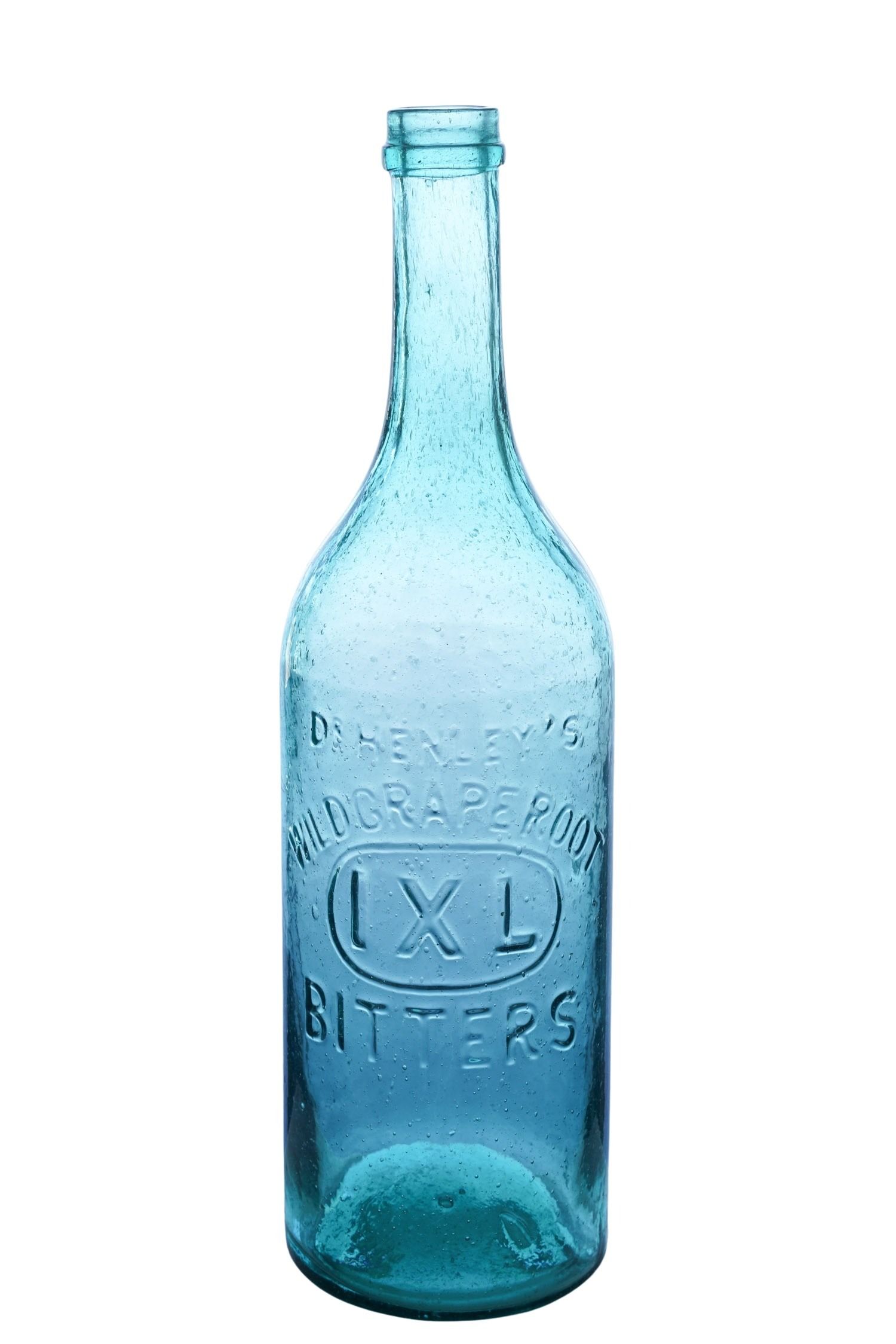
Dr. Henley’s IXL Wild Grape Root Bitters
Circa 1873–1882, applied top, 12 1/8". This is the second variant of the I.X.L. Bitters, featuring a circle surrounding "I.X.L." While this variant is most often encountered in aqua, and occasionally in lighter shades of green, examples in stronger colors are considerably scarcer. Crude, character-rich examples such as this are also much more difficult to find.
Description & Condition: Aqua with a strong strike. Crude glass, full of bubbles.
Min. Bid $75 - Est. $150–$300
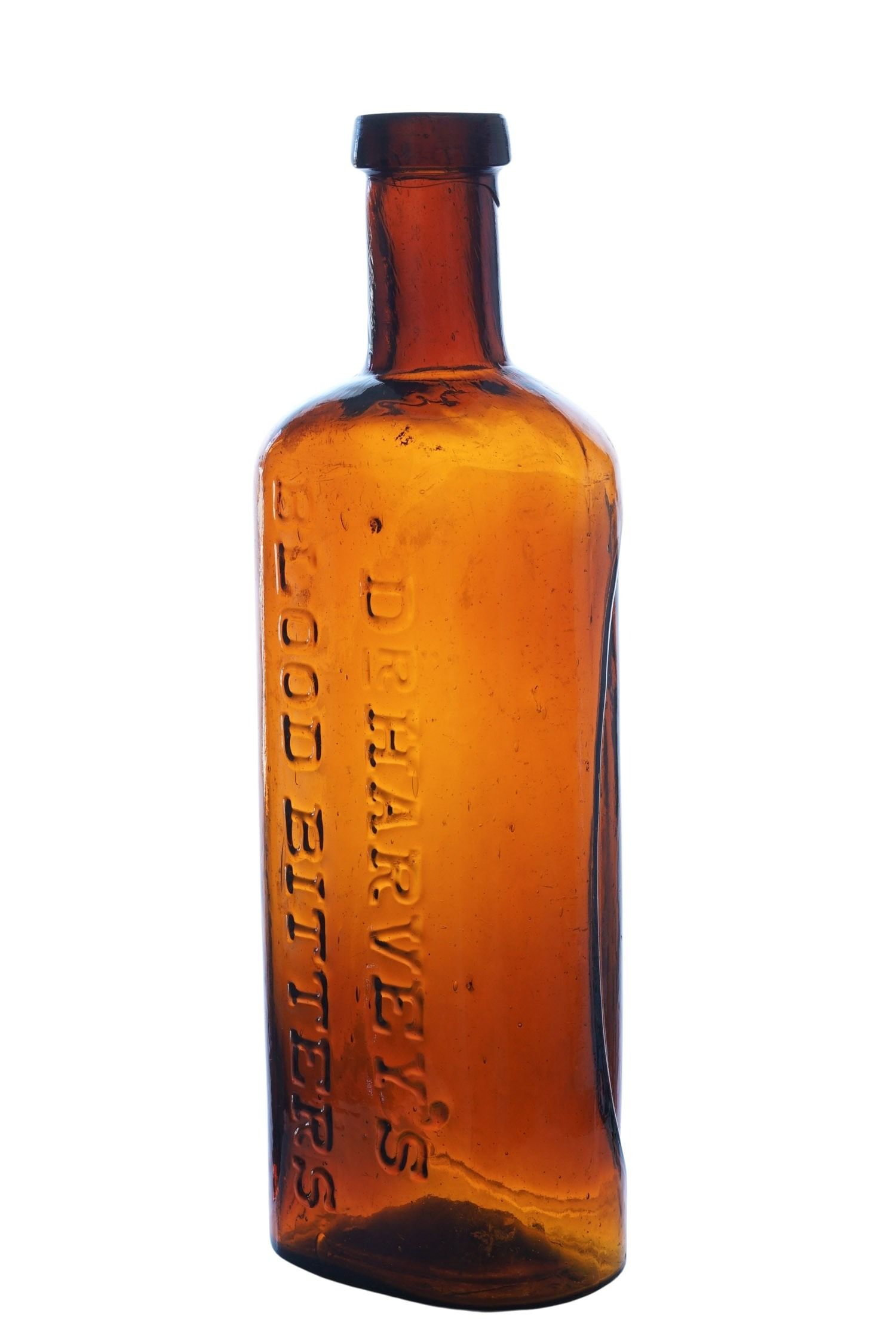
Dr. Harvey’s Blood Bitters
Circa 1881–1885, applied top, 8 3/4". A recently discovered 1881 advertisement identifies Paul Oesting, a Visalia druggist, as an agent for Dr. Harvey's Blood Bitters. Interestingly, the advertisement notes a London depot for Harvey & Son and states the product dated back to 1628, suggesting a connection to the famed English physician William Harvey. Another advertisement from 1884 identifies an agent in Fresno marketing the product as well. Given the bottle's distinctly Western curved R embossing and the documented California distribution network, it seems likely these bottles were produced in San Francisco during the early 1880s. Supporting this theory is the fact that many of the known examples have been recovered in the San Joaquin Valley near Visalia. A rare bitters with a great name.
Description & Condition: Medium amber with some whittle. Light exterior scratching, mostly on the rear recessed panel. Potstone on the reverse with an associated 1/4" bruise.
Min. Bid $500 - Est. $1,000–$2,500
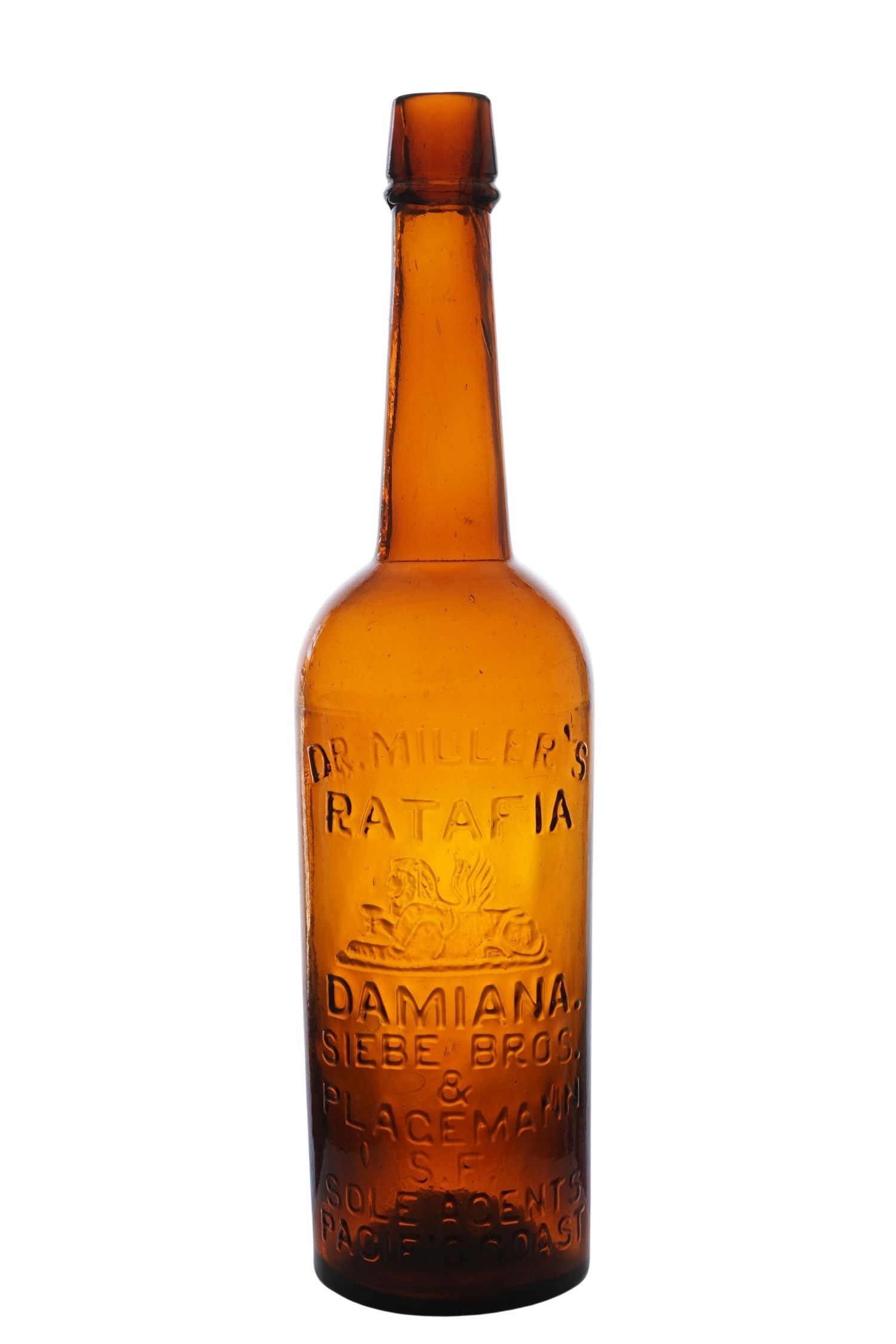
Dr. Miller’s Ratafia Damiana
Circa 1878–1882, applied top, sixth. An incredible Western bottle featuring a large embossed sphinx. These bottles have it all: an embossed animal, extensive embossing, and the coveted "Pacific Coast" embossing prized by collectors. Ratafia was a type of cordial, while damiana was a popular herb native to Mexico and Central America that was often promoted as an aphrodisiac. A few years ago, a broken example was excavated behind a former bordello in California's Central Valley, perhaps a fitting place to find such a product. Approximately a dozen examples are known, with the majority either damaged or suffering from a weak strike. Most examples occur in dark amber or orange amber, although at least one olive–toned example is known. Undoubtedly one of the most decorative and visually striking Western bottles, the Dr. Miller's Ratafia remains a favorite among collectors.
Description & Condition: Medium amber with a strong strike and in much better condition than most examples. The A in Damina has a small white circular mark measuring approximately 1/4". There is no glass loss, and it appears to be a circular bruise, although we are not certain. Please refer to the photographs in the online catalog.
Min. Bid $2,000 - Est. $4,000–$8,000
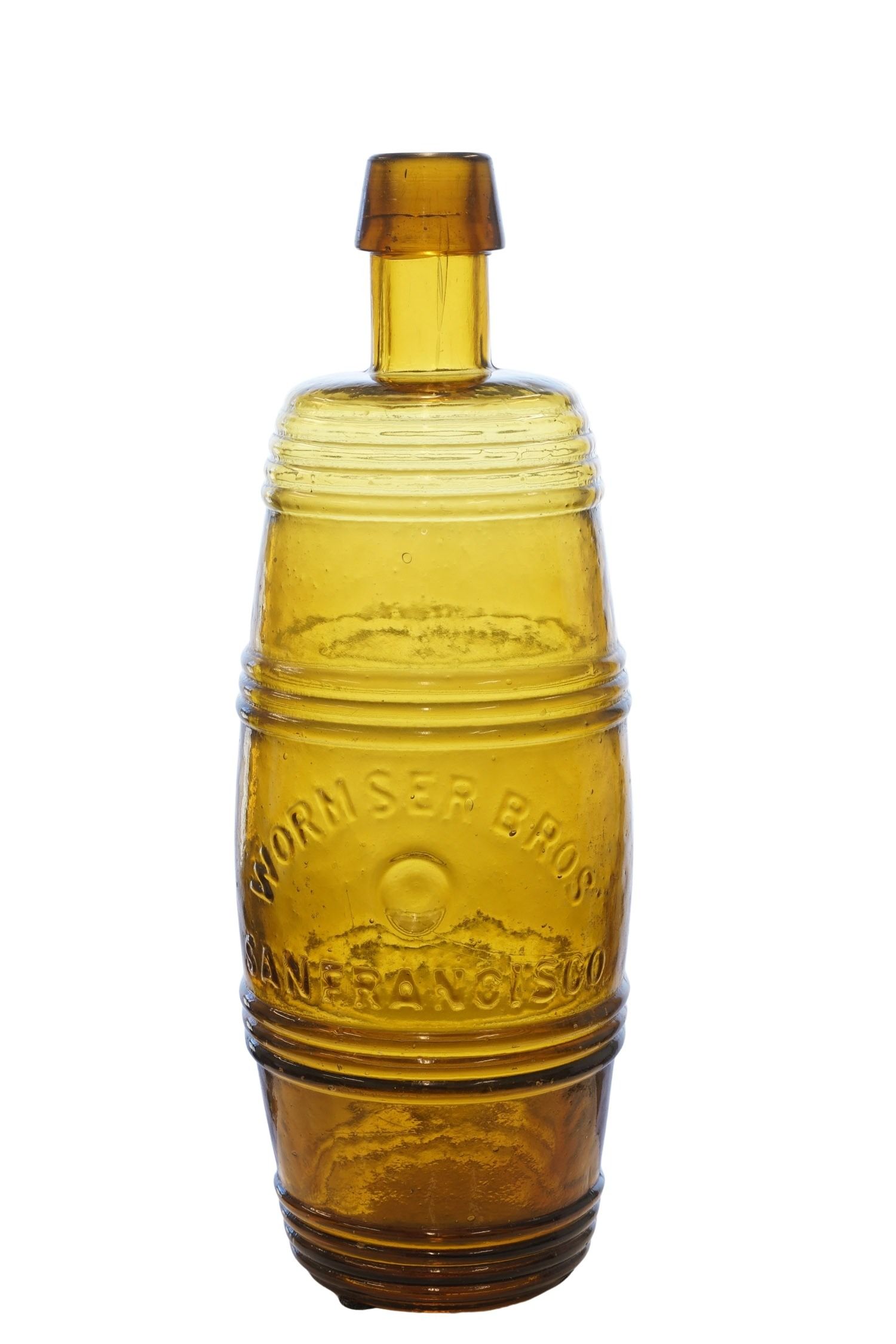
Wormser Bros San Francisco
Circa late 1860s, applied top, 9 5/8". The Wormser Brothers of San Francisco produced the only known barrel shaped bitters from the West, likely drawing inspiration from the numerous barrel bitters produced on the East Coast during the same period. Due to their scarcity today, it appears the product may not have achieved the commercial success of some of its competitors. Examples are typically found in shades of amber, though a few are known in yellow and even green. A staple of advanced Western bitters collections, the Wormser remains one of the more distinctive bitters bottles produced in California.
Description & Condition: Light honey amber color with some whittle. Interior open bubble in the neck, a 1/8" surface check on the ring near the base, and a few very small surface pings measuring 1/32" or smaller. Better color than most examples.
Min. Bid $350 - Est. $700–$1,400
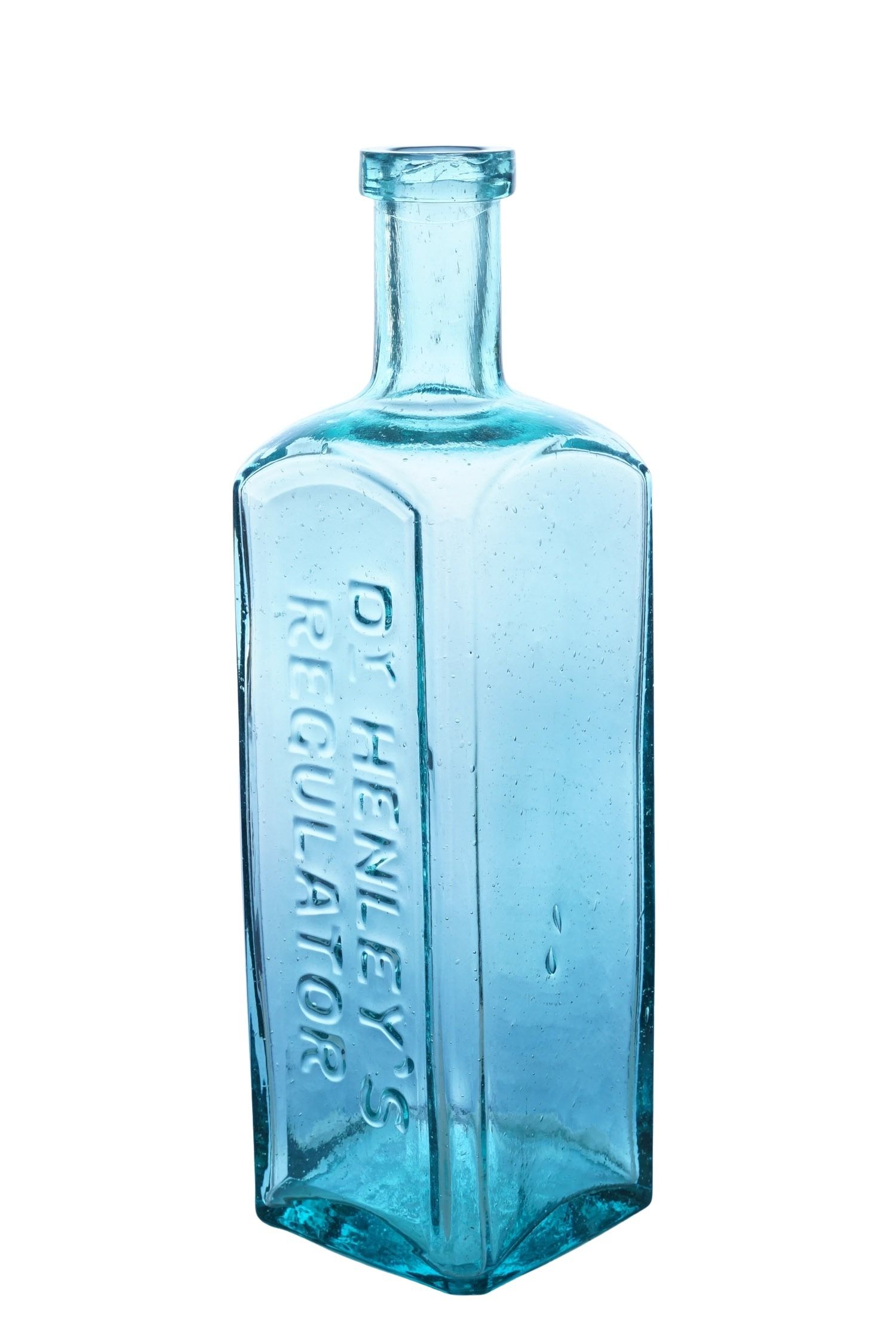
Dr. Henley's Regulator
Circa 1872–1875, applied top, 8 3/8". A rare Henley's product that was advertised from 1872 well into the 1880s, although the bottle itself likely dates to the early to mid 1870s based on the age of the layers in which examples have been dug. Dr. Henley's Regulator was one of the many proprietary medicines marketed by the prolific Dr. Henley during the height of the patent medicine era. Advertisements boldly proclaimed it to be "The Great Family Medicine" and even offered a $100 reward for any incurable case of sickness where the bones had not been destroyed by disease. Today, the bottle remains one of the more desirable Henley products and an excellent example of the extravagant claims commonly made by nineteenth century medicine manufacturers. It is believed that only about eight examples of the Regulator are currently known.
Description & Condition: Attractive bubbly glass. Approximately 1/2" bruise to the top of the lip.
Min. Bid $750 - Est. $1,500–$3,000
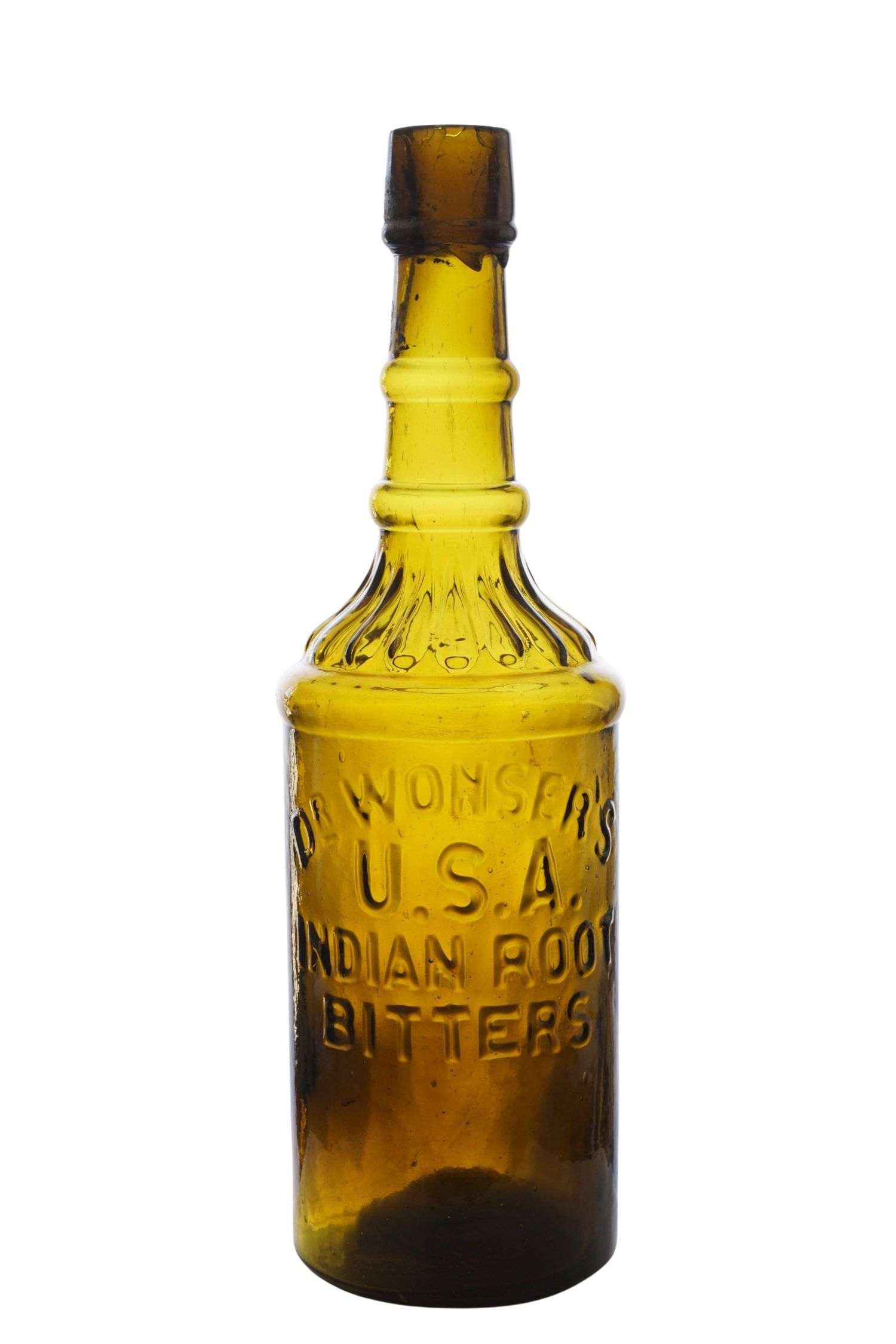
Dr. Wonser's U.S.A Indian Root Bitters
Circa 1870–1875, applied top, fifth. The Dr. Wonser's U.S.A. Indian Root Bitters ranks among the most desirable of all Western bitters. The brand originated with I. H. Wonser of Milwaukee, Wisconsin, who was manufacturing Indian Root Bitters by at least 1863. At some point he met William Hawkins of San Francisco and the two partnered to produce and distribute this product. As is often the case with California's great bottles, many of the known examples have been recovered from Nevada, where the product appears to have enjoyed considerable popularity. The bottle remains a favorite among collectors, its bold embossing, prominent U.S.A. lettering, and distinctive design combining to create one of the most recognizable bitters bottles of the nineteenth century. Examples are known in a remarkable range of colors, from chocolate amber and yellow amber to green and even aqua.
Description & Condition: Yellow olive color with abundant whittle. Remnants of the original neck foil remain. Small 1/8" chip off the edge of the base, a 1/16" peck off the base edge, and a 1/16" peck on the shoulder above the embossing. All minor issues.
Min. Bid $4,000 - Est. $8,000–$12,000
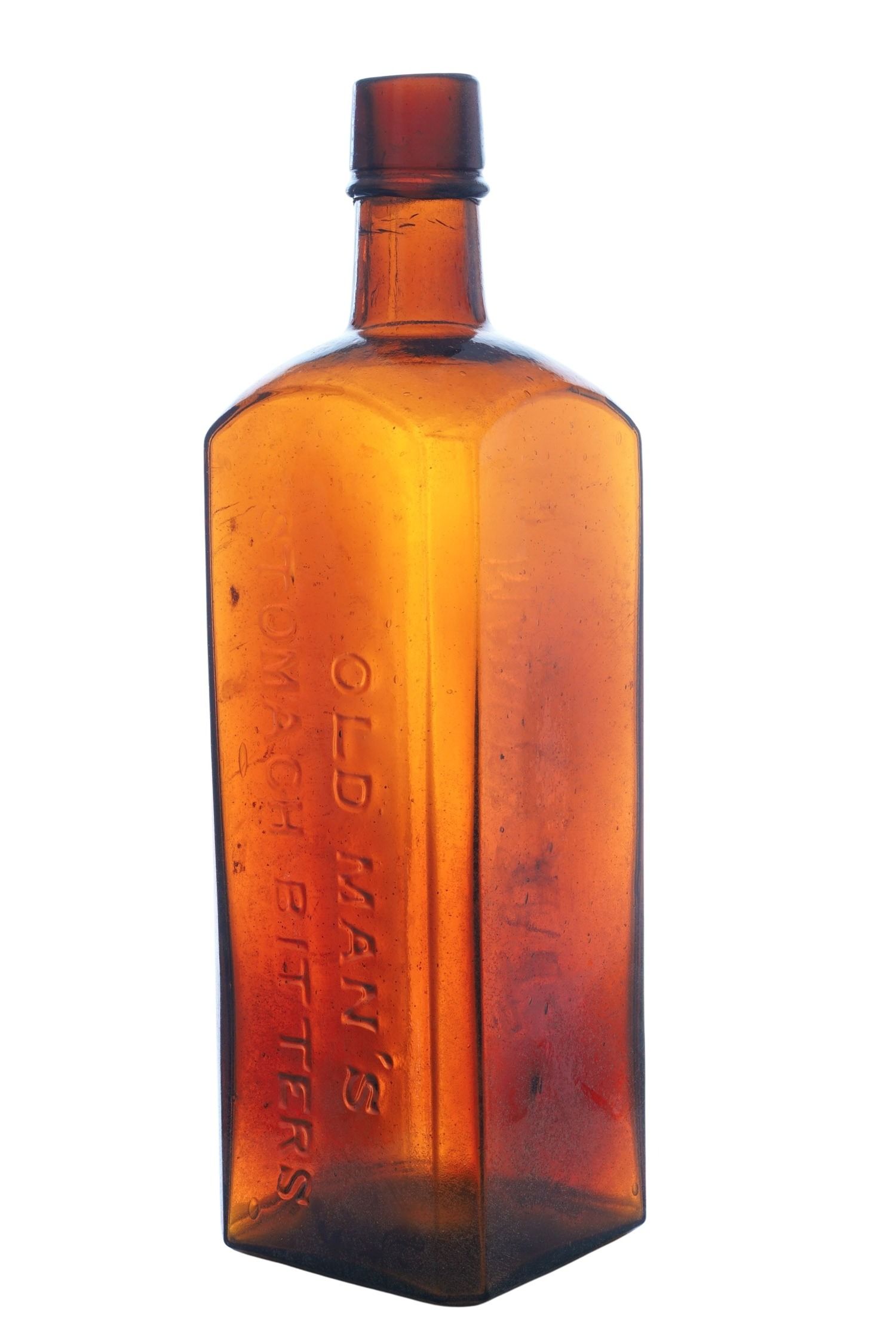
Old Man's Stomach Bitters
Circa 1876, applied top. An extremely rare Western bitters from San Francisco with only about four known examples. This particular bottle is the most recently discovered example, having been dug in Contra Costa County in 2019. Interestingly, known examples occur in several distinct shades of amber, suggesting that multiple batches were produced over a period of time rather than as a single limited run. If so, one is left to wonder where they were sold and what became of the others, as only a handful survive today. Perhaps the product's unusual name worked against it; after all, few customers may have wanted to be seen purchasing a product that implied they suffered from an "old man's" ailment.
Description & Condition: Amber. Exterior UV crazing. Several horizontal annealing checks in the neck. Please refer to the online catalog photos.
Min. Bid $500 - Est. $1,000–$3,000
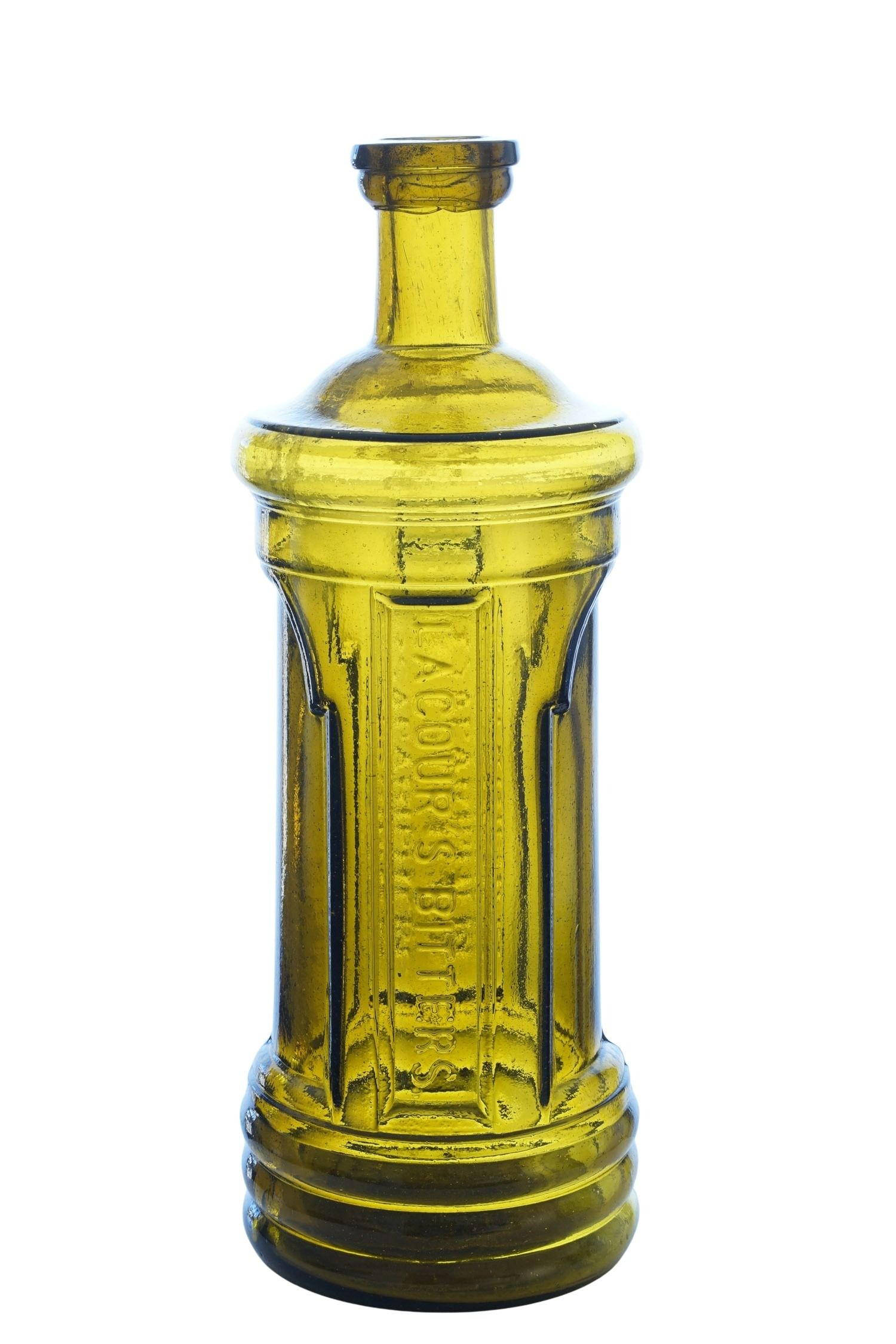
Lacour’s Sarsapariphere Bitters
Circa 1867–1869, smooth base, 9 1/4". Variant 1. A legendary Western bitters and one of the few figural bitters produced on the West Coast. In addition to its iconic lighthouse form, the Lacour's is especially prized for the remarkable range of colors in which it is found, with some advanced collectors being able to assemble color runs of the various shades. Variants 1 and 2 are generally considered the most desirable, as they occur in the widest range of colors and are typically found in the crudest glass. The easiest way to distinguish the three mold variants is by the raised center dot on the base: Variant 1 has a small dot, Variant 2 a larger dot, and Variant 3 no dot.
Description & Condition: Yellow olive color with a strong strike. Small surface potstone on the base with an associated 1/8" chip. Better condition than most examples, with no checks, cracks, or bruises. Some interior content stain, mostly in the shoulder.
Min. Bid $5,000 - Est. $10,000–$15,000
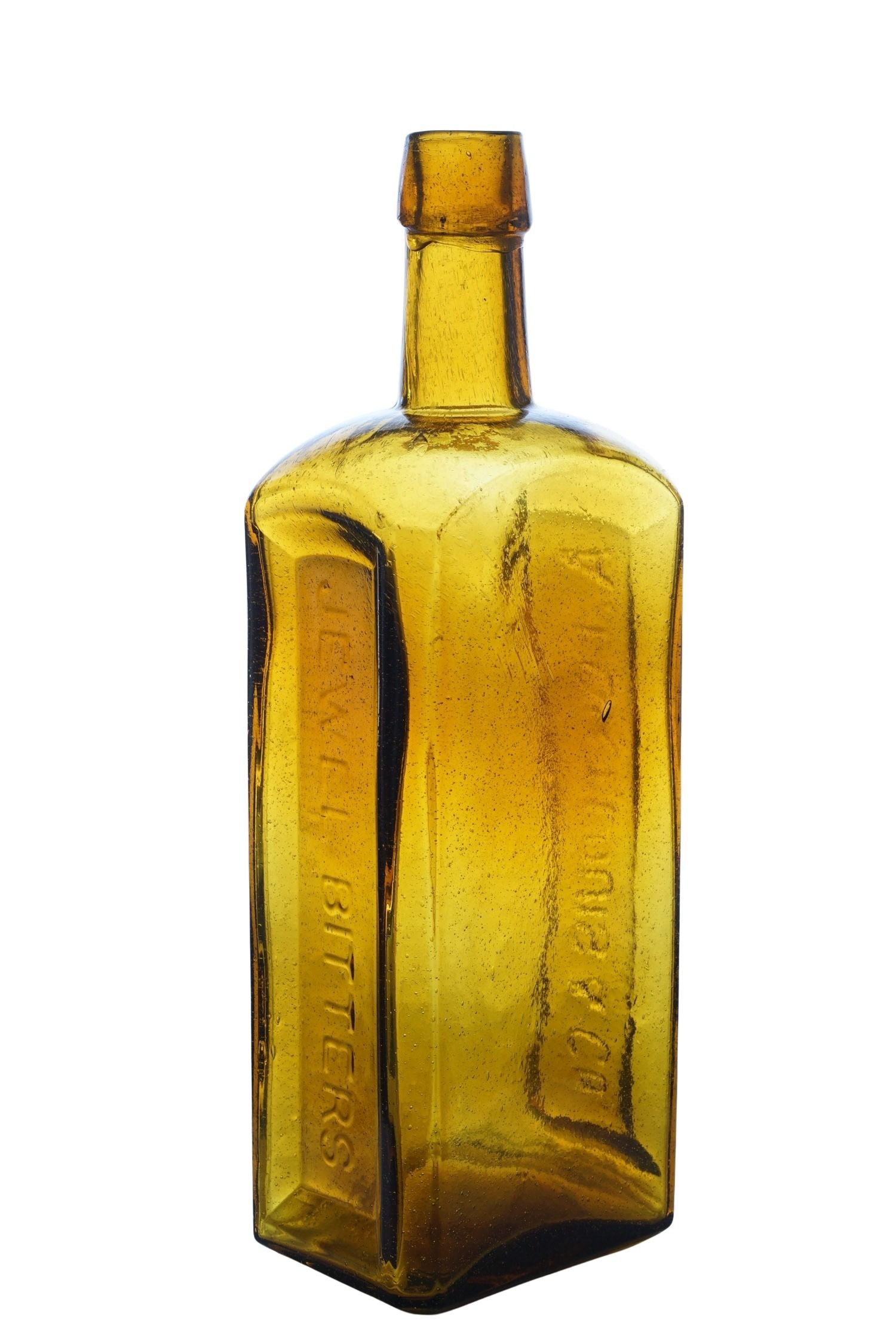
Jewel Bitters A. Fortlouis & Co.
Circa 1885–1889, applied top, 9 3/4". These rare bitters are known in two variants, one embossed John S. Bowman & Co. and the other A. Fortlouis & Co. The Fortlouis variant is by far the scarcer of the two, with only a handful of examples known. Both the bottle and the brand remain somewhat mysterious, as no advertising for the product has yet been discovered. The Bowman variant is believed to originate from San Francisco, where Bowman was based, while the Fortlouis examples may have originated in Tombstone, Arizona, San Diego, California, or Washington State, where Fortlouis was active during the mid to late 1880s. Until additional information comes to light, a degree of mystery will continue to surround these intriguing Western bitters. This example was dug at a logging camp in Washington state.
Description & Condition: Light honey amber color, nearly yellow in natural light. Crude glass filled with champagne bubbles. Believed to be the finest known example of this rare bitters.
Min. Bid $1,250 - Est. $2,500–$5,000
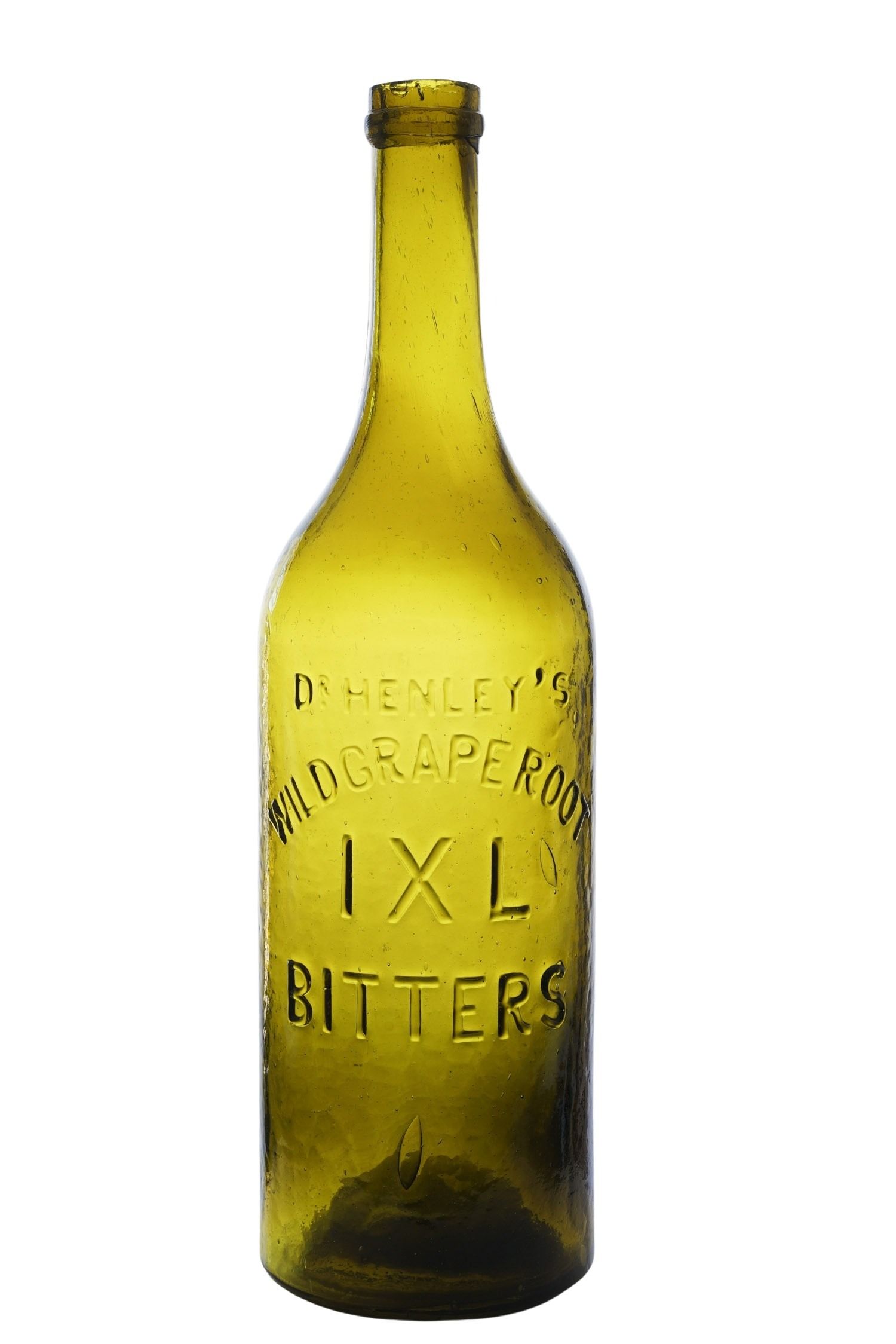
Dr. Henley’s IXL Wild Grape Root Bitters
Circa 1868–1873, applied top, 12". First variant. Without a doubt, this is the most famous of all the Dr. Henley's products. This is the earliest variant of the I.X.L. Bitters, lacking the circle around "I.X.L.," and is highly sought after by collectors for the wild colors and glass crudities in which it is often found. Introduced during the late 1860s, the I.X.L. Bitters would become Henley's flagship product and one of the best known California bitters of the nineteenth century. Today it remains a cornerstone bottle in advanced Western bitters collections and is eagerly sought whenever a quality colored example comes to market.
Description & Condition: Medium yellow olive. Heavy whittle. Minor 3/16" chip on the upper edge of the lip. An outstanding example in a very rare color.
Min. Bid $4,000 - Est. $8,000–$12,000
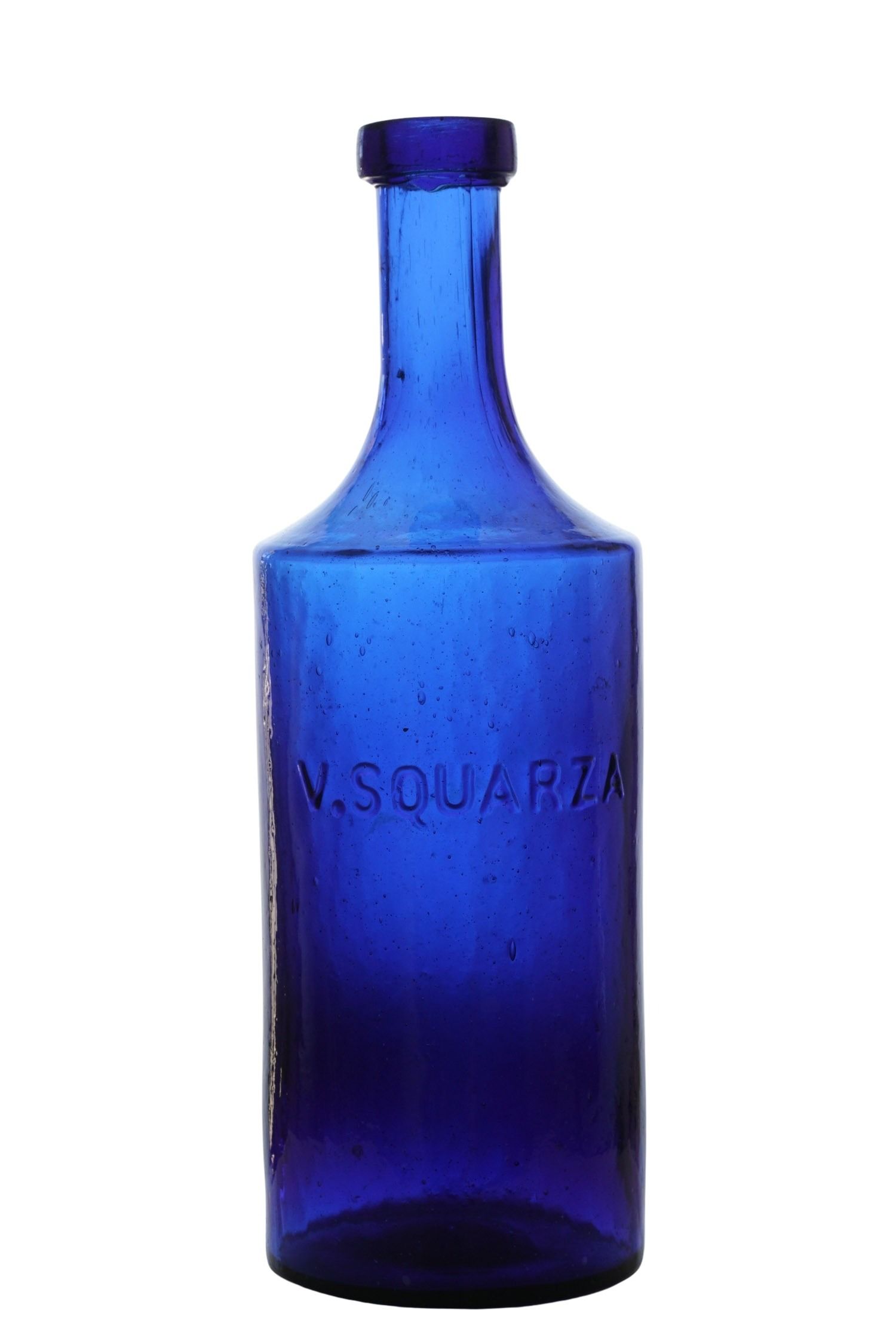
V. Squarza
Circa 1863–1866, applied top, 8 5/8". Vincenzo Squarza, an Italian immigrant, came to San Francisco in 1860 and established himself as a manufacturer and dealer of punches, cordials, and miscellaneous spirits. Squarza was best known for his popular "Squarza's Punch," though advertisements show he also marketed a Cholera Bitters in 1866. It is possible this bottle served as a generic container for any of his various products. Likely produced by Pacific Glass Works, it ranks among one of the earliest bottles blown in San Francisco, with only about five examples known today. Its unusual form sets it apart from virtually every other Western bottle of the period, and it is rare enough that most collectors have never had the opportunity to see one in person. It is also part of a very small group of known cobalt Western bottles from the 1860s that were used for products other than soda.
Description & Condition: Deep cobalt color with light whittle and early glass character. A small flake is present on the “Q,” along with minor abrasion to the side and top of the lip. The neck has a tiny potstone with an associated cluster of shallow, interconnected fissures just below the top, likely originating during manufacture. Overall, an impressive example with strong color and visual appeal.
Min. Bid $3,000 - Est. $6,000–$10,000
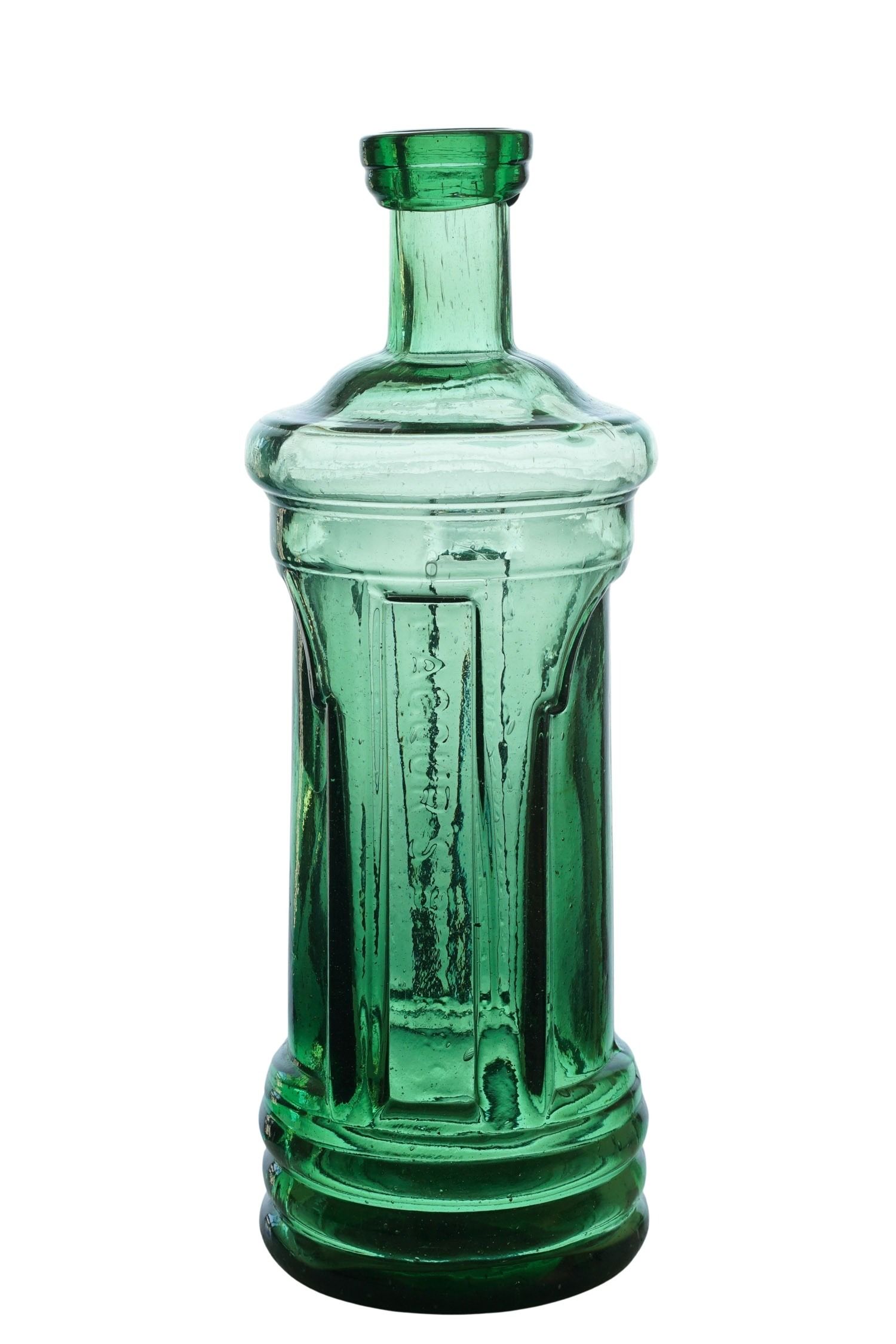
Lacour’s Sarsapariphere Bitters
Circa 1867–1869, smooth base, 9 1/4". Variant 1. An iconic Western bitters and one of the few figural bottles produced on the West Coast. Louis Lacour trademarked these bottles in 1867 in the shape of a lighthouse. The unusual name "Sarsapariphere" appears to have been a proprietary trade name associated with Lacour's sarsaparilla–based blood purifier, although the exact meaning and origin of the term remain unknown. There are three recognized variants of Lacour's bottles, this being the first variant. Long considered one of the most desirable of all Western bitters, the Lacour's is highly sought after by both Eastern and Western collectors alike. Collectors are particularly drawn to the vivid colors, crude glass, and distinctive figural form for which these bottles are known. With its early date and iconic design, it remains a cornerstone bottle in advanced collections.
Description & Condition: Vibrant apple green. Displays a large, shallow, partially open interior bubble, likely as made. A minuscule flake to the neck with an associated bruise measuring approximately 1/16", along with a minor 1/16" flea bite on the body, are the only notable issues. Remarkably, this example is otherwise free of the larger cracks, checks, bruises, and fissures commonly encountered on Lacour’s bottles. An exceptional example in fantastic condition and color.
Min. Bid $6,000 - Est. $12,000–$20,000
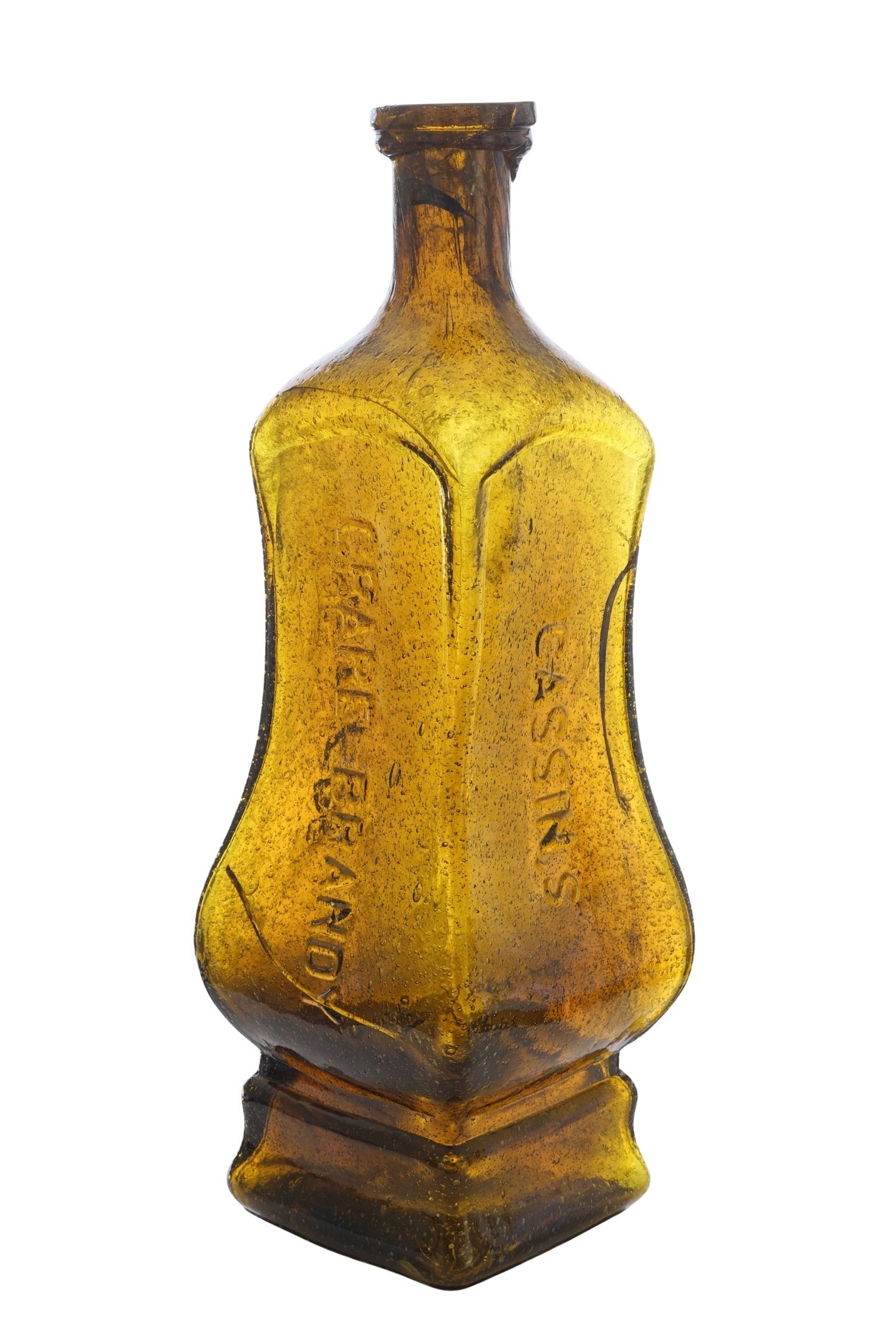
Cassin's Grape Brandy Bitters
Circa 1867–1868. Variant 2. A bottle that hardly needs an introduction. These legendary figural bitters were produced in San Francisco by Francis and Patrick Cassin, early California merchants involved in the liquor and bitters trade. Coveted by collectors for their vivid colors, distinctive viola form, and often crude, character rich glass, Cassin's Bitters ranks among the most iconic bottles of the American West. Like many of San Francisco's rarest bottles, surprisingly few examples have been found in the city itself, with the majority of known examples discovered in California's Gold Country and Nevada. The bottles occur in two mold variants, with this example being a Variant 2. It is believed the deeper body panels found on Variant 1 made the bottle more prone to damage, resulting in the mold being redesigned into what collectors now recognize as Variant 2. This particular example is noteworthy as the most recently discovered Cassin's known to us, having been found beneath a tree in California's Gold Country just a few years ago. The second Jeff saw this bottle, he knew he had to own it.
Description & Condition: A beautiful example in a rich golden amber, loaded with thousands of trapped air bubbles. Several annealing checks are present, along with numerous manufacturing related stress cracks throughout the bottle. Although extensive, these are believed to have occurred during the manufacturing process rather than from post production damage. Regardless, it remains a truly stunning and incredible piece of early California glass.
Min. Bid $5,000 - Est. $10,000–$15,000