Best Of The West Live Auction
November 13, 2026 5:30 PM PT
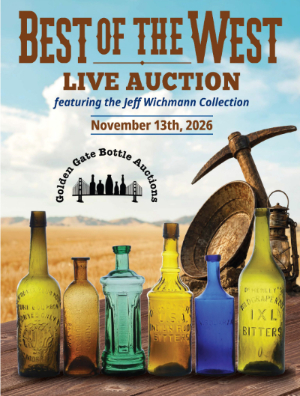
Golden Gate Bottle Auctions is proud to present the Best of the West Live Auction, featuring 72 exceptional lots from the Jeff Wichmann Collection. This special auction showcases an outstanding selection of rare Western bottles, along with four exceptional insulators. Jeff's longstanding passion for Western bottles and his contributions to the collecting community are reflected in this remarkable collection.
The auction will take place Friday, November 13, 2026, at the Gold Country Fairgrounds in Auburn, California, in conjunction with the 49er Bottle Show. Live bidding begins at 5:30 PM Pacific.
Absentee bids will be updated periodically in the online catalog. Please note that online bidding will not be available before or during the live auction on November 13.
→ Register For The Live Auction
The auction will take place Friday, November 13, 2026, at the Gold Country Fairgrounds in Auburn, California, in conjunction with the 49er Bottle Show. Live bidding begins at 5:30 PM Pacific.
Absentee bids will be updated periodically in the online catalog. Please note that online bidding will not be available before or during the live auction on November 13.
→ Register For The Live Auction
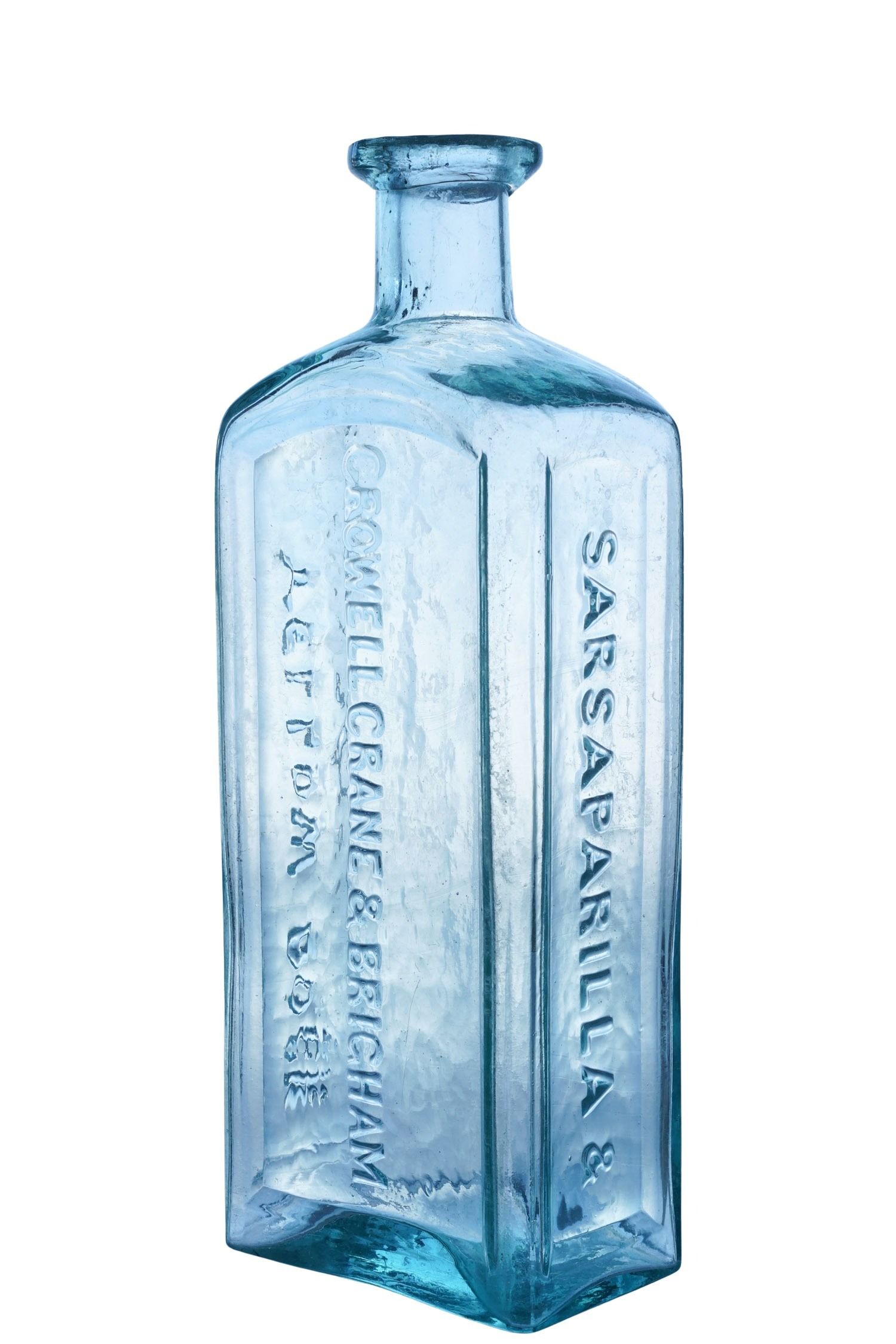
Crowell, Crane, & Brigham Yellow Dock Sarsaparilla
Circa 1856–1858, smooth base, 9 1/8". A rare Western medicine and one of the earliest embossed San Francisco medicine bottles, with at least one pontiled example known. Crowell, Crane, & Brigham operated from 1856 to 1858. After Brigham departed, the firm continued briefly as Crowell & Crane, appearing in the 1859 and 1860 San Francisco directories, before becoming Crane & Brigham by 1861. Crane & Brigham went on to become a large and successful West Coast drug firm associated with several Western bottles from the 1870s and 1880s.
Description & Condition: Good amount of whittle. Appears to have been professionally cleaned. Trace amount of dirt or other material remains adhered to the interior side of the neck.
Min. Bid $400 - Est. $800–$1,500
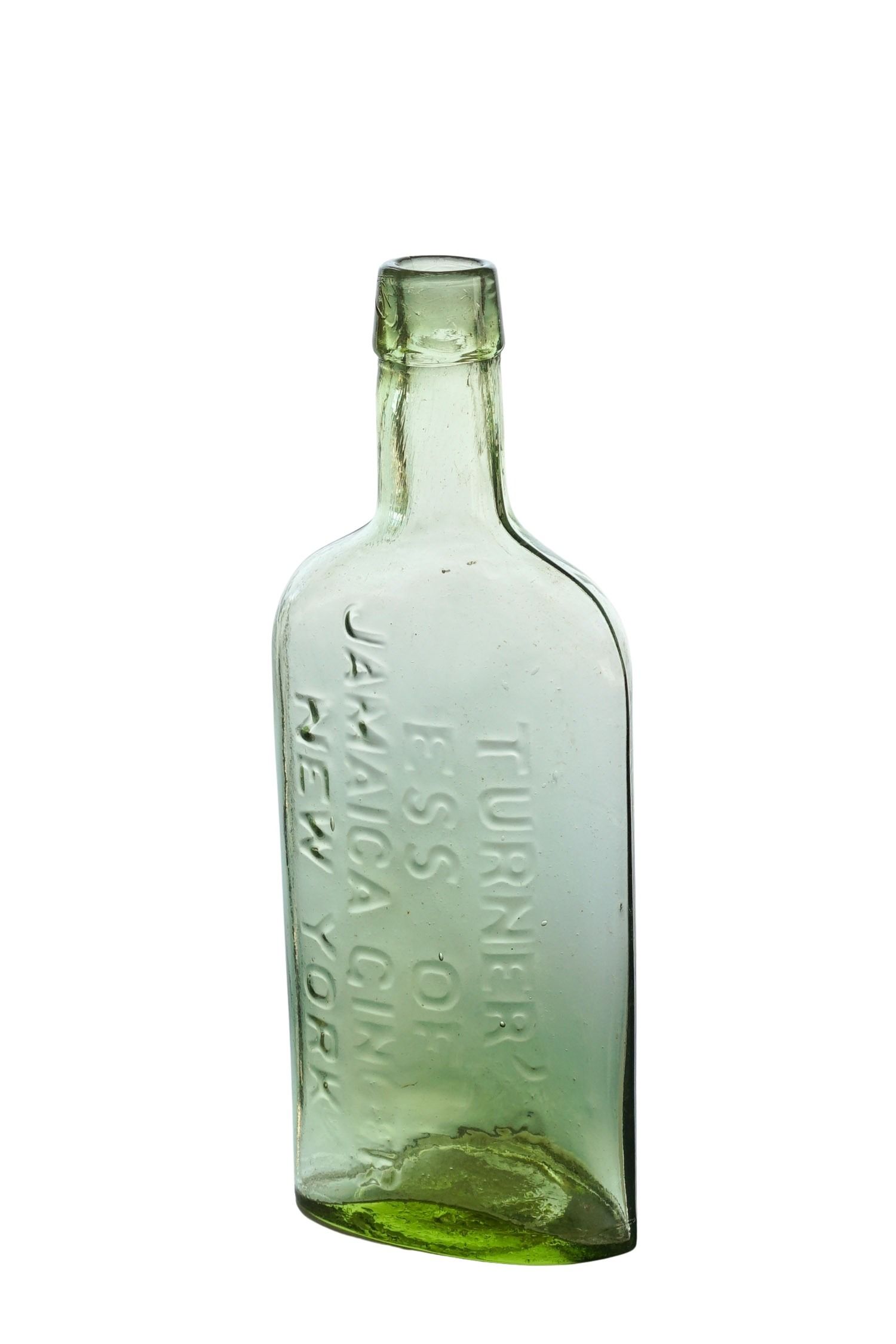
Turner's Ess of Jamaica Ginger New York
Circa 1860s–1870s, applied top, 5 3/4". The Turner Brothers operated a San Francisco branch from the 1850s until 1865, when McMillan & Kester acquired the business and continued marketing some of their products. One famous San Francisco privy excavation produced more than one hundred Turner's jakes, yet not a single green example was found. These bottles are often encountered in stained or pale aqua glass with an Eastern appearance, while the green and fire aqua examples are believed to have been blown in San Francisco. Turner's jakes are not rare, but nice examples are. Green examples are tough to find and are seldom offered for sale.
Description & Condition: Lime green color. Clean Western glass. A patch of shallow hairline fissures along the reverse base edge, likely caused by pressure on the bottle during manufacture. Please refer to the online catalog photos.
Min. Bid $75 - Est. $150–$300
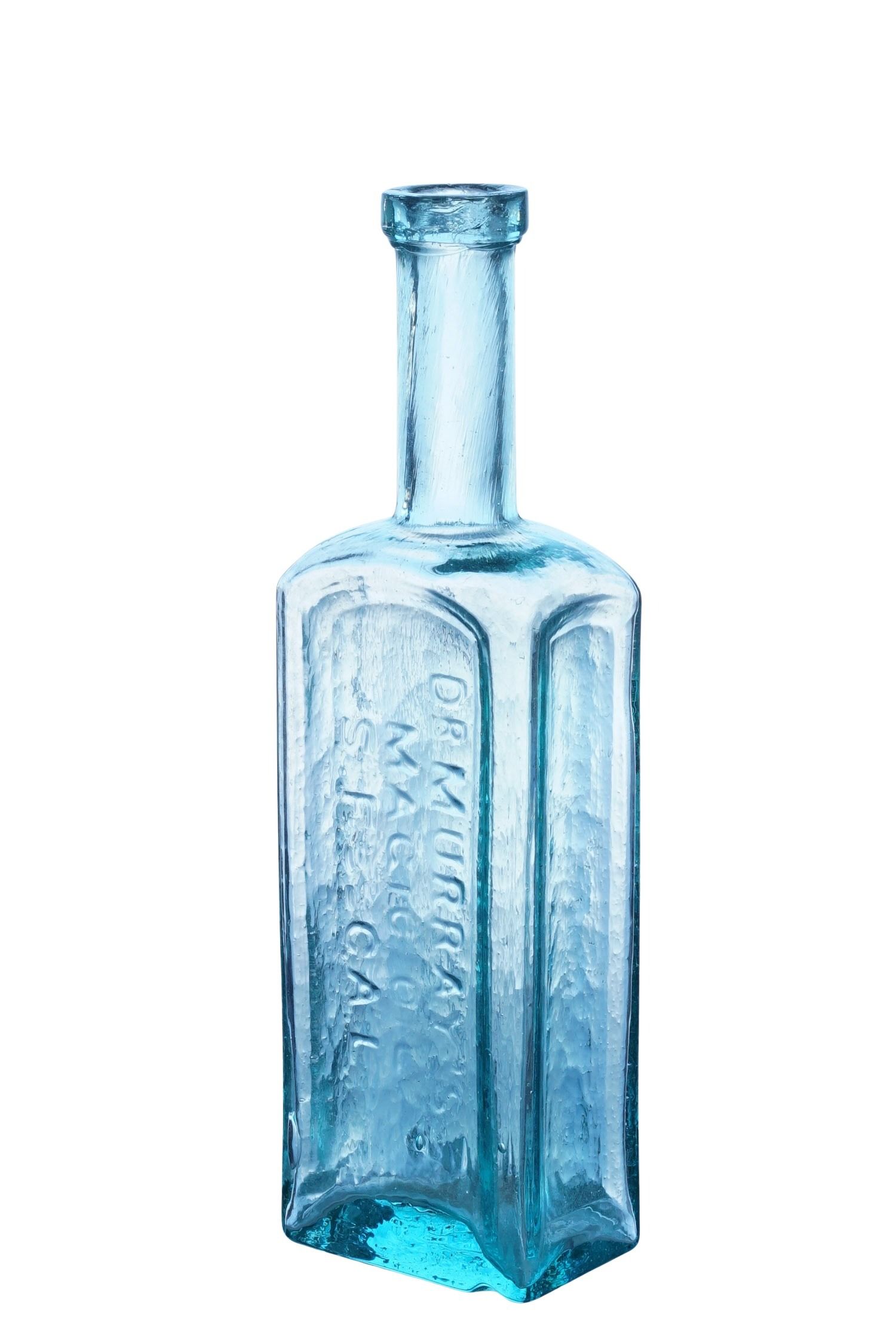
Dr. Murray's Magic Oil S.F. Cal
Circa 1868–1880s, applied top, 6 3/8". A popular Western medicine with a great name. Murray's Magic Oil must have lived up to its name, as numerous examples have been recovered throughout the West. The colorful product name and classic Western form have made it a longtime favorite among collectors. Advertised as the "King of Pain!", it was promoted as a cure for an astonishing range of ailments, including rheumatism, neuralgia, toothache, burns, scalds, earache, cramps, colic, sore throat, and even diphtheria. The broad claims made in period advertisements reflect the era's enthusiasm for patent medicines.
Description & Condition: Applied top with heavy whittle. Small divot on the base edge that appears to be manufacturing crudity. A stellar example that may likely be the crudest example known.
Min. Bid $150 - Est. $300–$600
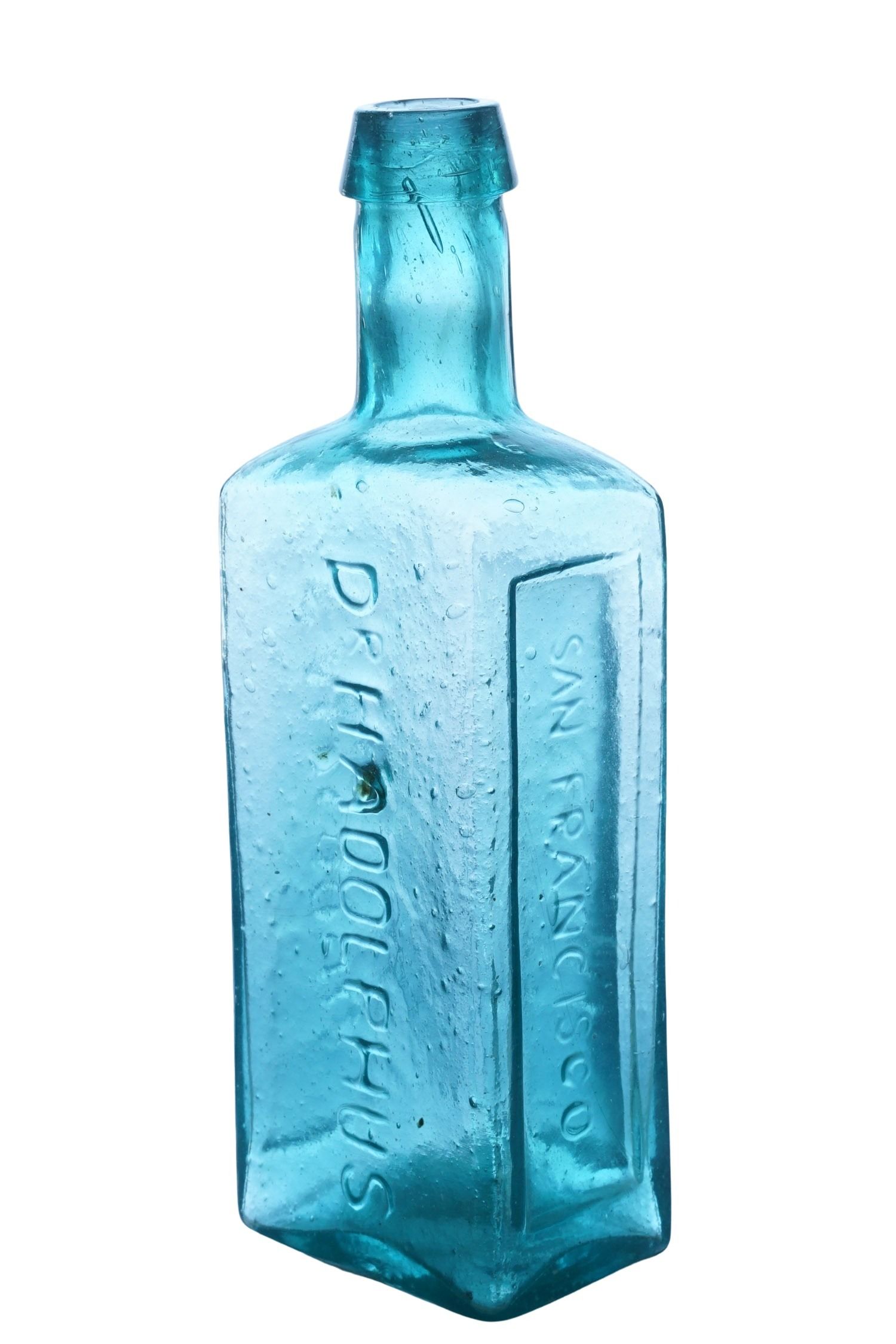
Dr. H Adolphus Anti Rheumatic Cordial San Francisco California
Circa 1860, open pontil, 7 1/4". An early and important Western bottle being one of the first bottles blown on the West Coast by the San Francisco Glass Works in 1860. Although this product was being advertised at late as 1863, it is likely only one batch of these were made in 1860. These are extremely rare with around 8 known examples, most being a blue aqua, and many being damaged. Due to their early age, they're often very primitive looking with great crudity and character. As one of the very few Western blown pontiled bottles, this is an exceptionally important example of early California glassmaking. Examples are rarely offered for public sale.
Description & Condition: Crude, bubbly glass. Blue aqua with a stronger strike than many examples. Three approximately 1/2" chips around the circular indentation on the base, likely incurred during manufacture when the glass adhered to the mold.
Min. Bid $2,500 - Est. $5,000–$10,000
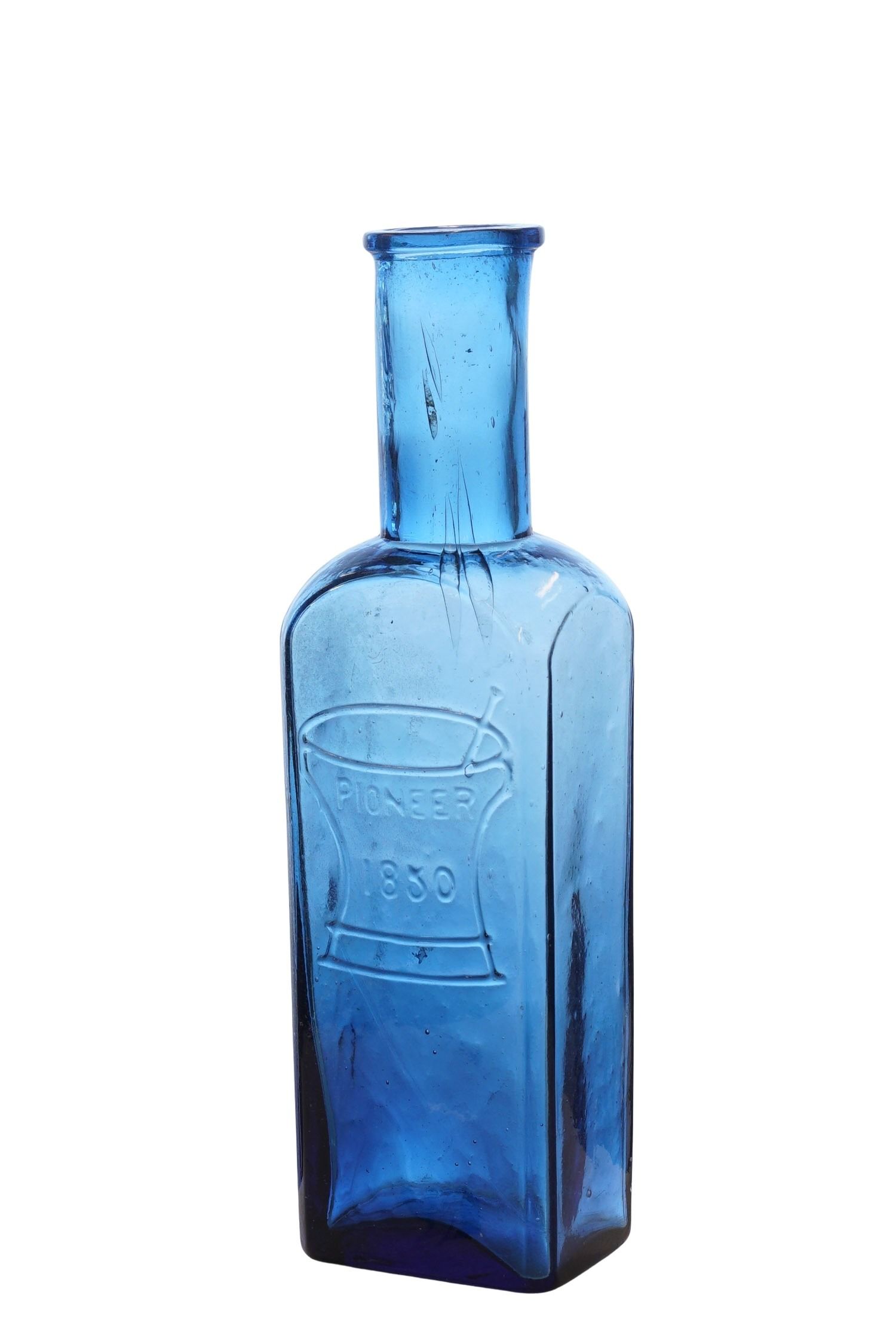
Dickey’s Pioneer 1850
Circa 1866-1868, tooled top, 6 1/4". Considered the holy grail of Dickey’s bottles, this is believed to be the earliest mold, briefly used in the late 1860s before being revised into the more commonly encountered variant. Known among collectors as the “Stovepipe” variant for its distinctive elongated neck. These are also known in a clear coloration, but no mint examples exist. This example was dug about 5 years ago in the Woodland area.
Description & Condition: Light crudity with a few large bubbles in the neck. Minor shovel scuff on the reverse and a scratch along the panel edge near the base with an associated 1/16" bruise. Scattered areas of exterior UV crazing that are barely noticeable with backlighting.
Min. Bid $500 - Est. $1,000–$2,000
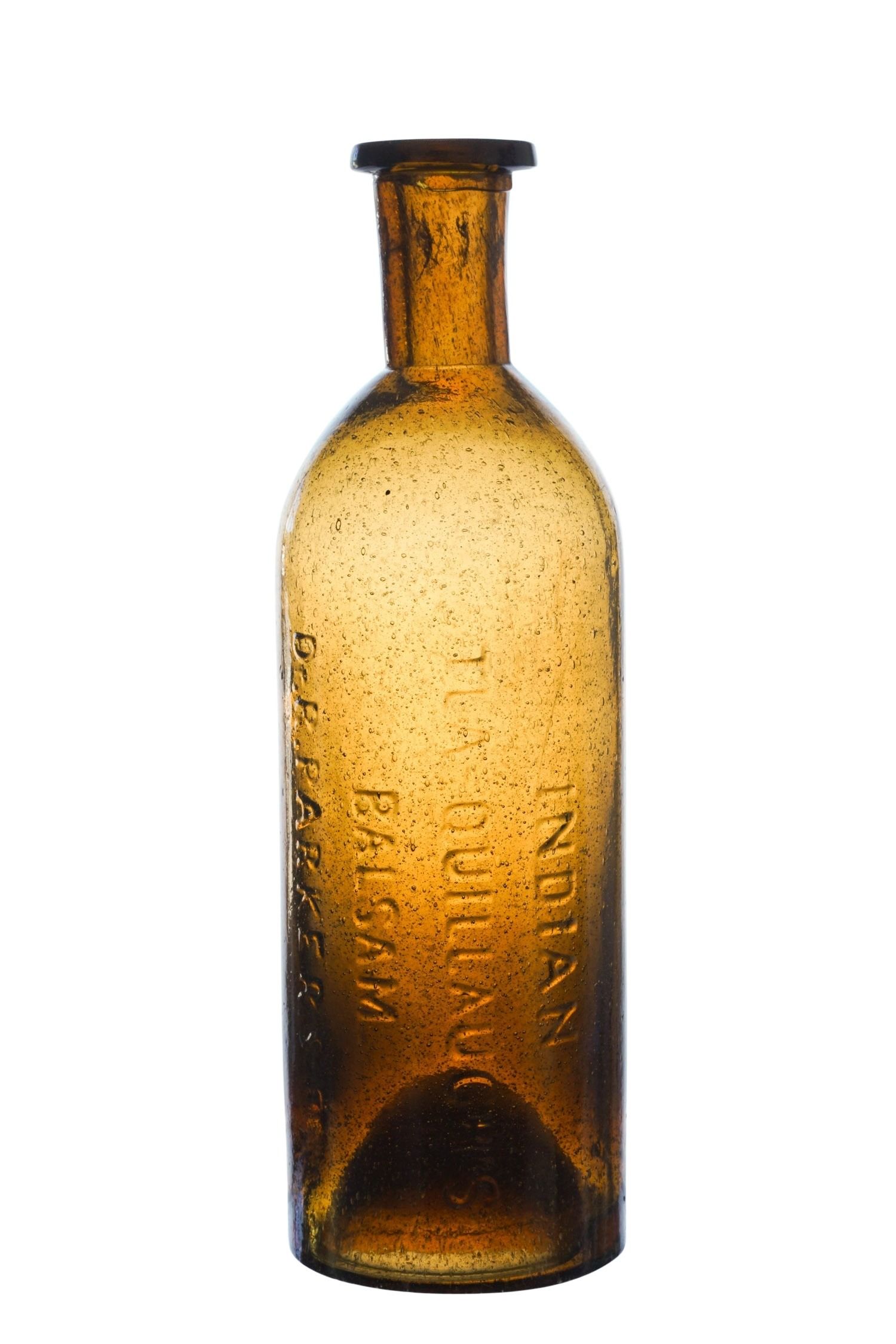
Indian Tla–Quillaugh's Balsam Dr. Parker S.F.
Circa 1864–1865, applied top, 8 1/2". Dr. Ralzemond Parker established his San Francisco business in 1860 and advertised his balsam in 1864 and 1865 before relocating to Oroville by 1866. The product's unusual name likely derives from the Upper Columbia term "Tla-quill-augh," meaning a medicine man or healer. Nineteenth century accounts describe Tla-quill-aughs as individuals possessing supernatural powers and extensive knowledge of medicinal herbs. There are approximately eight known examples, with nearly all exhibiting some form of damage. These bottles are primarily found in two colors: deep olive green and the beautiful peach puce shade seen here. They are believed to have been blown at the Pacific Glass Works and share colors found in the Salutaris Bitters, Wideman & Chappaz, and some of the early Pacific Glass Works whiskey cylinders. Possessing the color, crudity, and rarity sought by advanced collectors, this bottle ranks among the most desirable of all early California medicines and remains near the top of many Western collectors' want lists.
Description & Condition: Beautiful peachy apricot color with crude early glass loaded with champagne bubbles. The top was professionally replaced above the drip by Maxine Hines in the 1980s and is very difficult to detect with the naked eye. Well–hidden 1/2" bruise on the base, a shallow sliver of a chip on the base edge, and a few minor 1/8" surface impacts scattered throughout the body. Several annealing checks in the neck. All condition issues are subtle, and the bottle displays beautifully. No additional examples have surfaced in more than 30 years, and it is highly unlikely that others will ever be found. For the serious collector, opportunities to acquire a Parker’s may not happen for many years to come.
Min. Bid $3,000 - Est. $6,000–$12,000
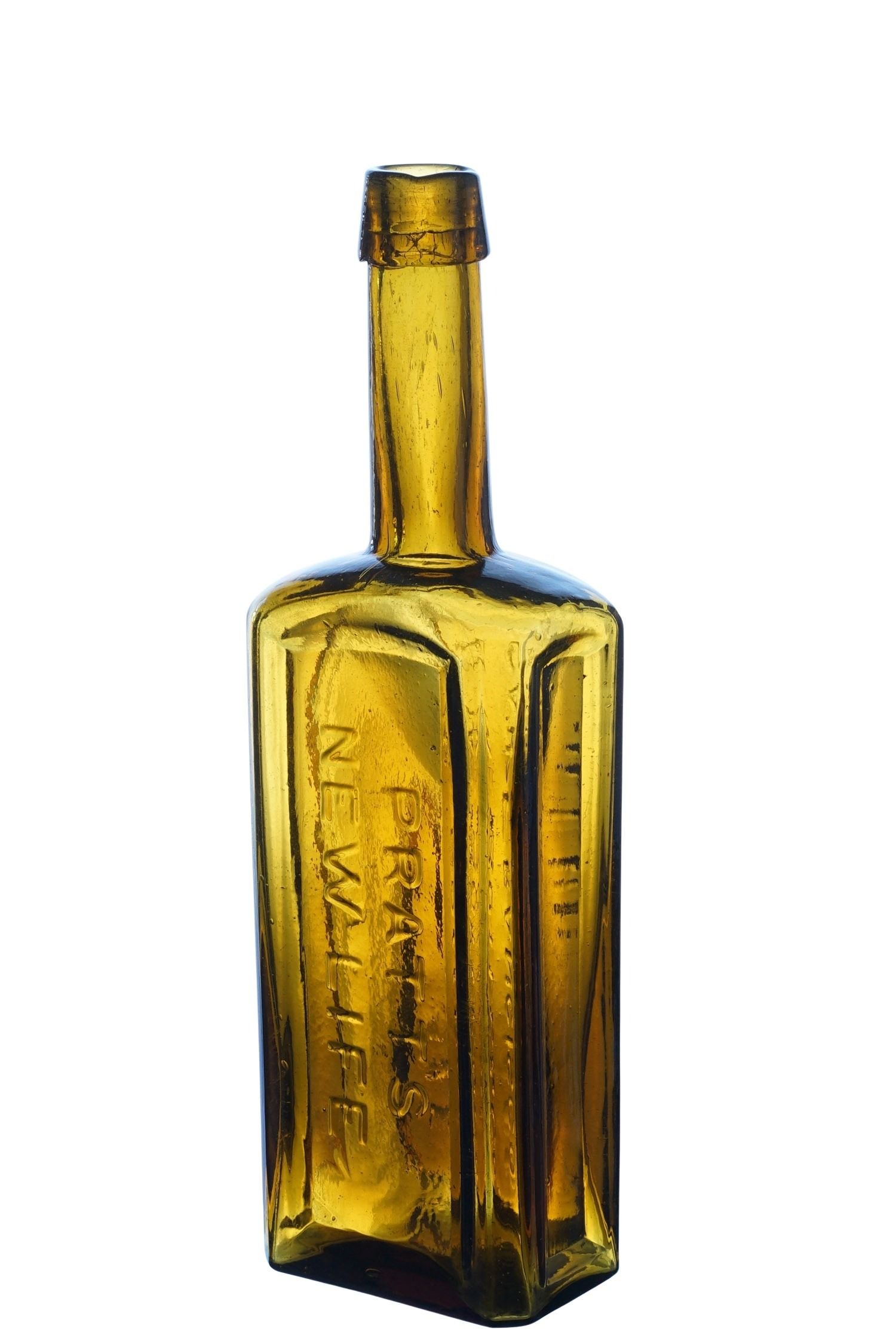
Pratt's New Life A.M. McBoyle & Co San Francisco
Circa 1868–1875, applied top, 7 1/2". A rare Western medicine that was virtually unknown before the famous San Francisco "Big Dig" of 1999. We can account for only two examples found outside of the "Big Dig", one in Carson City and one in Oakland, California. This medicine was promoted as a botanical blood purifier and liver invigorator, claiming to strengthen the stomach, regulate the bowels, and cure a wide range of ailments. Contemporary advertisements stated it was prepared from fresh Shaker roots and herbs, reflecting the era's growing popularity of botanical patent medicines.
Description & Condition: Honey amber color, slightly lighter than many known examples. Crude, slightly crooked neck. Two small 1/8" chips to the underside of the top, a few areas of light scratching along the panel edges, and two 1/8" areas of light abrasion on the panel edges. Still in better condition than most examples, many of which have significant damage or repairs.
Min. Bid $200 - Est. $400–$800
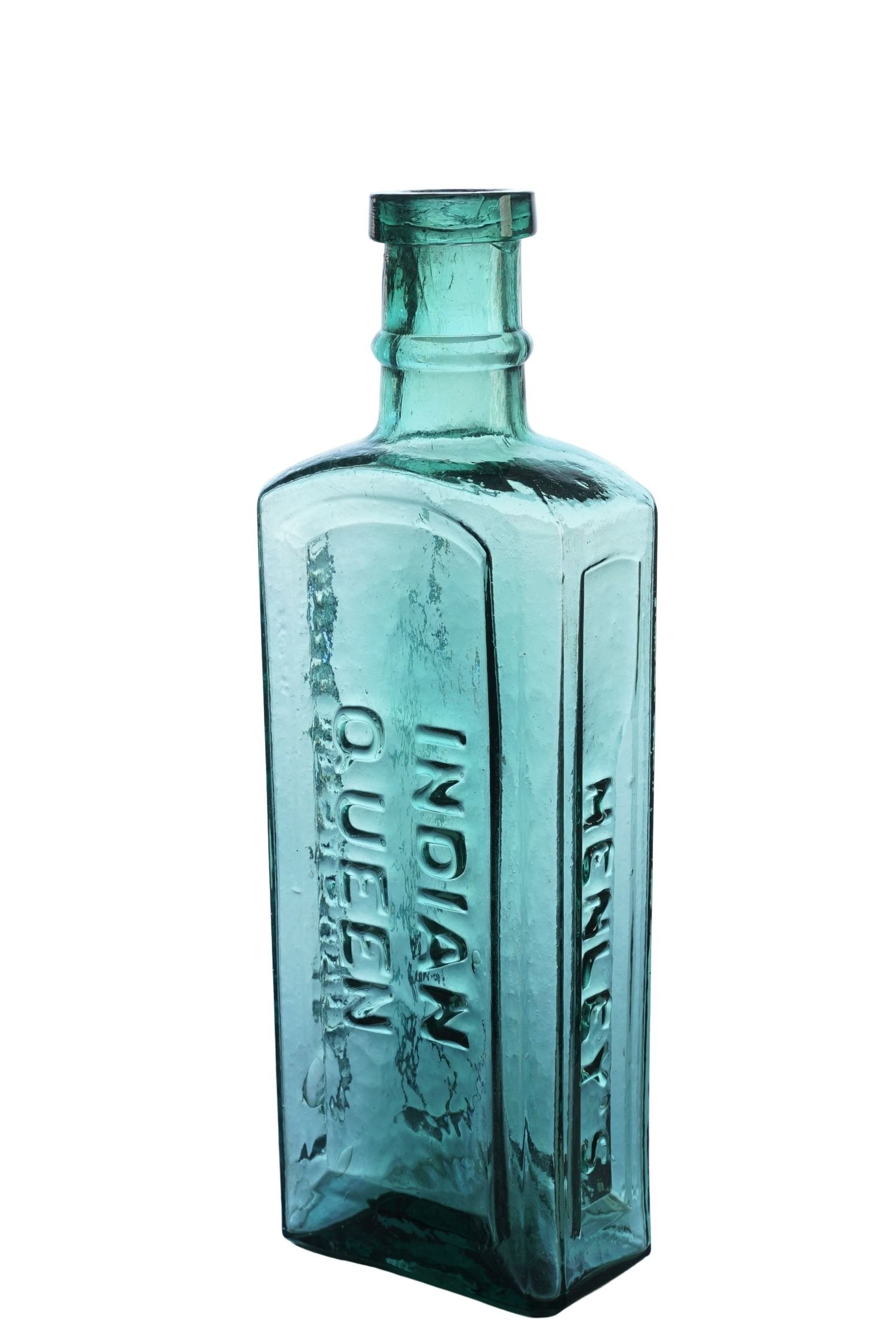
Henley’s Indian Queen Hair Restorative
Circa 1871–1873, applied top, 7 5/8". This product was trademarked in 1871 and advertised extensively from 1872–1873. One of the rarer Henley's products, these medicine bottles feature bold embossing and an attractive overall design. An 1872 advertisement claimed Henley's Indian Queen Hair Restorative could cure baldness and restore gray hair. Its trademark depicted an "Indian Queen" holding a bow and arrow, while the product was promoted as "a beautiful clear tincture." Known in both blue and green shades, with only about five or six presently known, it ranks among the rarest Western hair bottles. This example was dug in downtown San Francisco in the 1980s.
Description & Condition: Attractive light blue-green color with abundant whittle. Shallow 1/8" flake to the edge of the lip and a 1/8" area of light roughness on the front near the base.
Min. Bid $1,000 - Est. $2,000–$4,000