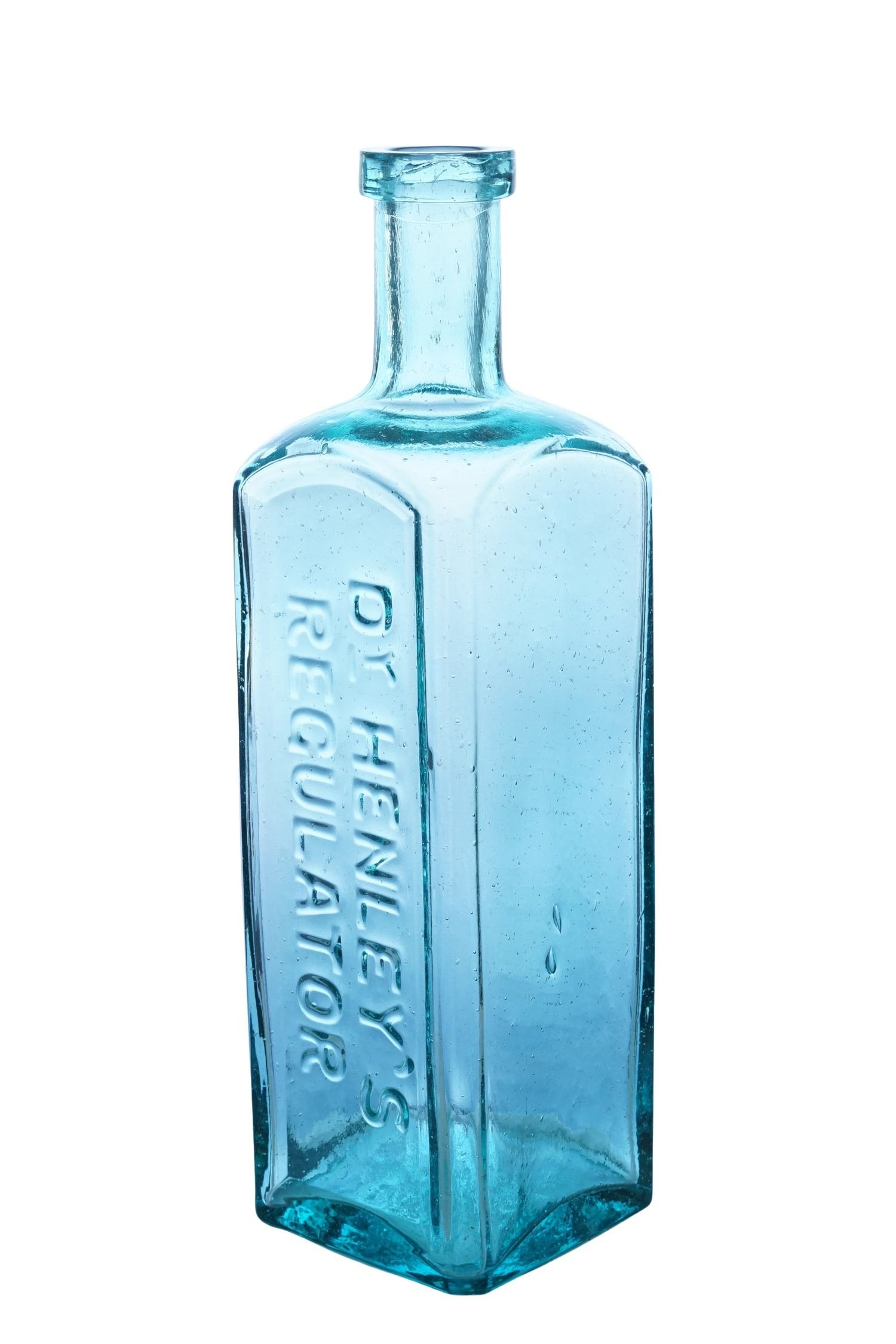
Dr. Henley's Regulator
Circa 1872–1875, applied top, 8 3/8". A rare Henley's product that was advertised from 1872 well into the 1880s, although the bottle itself likely dates to the early to mid 1870s based on the age of the layers in which examples have been dug. Dr. Henley's Regulator was one of the many proprietary medicines marketed by the prolific Dr. Henley during the height of the patent medicine era. Advertisements boldly proclaimed it to be "The Great Family Medicine" and even offered a $100 reward for any incurable case of sickness where the bones had not been destroyed by disease. Today, the bottle remains one of the more desirable Henley products and an excellent example of the extravagant claims commonly made by nineteenth century medicine manufacturers. It is believed that only about eight examples of the Regulator are currently known.
Description & Condition: Attractive bubbly glass. Approximately 1/2" bruise to the top of the lip.
Min. Bid $750 - Est. $1,500–$3,000
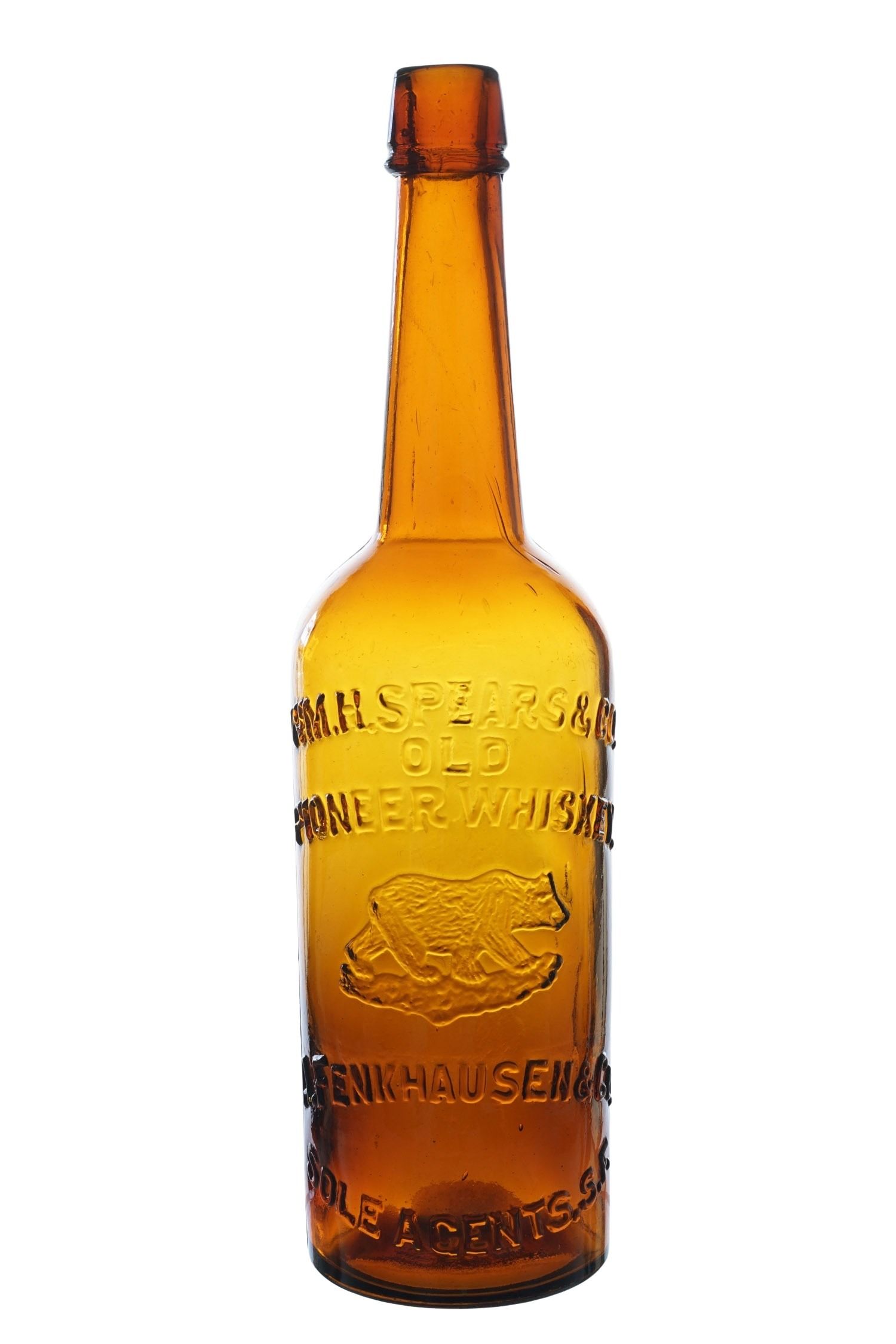
WM. H. Spears & Co. Old Pioneer Whiskey A. Fenkhausen & Co.
Circa 1881–1886, applied top, fifth. This is the "One Name Bear" variant, made after Fenkhausen & Braunschweiger dissolved their partnership in 1881. These fifths have long been popular with collectors due to the embossed walking bear and the Pioneer Whiskey name, both of which immediately bring to mind California's frontier past. One of the more recognizable pictorial whiskey bottles from the American West. These bottles are very difficult to find with a strong strike.
Description & Condition: Honey amber, very strong strike. A top example.
Min. Bid $750 - Est. $1,500–$3,000
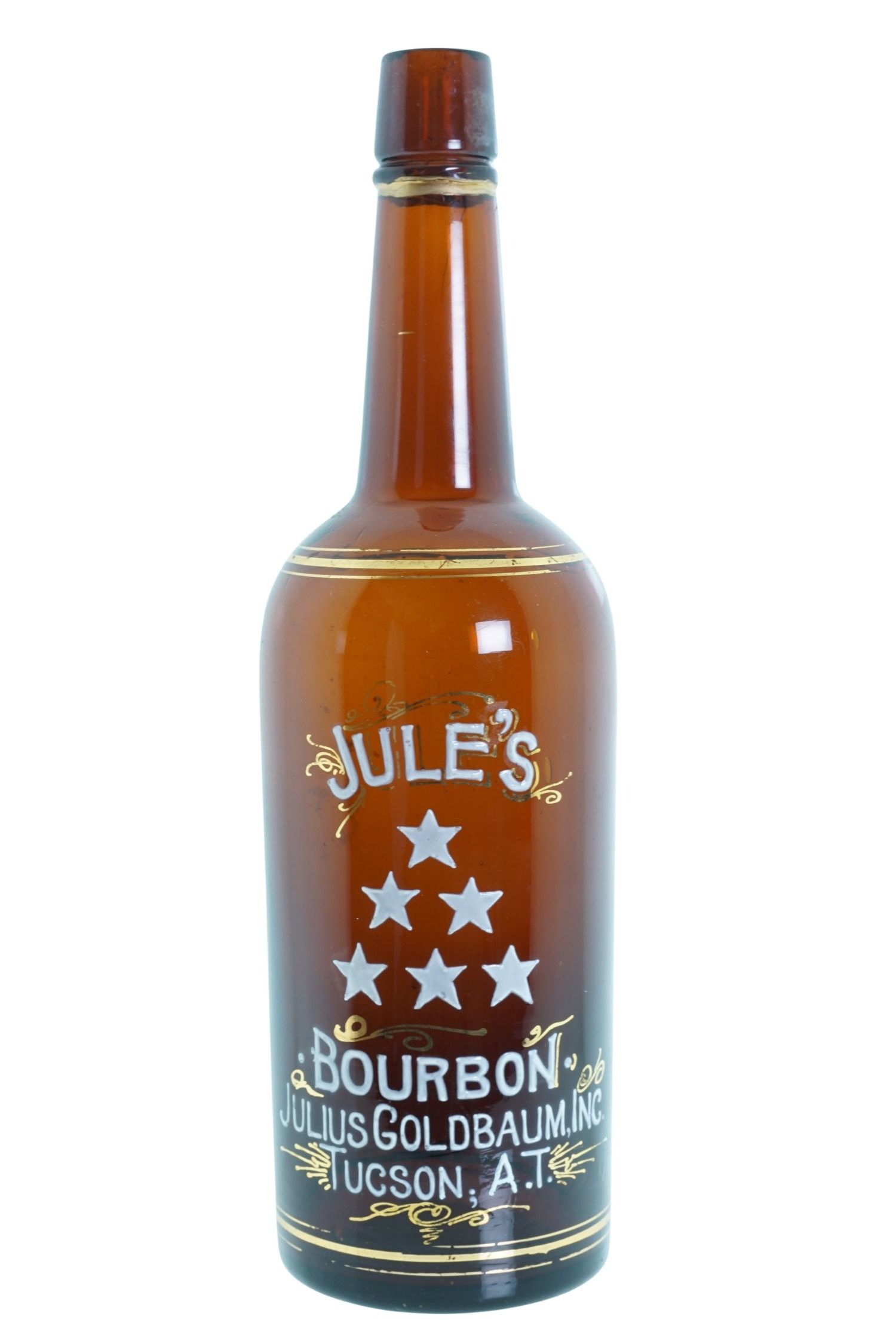
Jule's Bourbon Julius Goldbaum, Inc. Tucson, A.T.
Circa 1887–1903, quart, 12". Julius Goldbaum was one of Tucson's best known wholesale liquor dealers during Arizona's territorial period. This impressive back bar is embossed "A.T." for Arizona Territory, indicating it was produced prior to Arizona achieving statehood in 1912. Remarkably, nearly all known examples trace their origins to Goldbaum's former Tucson residence, where three examples were discovered in the basement during the 1940s along with business papers, labels, and other artifacts relating to his liquor business. Today, only a single mint example is known, underscoring the extreme rarity of this bottle in any condition.
Description & Condition: Professionally replaced top. The workmanship is exceptional, and the repair is extremely difficult to detect with the naked eye. Some loss to the original gold detailing. Overall an attractive example, with a possible touch-up to the white enamel in the A in A.T.
Min. Bid $1,500 - Est. $3,000–$5,000
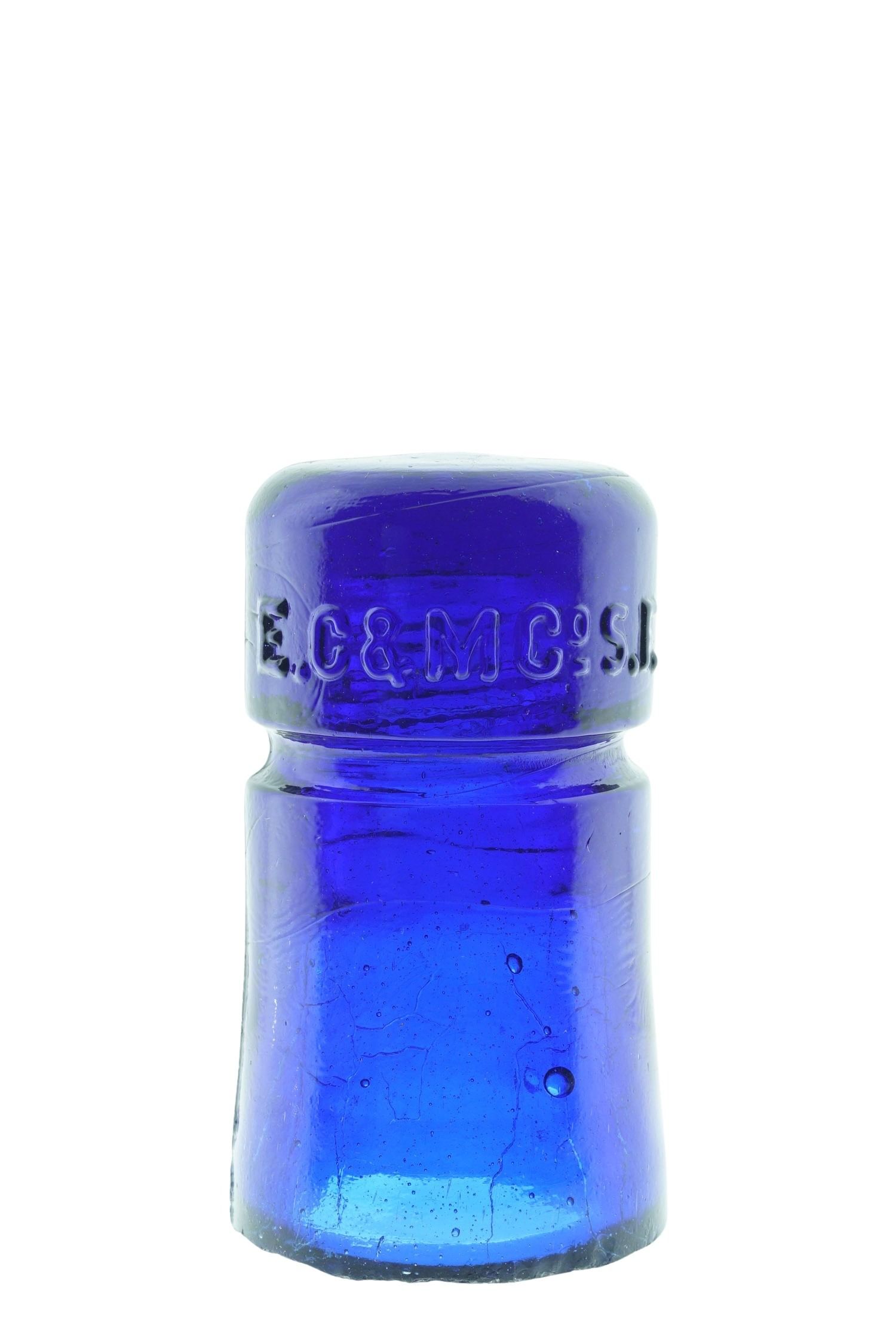
EC&M Insulator
Circa 1870–1878, CD 123, A Mold, 4 1/4". Another EC&M insulator, this time in a deep cobalt and a different mold. EC&M molds differ in several identifiable features, including dome and skirt shape, embossing size and style, ampersand form, wire groove characteristics, seam lines, button placement, and the presence or absence of slug plates.
Description & Condition: Exceptional deep cobalt blue. Excellent condition with only minor chipping on the skirt.
Min. Bid $1,500 - Est. $3,000–$6,000
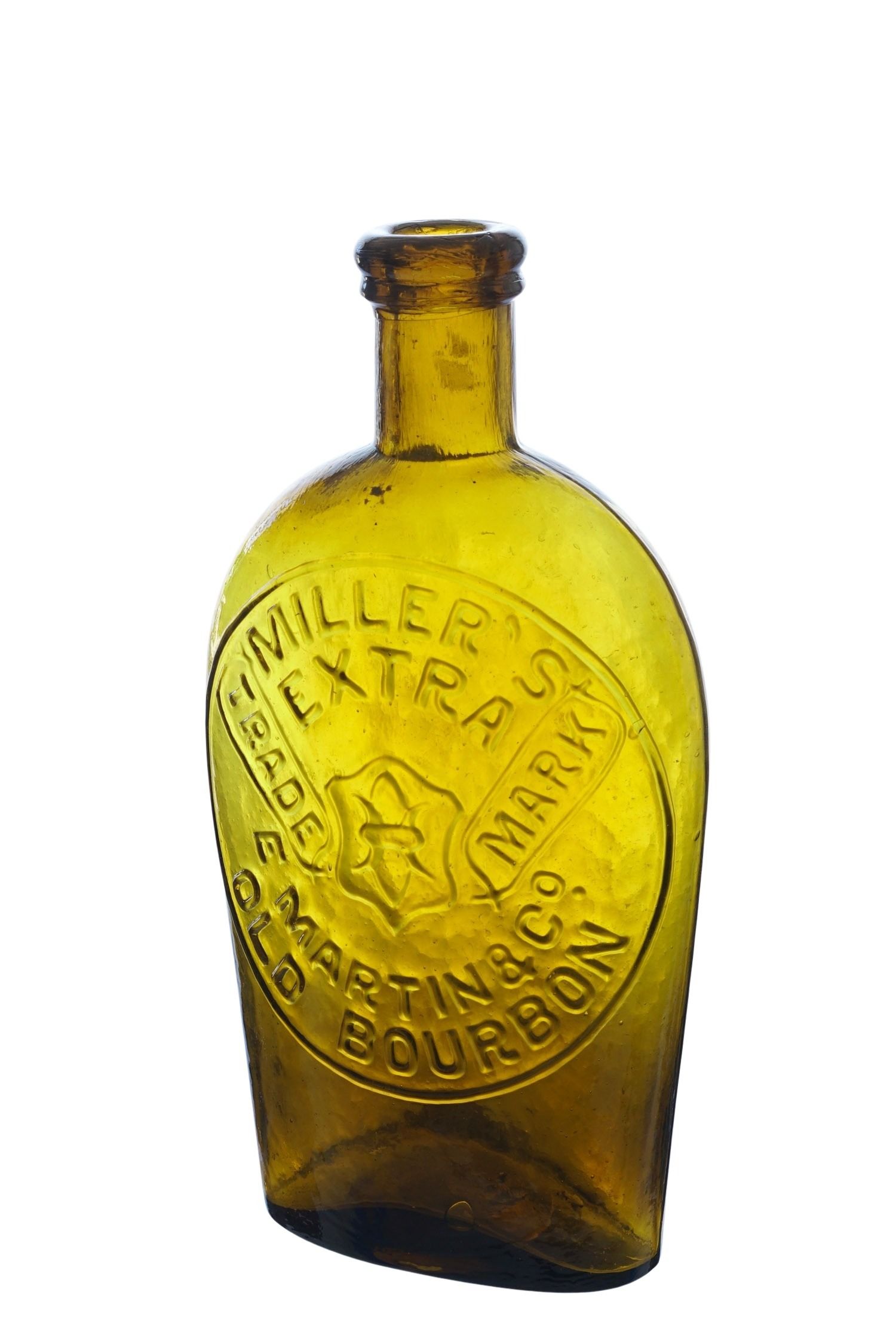
Miller's Extra Old Bourbon
Circa 1871–1880, pint, large design variant. The Miller's flask is probably the most iconic and recognizable of the applied top Western flasks, with numerous examples having been recovered throughout the West Coast. Miller's flasks were especially popular in the mining camps of California and Nevada, with the famous ghost town of Cerro Gordo accounting for many of the known examples. E. Martin & Co. appears to have conducted a successful marketing campaign with hotels, as numerous examples have been excavated from hotel privies across the West. One hotel privy in San Diego alone produced more than fifteen Miller's flasks. There are two recognized variants, the large design and the small design. Miller's may not be a rare bottle, but outstanding examples such as this remain highly sought after by collectors.
Description & Condition: Yellow olive amber, strong strike, and abundant whittle. Double roll top with a minor 1/16" flake to the base edge. A top example.
Min. Bid $750 - Est. $1,500–$3,000
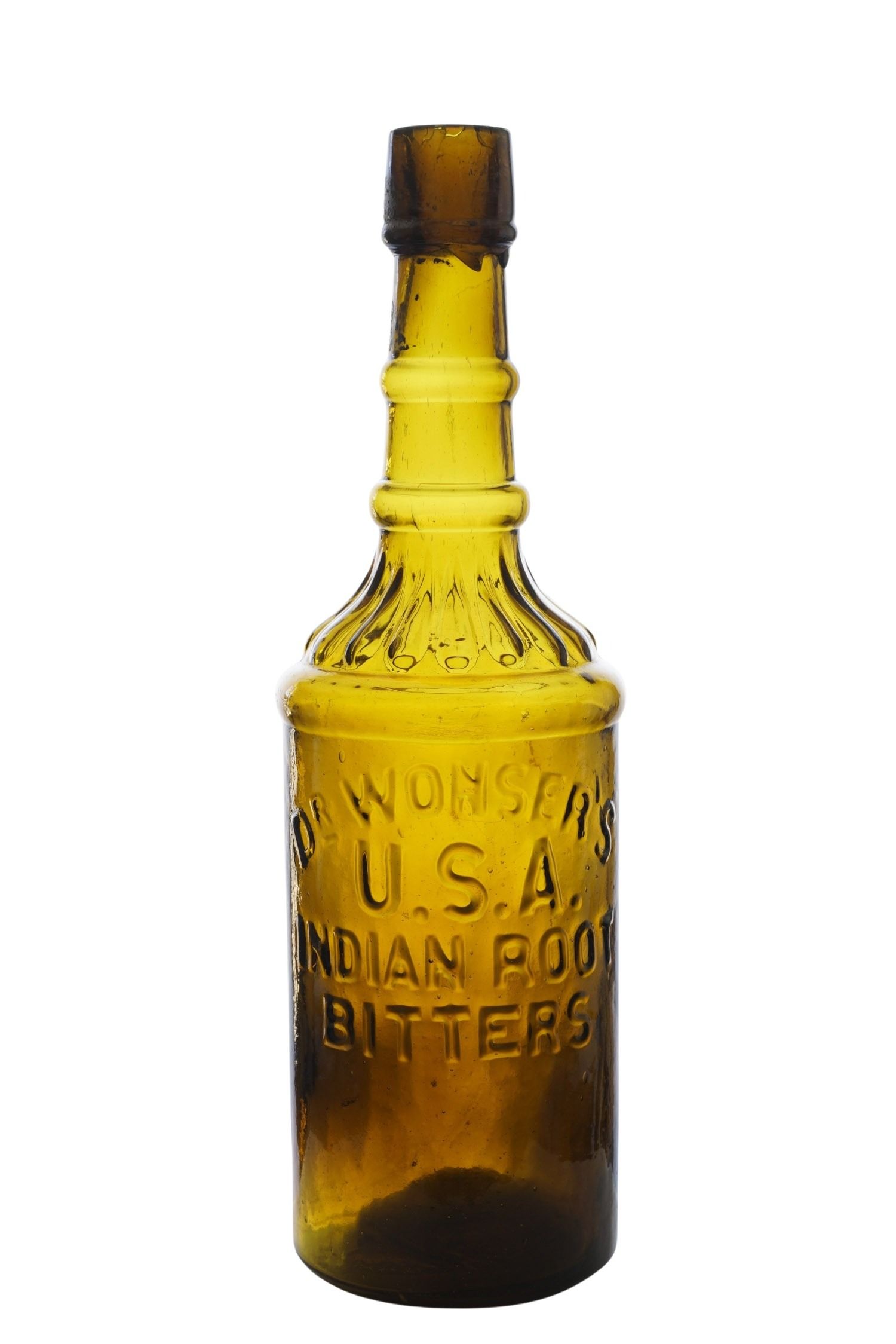
Dr. Wonser's U.S.A Indian Root Bitters
Circa 1870–1875, applied top, fifth. The Dr. Wonser's U.S.A. Indian Root Bitters ranks among the most desirable of all Western bitters. The brand originated with I. H. Wonser of Milwaukee, Wisconsin, who was manufacturing Indian Root Bitters by at least 1863. At some point he met William Hawkins of San Francisco and the two partnered to produce and distribute this product. As is often the case with California's great bottles, many of the known examples have been recovered from Nevada, where the product appears to have enjoyed considerable popularity. The bottle remains a favorite among collectors, its bold embossing, prominent U.S.A. lettering, and distinctive design combining to create one of the most recognizable bitters bottles of the nineteenth century. Examples are known in a remarkable range of colors, from chocolate amber and yellow amber to green and even aqua.
Description & Condition: Yellow olive color with abundant whittle. Remnants of the original neck foil remain. Small 1/8" chip off the edge of the base, a 1/16" peck off the base edge, and a 1/16" peck on the shoulder above the embossing. All minor issues.
Min. Bid $4,000 - Est. $8,000–$12,000
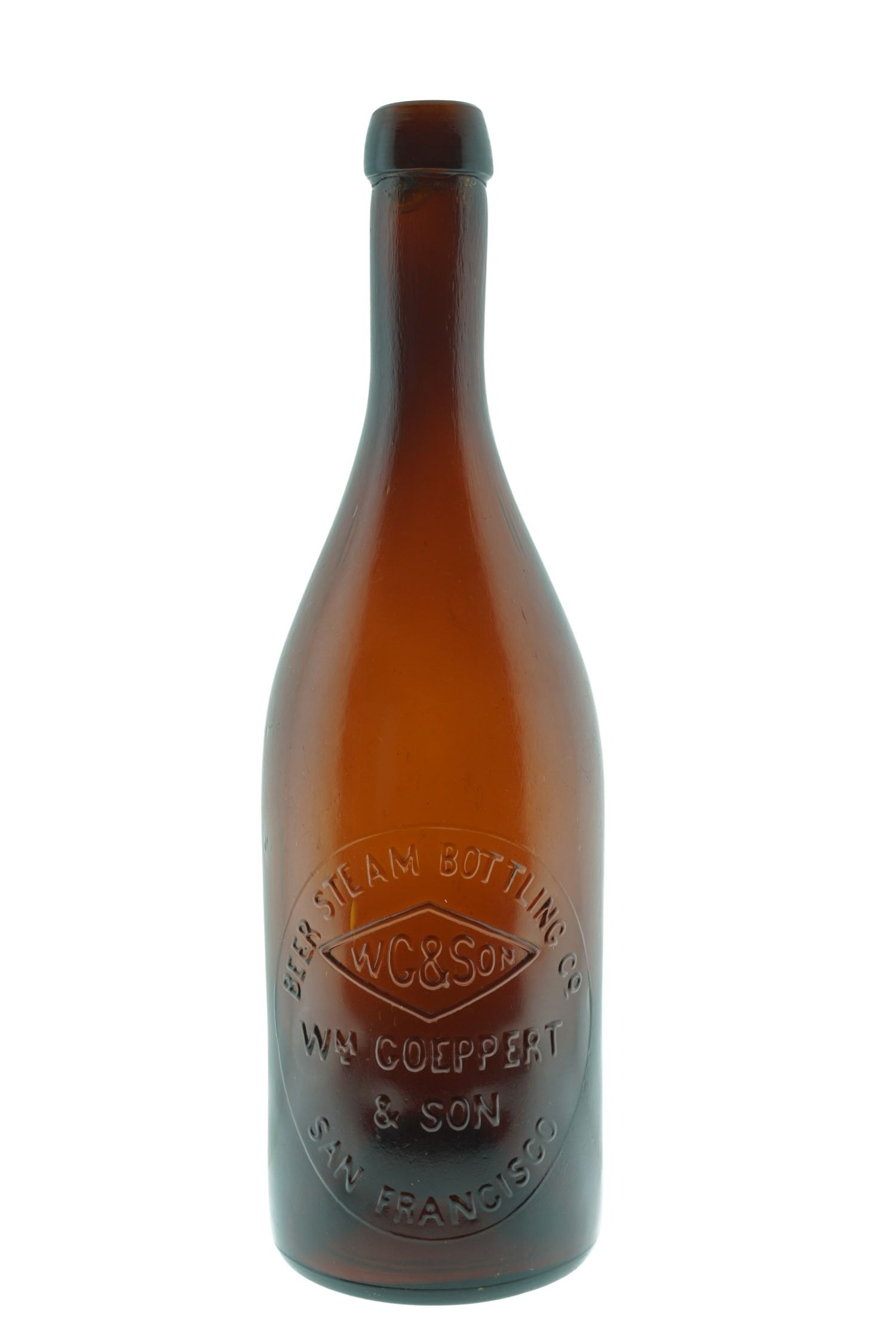
Beer Steam Bottling Co. WM. Goeppert & Son San Francisco
Circa 1882–1885, applied top, quart. William Goeppert & Son was operated by William Goeppert and his son George during the early to mid–1880s. At the 1883 Mechanics' Institute Fair, Goeppert & Son received an award for the best California–made beer for their Bavaria and Felsen Beer products. By March of 1885, the firm was no longer listed, and George partnered with Fred Haussler to form the Bavaria & Felsen Beer Steam Bottling Company. As is the case with most applied top Western quart beers of the 1880s, examples are scarce today, with only about 20 or fewer known. These bottles are found with either a banded champagne top or the more widely encountered tapered top, as seen on this example. There is also an extremely rare aqua variant known, produced with the champagne top and a slightly different embossing pattern.
Description & Condition: Amber color with essentially no wear. 1/4" and 1/16" checks in the body, a 1/2" check in the neck, and a couple of bruises in the neck below the top. Despite these issues, it remains in better condition than most early beer examples.
Min. Bid $1,000 - Est. $2,000–$4,000
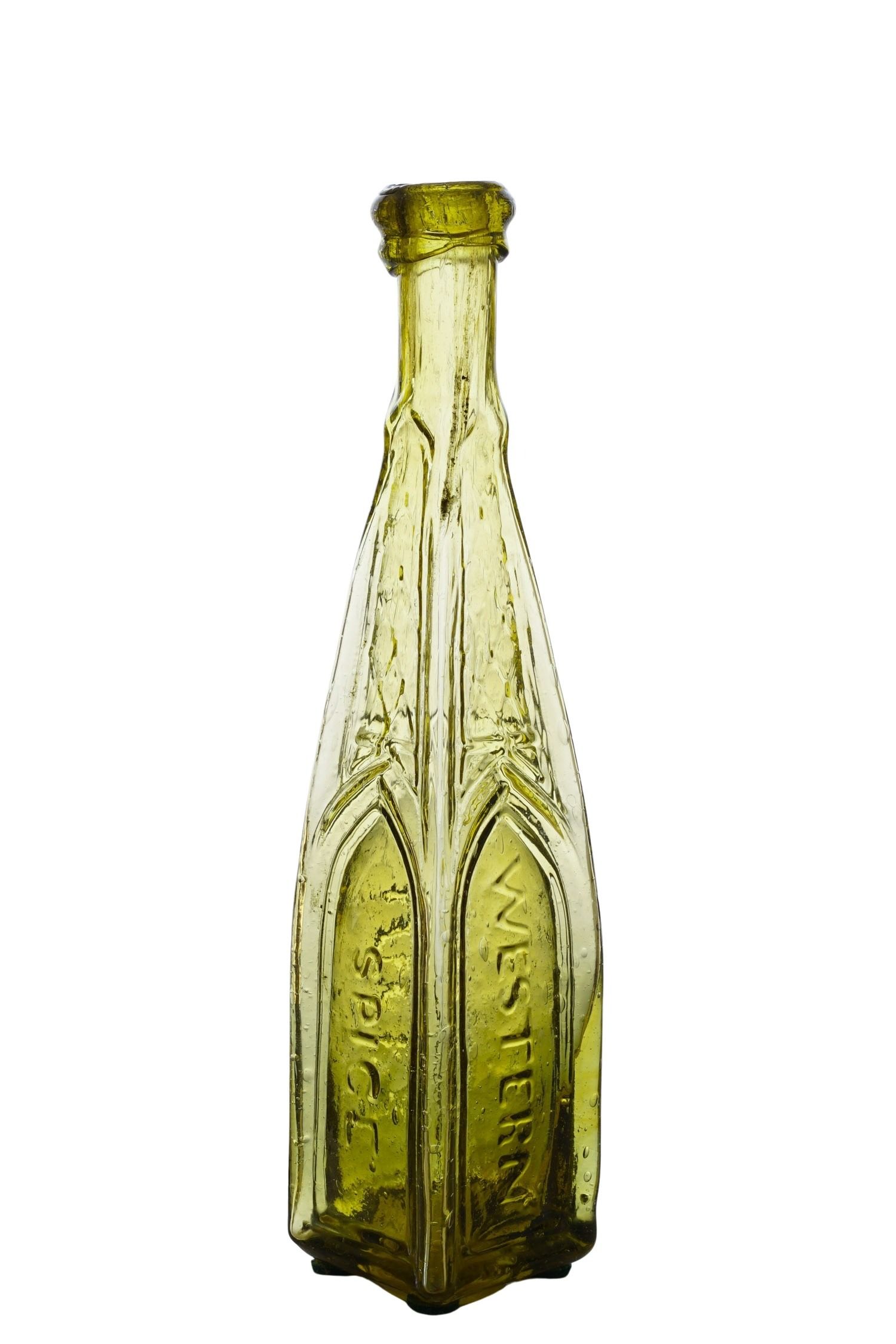
Western Spice Mills
Circa 1865–1870, applied top, 8 1/2". A rare gothic pepper sauce produced by the Western Spice Mills, which were located in St. Louis and advertised as one of the oldest spice mills in the West. While St. Louis is considered part of the Midwest today, it was widely regarded as a Western city during the mid nineteenth century and served as a major gateway to the frontier. One of the few embossed pepper sauce bottles produced during the nineteenth century and a favorite among serious food collectors. Most examples are found in aqua, with only a few known in shades of yellow.
Description & Condition: Vivid yellow color. Crude glass full of bubbles. Well-hidden 1/2" hairline fissure in the shoulder, blending into a run of impurities. Excellent character and eye appeal.
Min. Bid $2,000 - Est. $4,000–$8,000
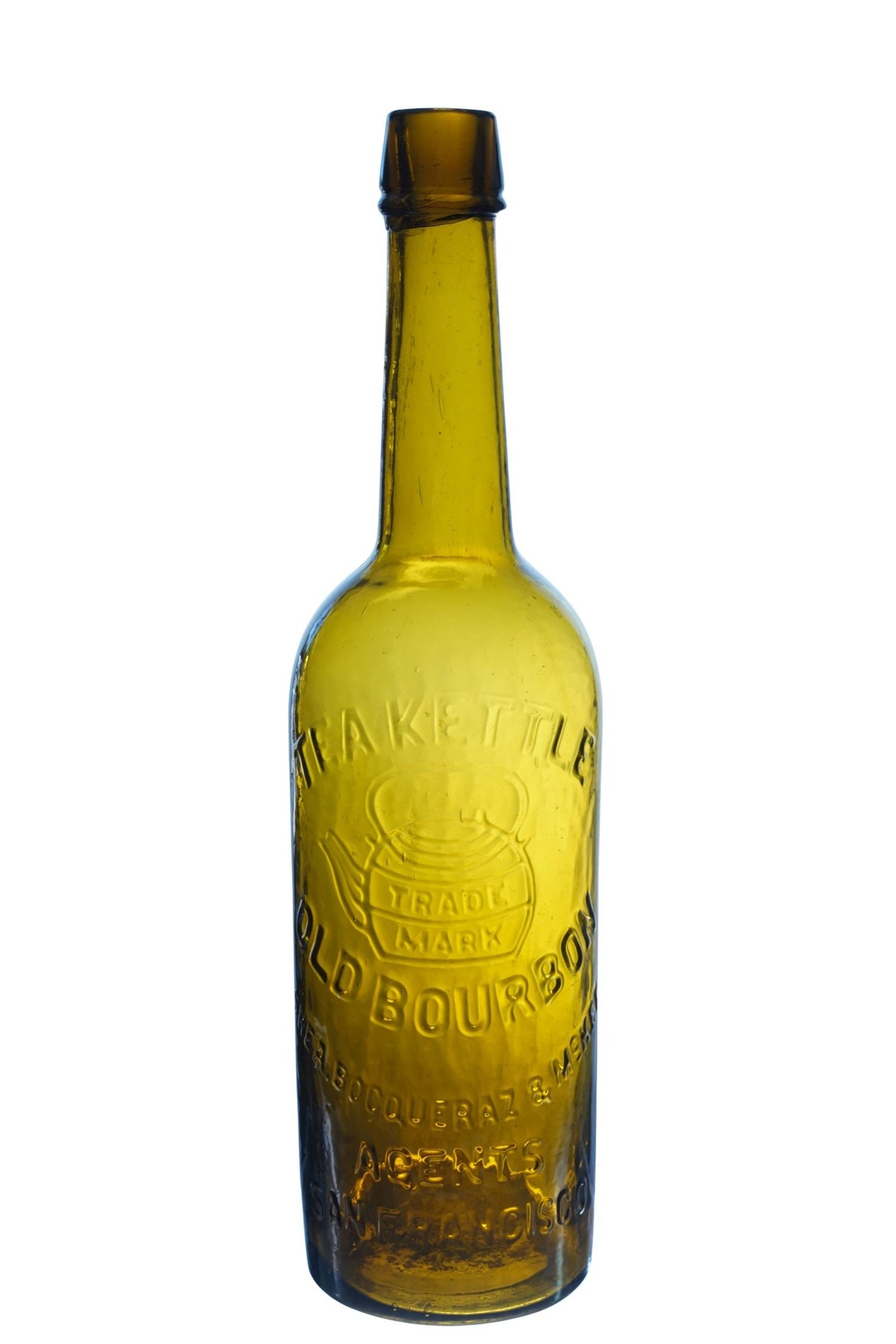
Tea Kettle Old Bourbon
Circa 1871–1880s, applied top, fifth. Perhaps the best known pictorial whiskey fifth of the Wild West era. Examples have been found throughout the American West, though the greatest concentration has come from Nevada, particularly the Comstock region. The whiskey sold in these bottles was produced by the famous Tea Kettle Distillery in Trimble County, Kentucky. The distinctive embossed tea kettle served as the brand's trademark and, much like the horse on a Gold Dust or the antlers on a Jesse Moore, helped the bottle stand out on a crowded saloon shelf. These bottles are highly collectible because they occur in a wide range of colors, from various shades of amber and yellow to yellow–green and olive. Despite their popularity, it can be surprisingly difficult to find examples combining color with a strong strike.
Description & Condition: A yellow olive shade with a good strike and abundant whittle. Retains a tiny amount of interior residue.
Min. Bid $1,000 - Est. $2,000–$4,000
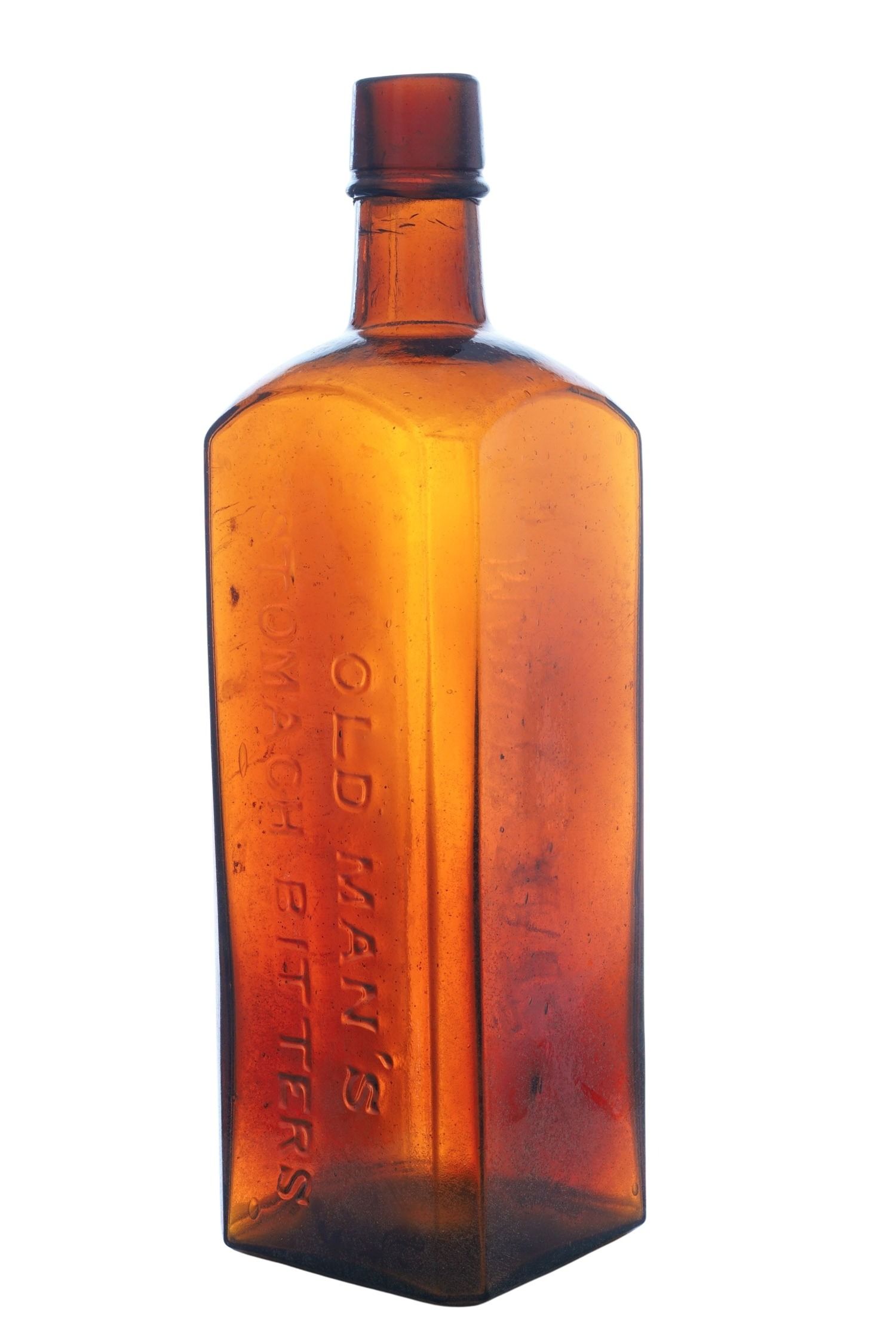
Old Man's Stomach Bitters
Circa 1876, applied top. An extremely rare Western bitters from San Francisco with only about four known examples. This particular bottle is the most recently discovered example, having been dug in Contra Costa County in 2019. Interestingly, known examples occur in several distinct shades of amber, suggesting that multiple batches were produced over a period of time rather than as a single limited run. If so, one is left to wonder where they were sold and what became of the others, as only a handful survive today. Perhaps the product's unusual name worked against it; after all, few customers may have wanted to be seen purchasing a product that implied they suffered from an "old man's" ailment.
Description & Condition: Amber. Exterior UV crazing. Several horizontal annealing checks in the neck. Please refer to the online catalog photos.
Min. Bid $500 - Est. $1,000–$3,000
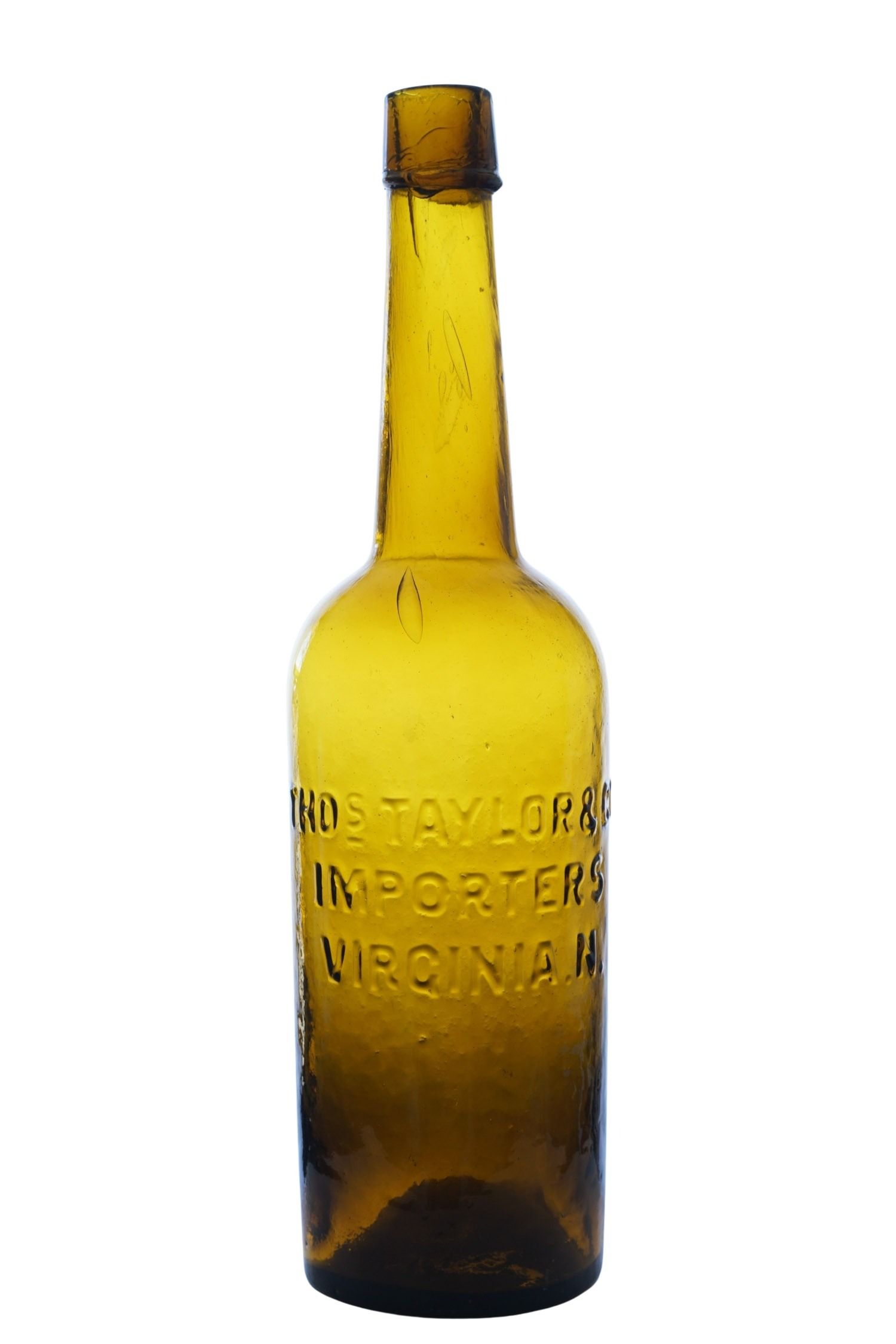
Thomas Taylor & Co Importers Virginia, N.
Circa 1870–1874, applied top, fifth. One of the most famous whiskey bottles of the Comstock era, produced in both fifth and sixth sizes. Approximately 15 fifths and 7 sixths are believed to exist, making either size a rarity today. Thomas Taylor was an early West Coast liquor merchant who arrived in California during the Gold Rush era and later established himself in both San Francisco and Virginia City. His business prospered during the height of the Comstock mining boom, supplying liquor to one of the wealthiest and most influential mining regions in the American West. Taylor's bottles are highly sought after for their direct connection to Virginia City and the legendary silver mining history of the Comstock. They are also among a very small group of embossed bottles from the 1860s and 1870s bearing the name Virginia, joining such rarities as the Morrill Citrate, Higgins Ink, and Stephens & Jose gravitating soda.
Description & Condition: Olive amber color with a touch of yellow. Abundant whittle and crude, stippled glass. A beautiful example.
Min. Bid $3,000 - Est. $6,000–$12,000
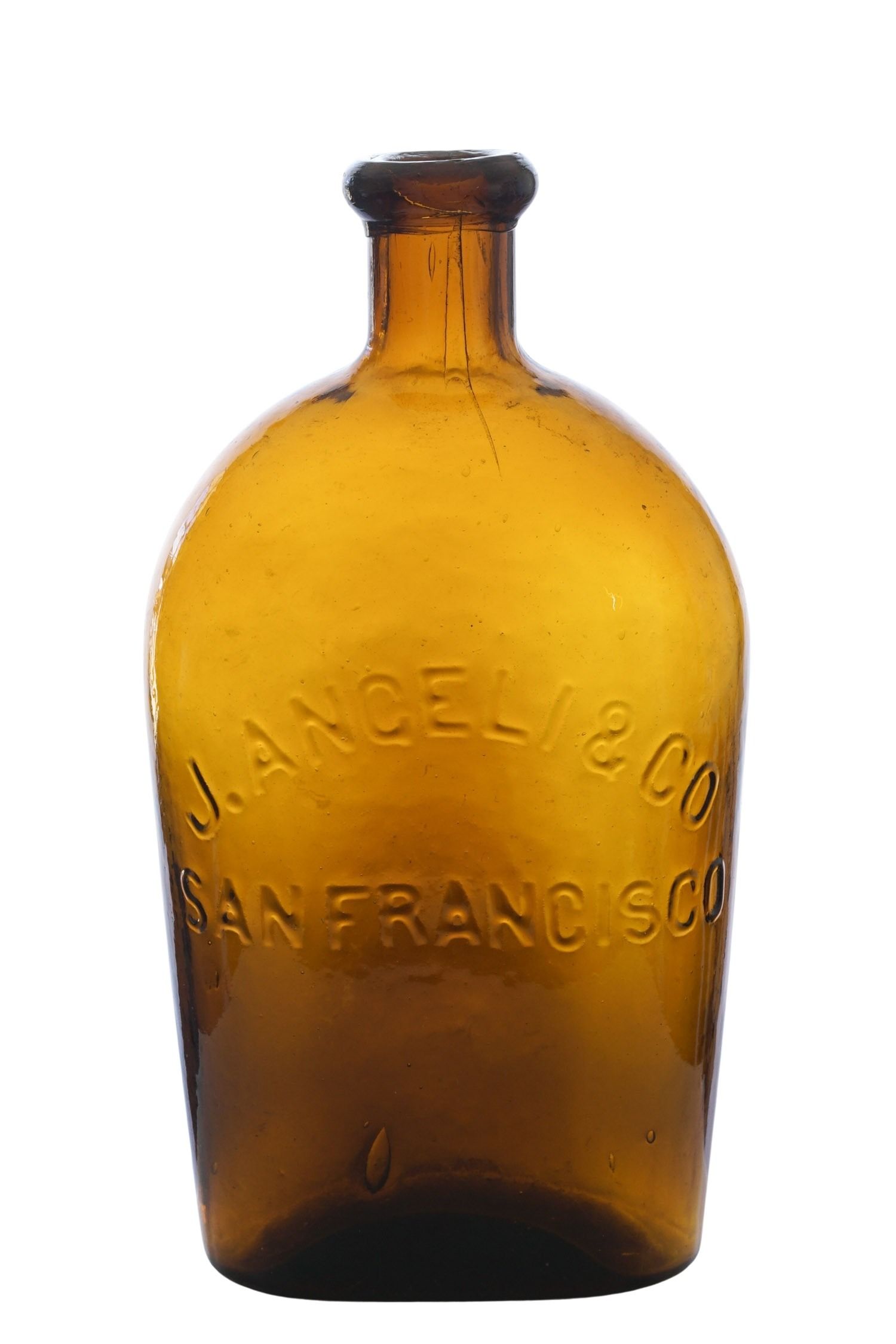
J. Angeli & Co
Circa 1868–1871, applied top, 7 5/8". One of the earliest Western blown flasks that likely dates only a year or two later than the horizontal Wormser flask, which is believed to have been introduced around 1866–1867. The Angeli and Wormser are closely related in concept, both featuring unusual bases and capacities exceeding a pint. This has always been a difficult flask for collectors to acquire, even among advanced Western collectors. Most known examples are shades of amber, although one or two exceptional specimens are known with a strong yellow olive influence. With its early date, large size, and distinctive form, the Angeli remains one of the top ten Western flasks with around 7 known examples. This one was dug by the late Ken Salazar in a deep West Oakland well full of bromo seltzers.
Description & Condition: Old amber with a good strike, light whittle, and clean glass. Very light minor scuff above the embossing and a minuscule amount of interior stain. A very strong example of this rare flask.
Min. Bid $3,500 - Est. $7,000–$14,000
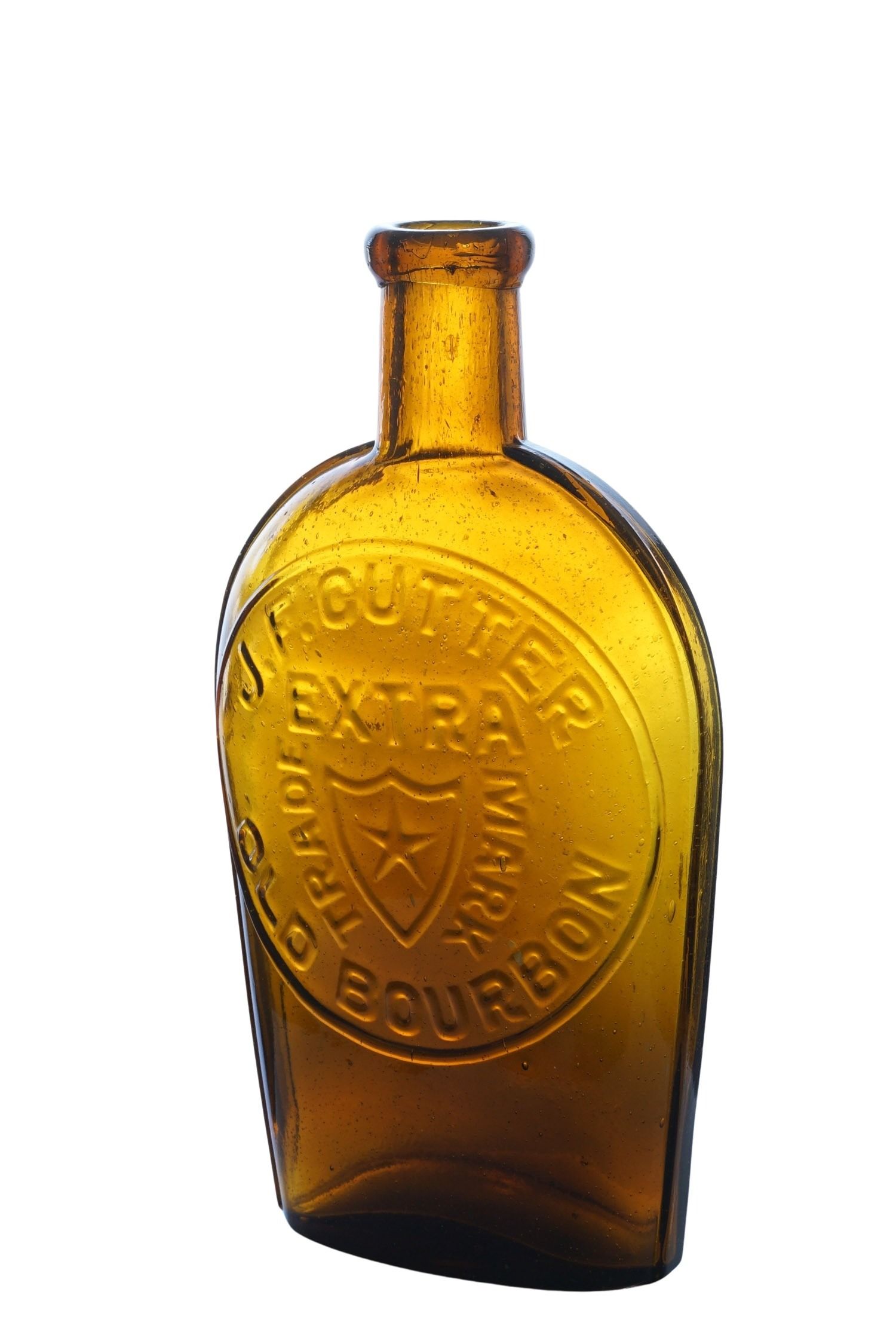
J.F. Cutter Extra Old Bourbon
Circa 1875–1880, applied top, pint. A popular Western flask full of large embossing, these have been found throughout the Pacific Coast, from San Diego to Washington and eastward into Nevada. Most examples occur in shades of amber, with olive toned examples being exceedingly rare.
Description & Condition: Medium honey amber color with a good strike and attractive bubbly glass.
Min. Bid $400 - Est. $800–$1,500
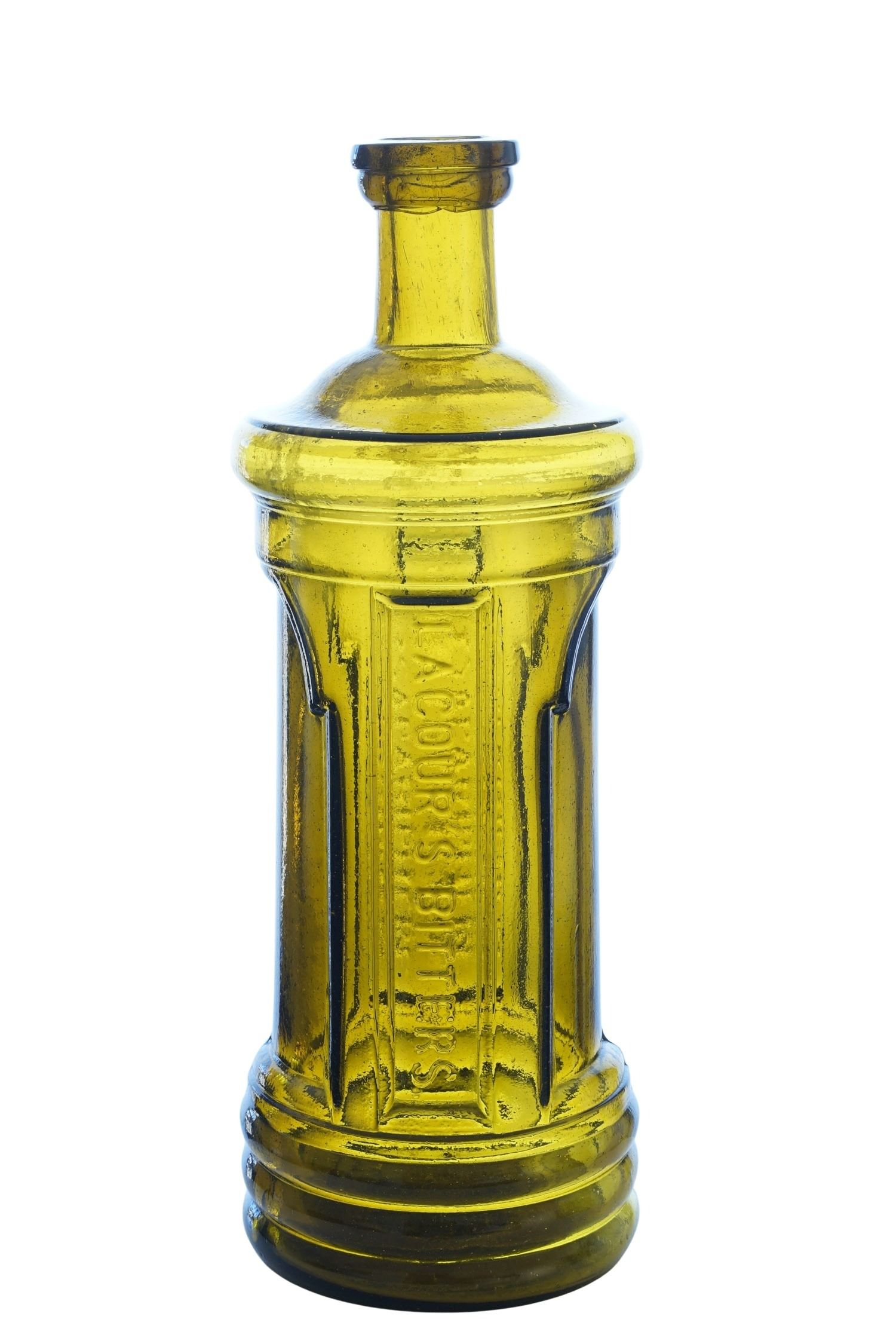
Lacour’s Sarsapariphere Bitters
Circa 1867–1869, smooth base, 9 1/4". Variant 1. A legendary Western bitters and one of the few figural bitters produced on the West Coast. In addition to its iconic lighthouse form, the Lacour's is especially prized for the remarkable range of colors in which it is found, with some advanced collectors being able to assemble color runs of the various shades. Variants 1 and 2 are generally considered the most desirable, as they occur in the widest range of colors and are typically found in the crudest glass. The easiest way to distinguish the three mold variants is by the raised center dot on the base: Variant 1 has a small dot, Variant 2 a larger dot, and Variant 3 no dot.
Description & Condition: Yellow olive color with a strong strike. Small surface potstone on the base with an associated 1/8" chip. Better condition than most examples, with no checks, cracks, or bruises. Some interior content stain, mostly in the shoulder.
Min. Bid $5,000 - Est. $10,000–$15,000
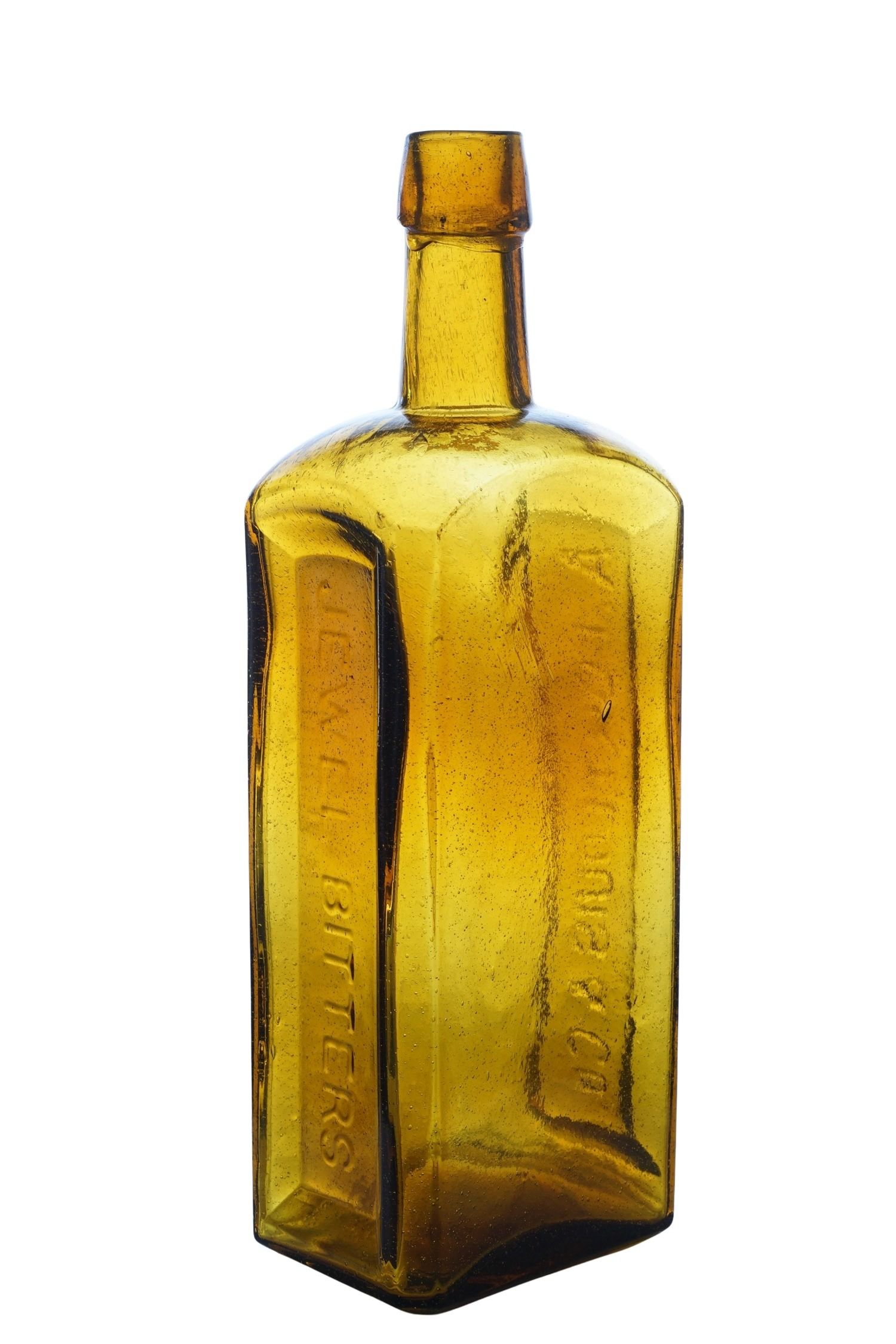
Jewel Bitters A. Fortlouis & Co.
Circa 1885–1889, applied top, 9 3/4". These rare bitters are known in two variants, one embossed John S. Bowman & Co. and the other A. Fortlouis & Co. The Fortlouis variant is by far the scarcer of the two, with only a handful of examples known. Both the bottle and the brand remain somewhat mysterious, as no advertising for the product has yet been discovered. The Bowman variant is believed to originate from San Francisco, where Bowman was based, while the Fortlouis examples may have originated in Tombstone, Arizona, San Diego, California, or Washington State, where Fortlouis was active during the mid to late 1880s. Until additional information comes to light, a degree of mystery will continue to surround these intriguing Western bitters. This example was dug at a logging camp in Washington state.
Description & Condition: Light honey amber color, nearly yellow in natural light. Crude glass filled with champagne bubbles. Believed to be the finest known example of this rare bitters.
Min. Bid $1,250 - Est. $2,500–$5,000
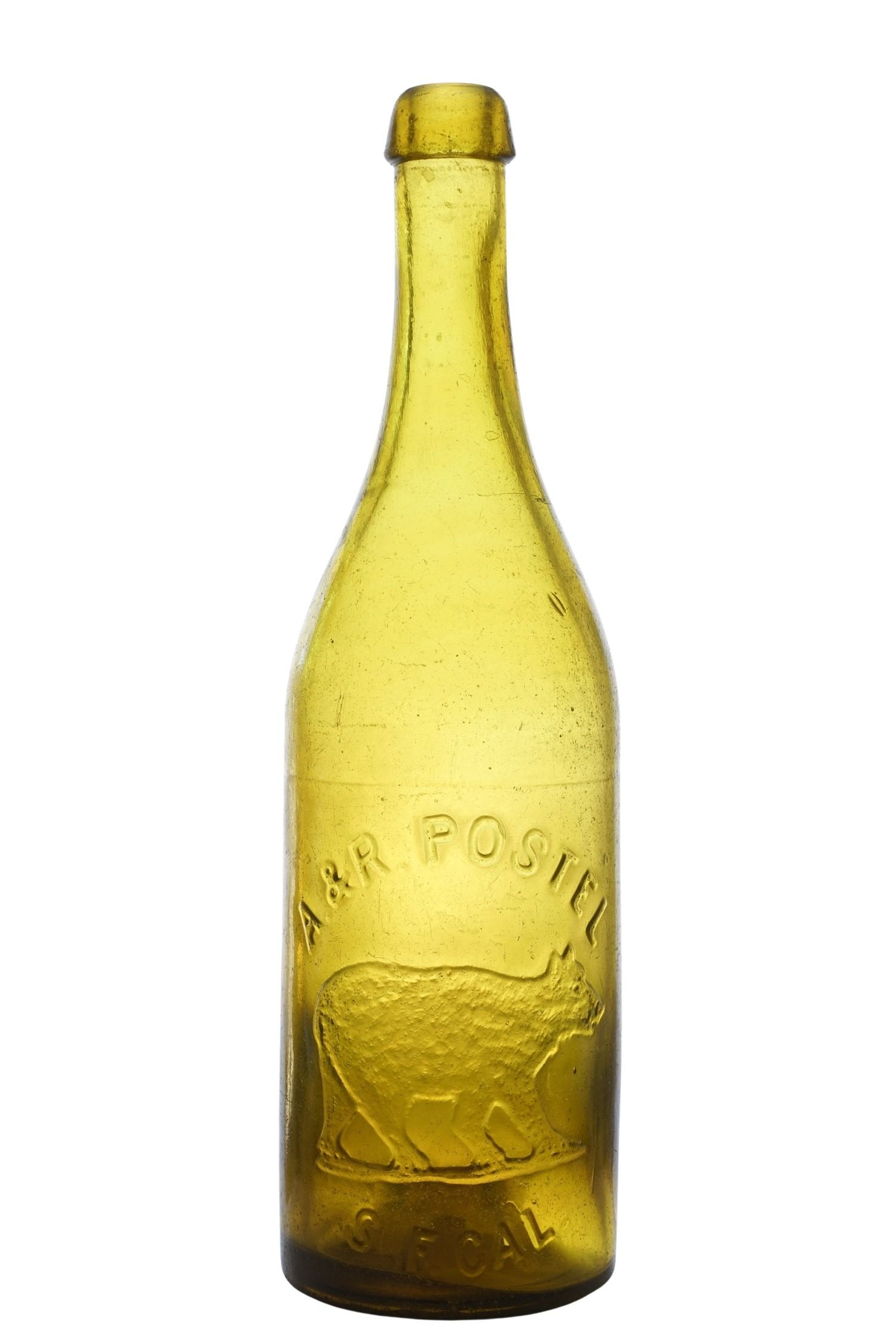
A&R Postel
Circa 1885–1887, applied top, quart. There are two early Western beers bearing the Postel name: the C.D. Postel with the sheaf of wheat and this A. & R. Postel featuring the embossed bear. Both are difficult to acquire, but the A. & R. is the rarer of the two and is highly coveted for its outstanding embossing pattern featuring a large bear. This example is a beautiful citron yellow, possibly the only known early Western beer in this color. Found in the bay near Port Chicago, California, this is an extremely rare bottle that would stand out in any collection of early Western beers.
Description & Condition: Bright citron yellow. Substantial exterior wear, likely from prolonged exposure in a watery environment such as San Francisco Bay. Minor 1/8" flake to the edge of the base and a 1/8" partially radiating potstone in the side shoulder. Professionally cleaned.
Min. Bid $5,000 - Est. $10,000–$20,000
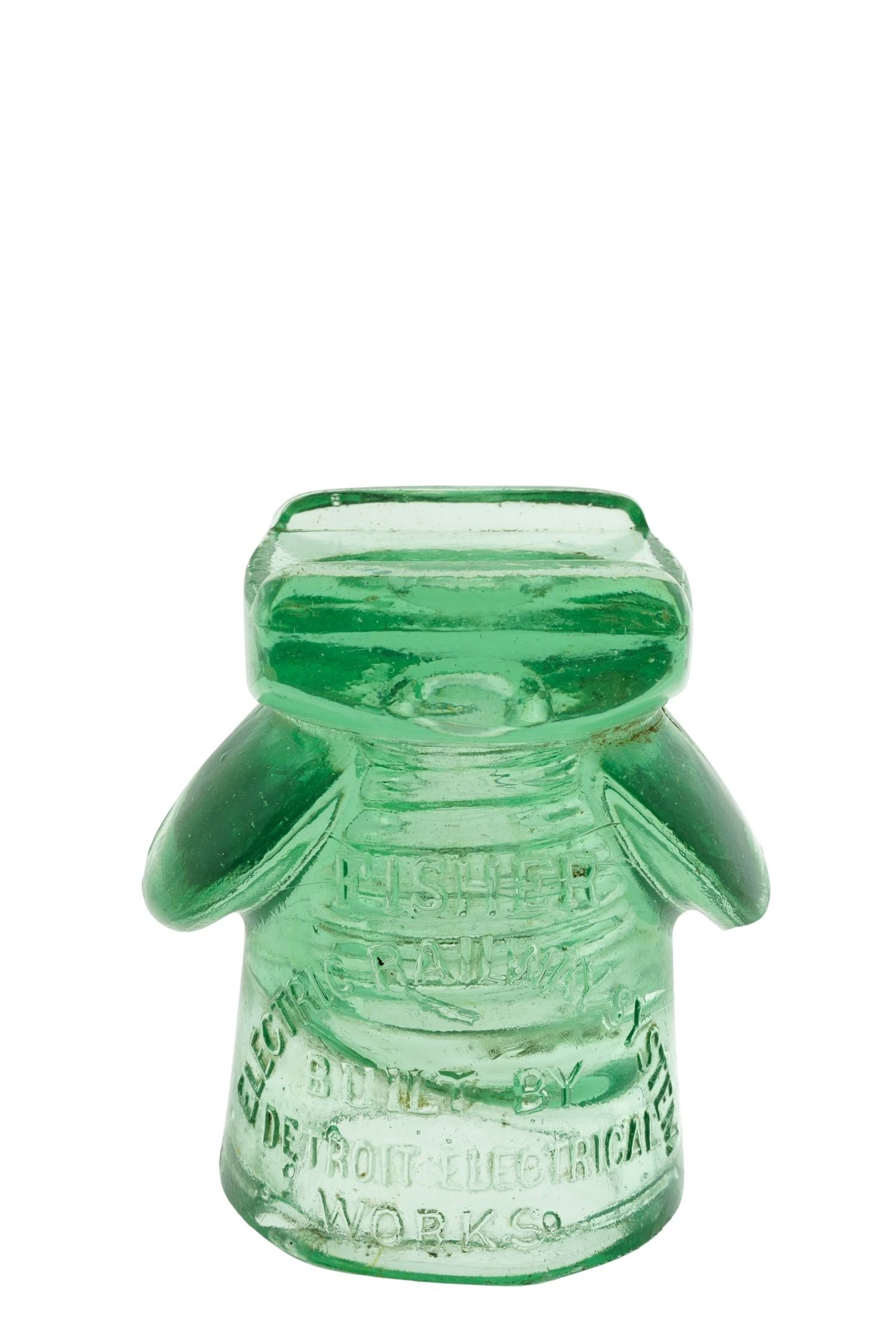
Fisher Electric Railway System
Circa 1887–1889, CD 265, 4". Designed for use with Frank E. Fisher’s pioneering underground third-rail electric railway system. The first known embossed Fisher insulator was discovered in San Jose, with additional examples later recovered in Michigan. The Fisher Electric Railway operated between San Jose and Santa Clara after opening in 1888. Its underground conduit system proved unreliable, with mud and debris frequently interrupting electrical contact, and the line soon failed. Today, these remarkable insulators are prized for their rarity and their association with some of the earliest electric railway experiments in the United States.
Description & Condition: A light green example in very good overall condition. Has a chip to the right arm measuring approximately 1", along with two minor chips to the top measuring 1/8" and 1/16". The base is free of damage.
Min. Bid $2,500 - Est. $5,000–$10,000
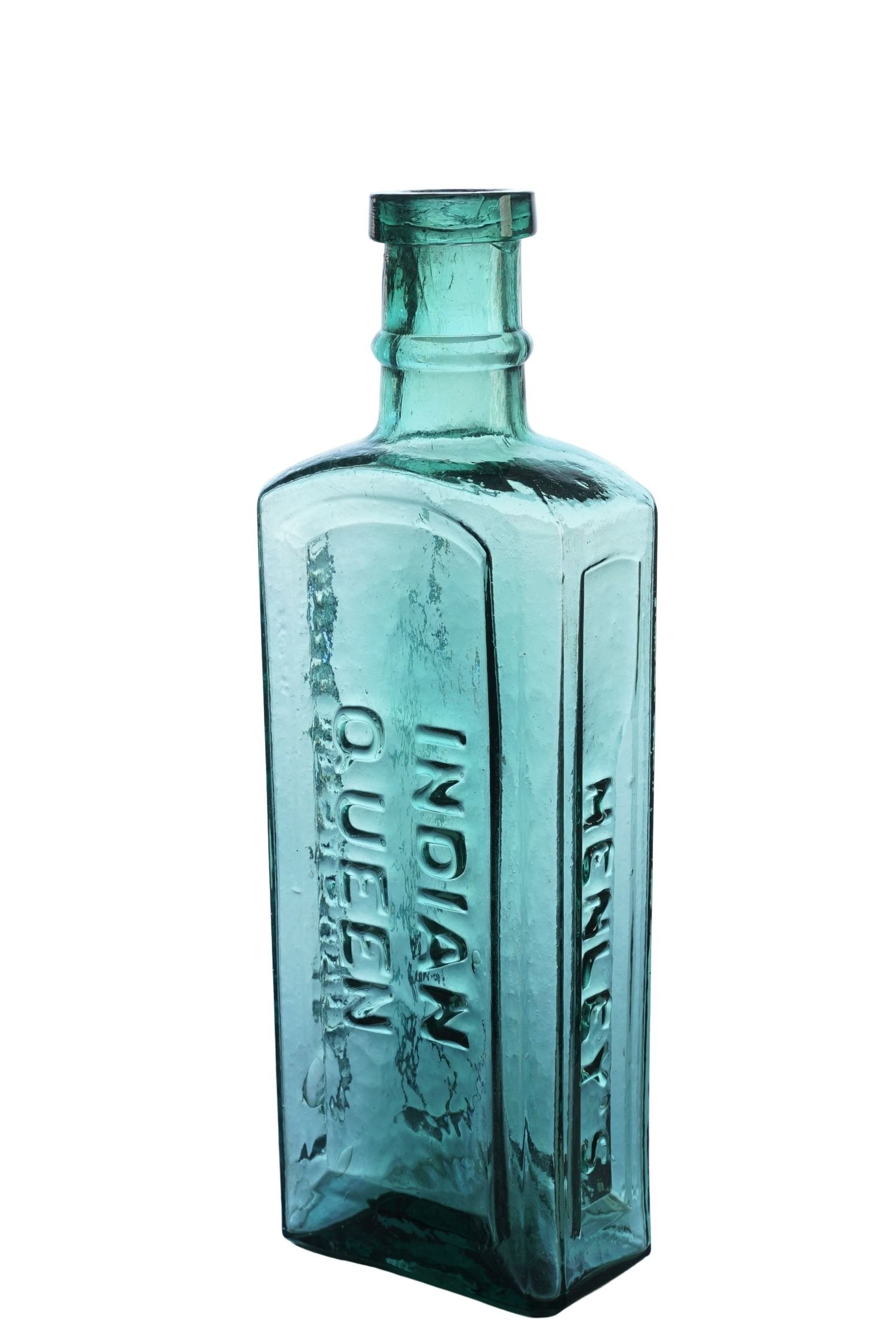
Henley’s Indian Queen Hair Restorative
Circa 1871–1873, applied top, 7 5/8". This product was trademarked in 1871 and advertised extensively from 1872–1873. One of the rarer Henley's products, these medicine bottles feature bold embossing and an attractive overall design. An 1872 advertisement claimed Henley's Indian Queen Hair Restorative could cure baldness and restore gray hair. Its trademark depicted an "Indian Queen" holding a bow and arrow, while the product was promoted as "a beautiful clear tincture." Known in both blue and green shades, with only about five or six presently known, it ranks among the rarest Western hair bottles. This example was dug in downtown San Francisco in the 1980s.
Description & Condition: Attractive light blue-green color with abundant whittle. Shallow 1/8" flake to the edge of the lip and a 1/8" area of light roughness on the front near the base.
Min. Bid $1,000 - Est. $2,000–$4,000
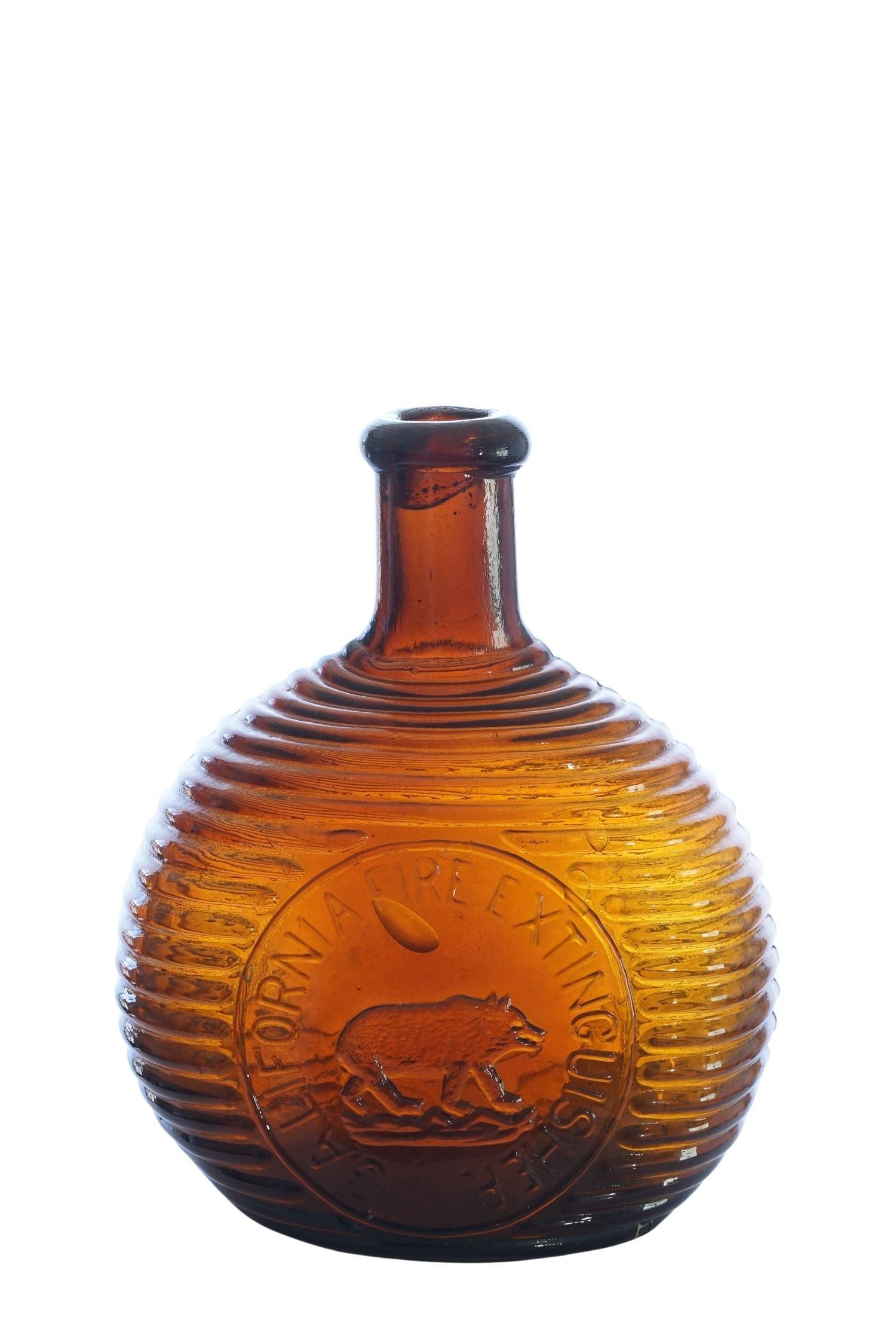
California Fire Extinguisher
Circa 1885, applied top, 6 1/2". These unique fire extinguishers, commonly known as hand fire grenades, became popular during the early to mid–1880s as a means of combating small fires. A California newspaper advertisement from early 1885 proudly noted that "the California bear is blown into the bottle," referring to the embossed bear featured on these bottles. Advertisements indicate that the California Fire Extinguisher Company was located at 858 Howard Street in San Francisco and was managed by A. Muiller. Interestingly, we could locate no listing for the company in the 1885, 1886, or 1887 San Francisco city directories. Additional research is needed, but it appears the company and its product may have had an extremely short lifespan. The glass bottle was filled with a chemical solution and intended to be thrown directly into a fire. Contemporary accounts noted that the liquid itself was not primarily responsible for extinguishing the flames; rather, when exposed to heat, it generated large quantities of fire extinguishing gas that smothered the fire and prevented combustion from continuing. Numerous varieties of these so called hand fire grenades were marketed during the 1880s, but few can match the Western appeal of this grenade with its boldly embossed California bear.
Description & Condition: Medium amber with the original cork still inside. Minor 1/8" chip near the base on the reverse, not visible when displayed.
Min. Bid $2,500 - Est. $5,000–$10,000
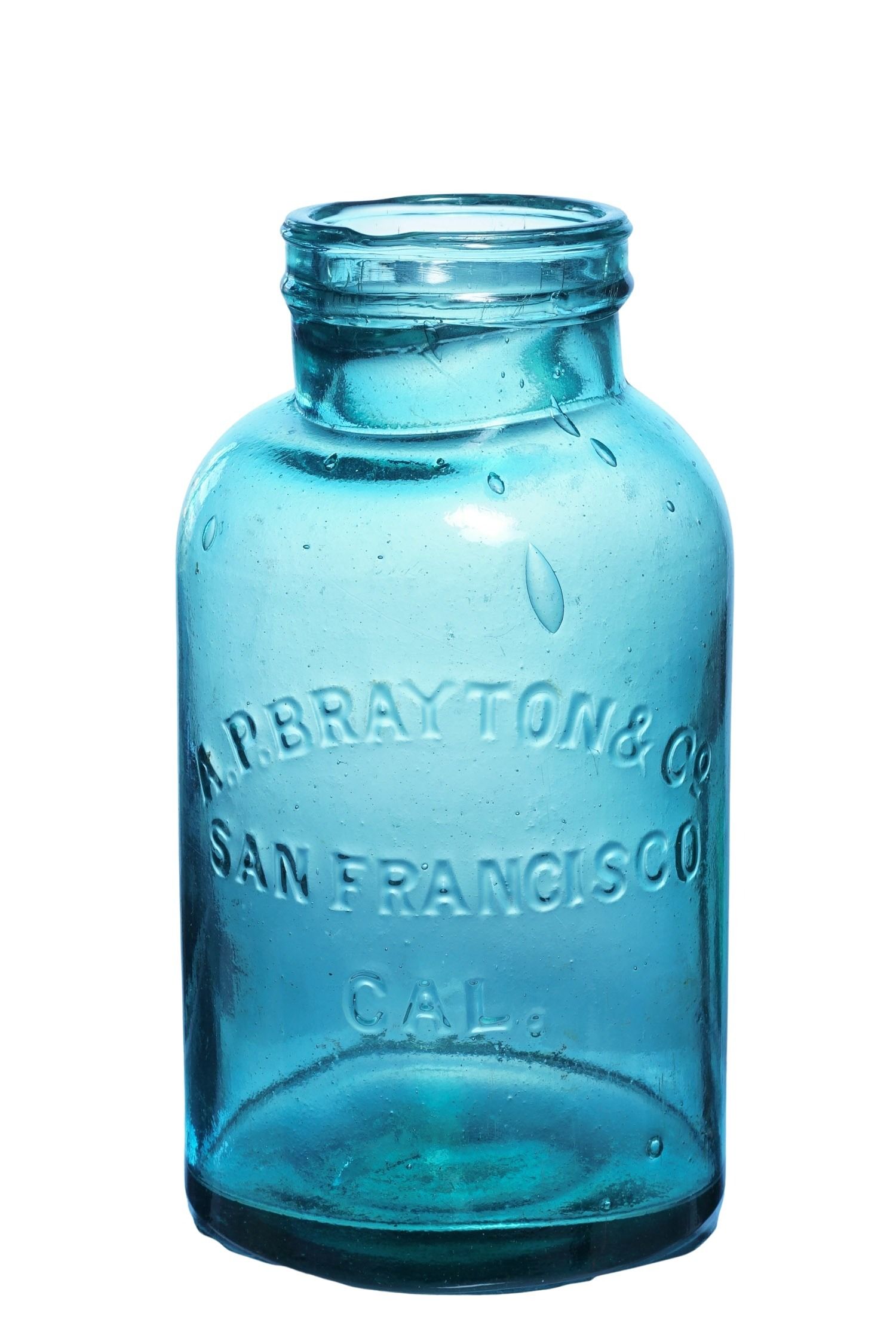
A.P. Brayton & Co. San Francisco Cal.
Circa 1863–1865, applied top, quart. These jars are the earliest Western fruit jars and may have been among the first bottles blown in California, occurring in both iron pontiled and smooth base examples. They were produced in pint, quart, and half–gallon sizes, with fewer than ten examples known across all sizes in any condition. Due to their early manufacture, many exhibit a beautiful Western fire aqua color, as seen in this example. Albert P. Brayton was an early California pioneer in the foundry business, founding what would eventually become Pacific Iron Works, and is believed to have manufactured the iron Haller–type closure used on these jars. In 1863, Brayton advertised himself as the sole agent for "Haller's Patent Airtight Fruit–Jars." It is possible that he licensed the closure, commissioned a jar bearing his embossed name, and contracted the recently established Pacific Glass Works to produce a small run around 1863. Undoubtedly the holy grail of Western fruit jars, the A.P. Brayton is coveted by both Western and Eastern jar collectors alike. This may be the only undamaged smooth base quart known.
Description & Condition: Rich deep aqua color. Two tiny flea bites to the lip, along with some very light exterior scratching. Two small dips in the lip appear to be manufacturing crudity. All are minor distractions, noted for accuracy. An impressive example that displays beautifully.
Min. Bid $7,500 - Est. $15,000–$25,000